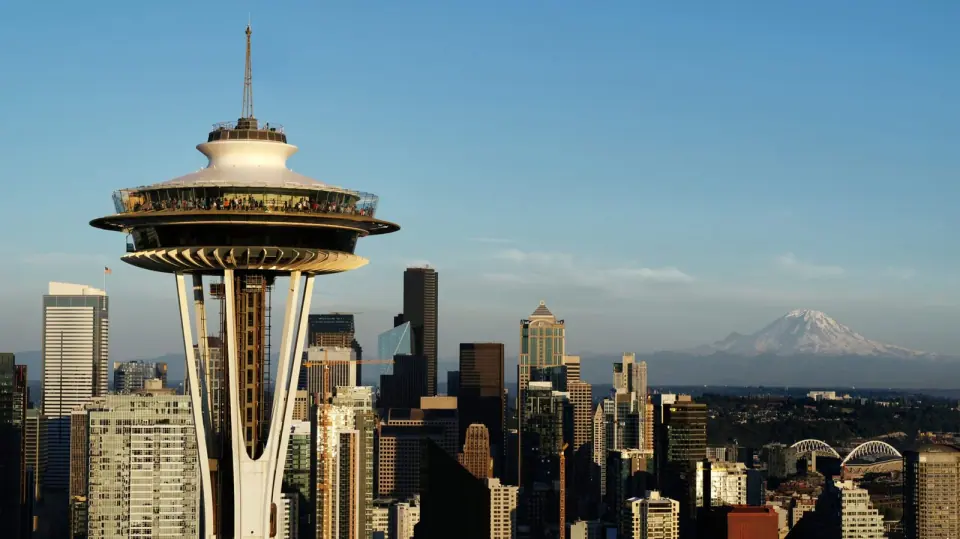
The name honors British Admiral Peter Rainier, the same figure behind the mountain you see on clear days. For its logo, the club borrowed a design from the Union Club in Victoria, British Columbia, which dates to 1877.
A boarding house on paper
In 1888, territorial law simply had no category for private clubs, so the founders got creative and incorporated as a men's boarding house and restaurant. Once a revised state law passed in 1895, the club reincorporated as a private club on January 18, 1899.
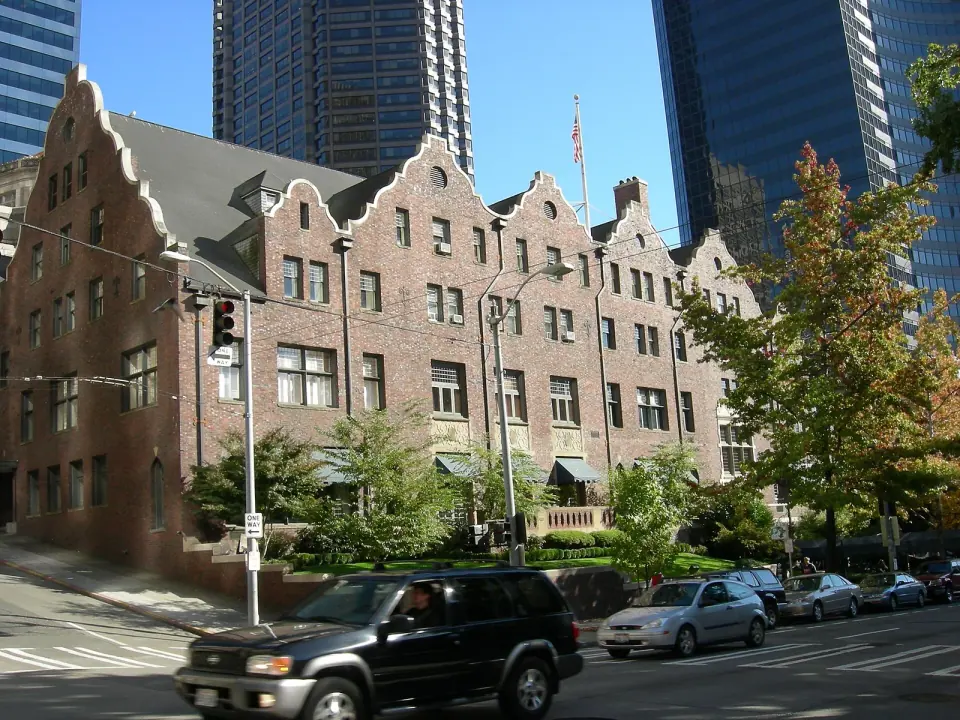
The Clubhouse at Fourth and Columbia
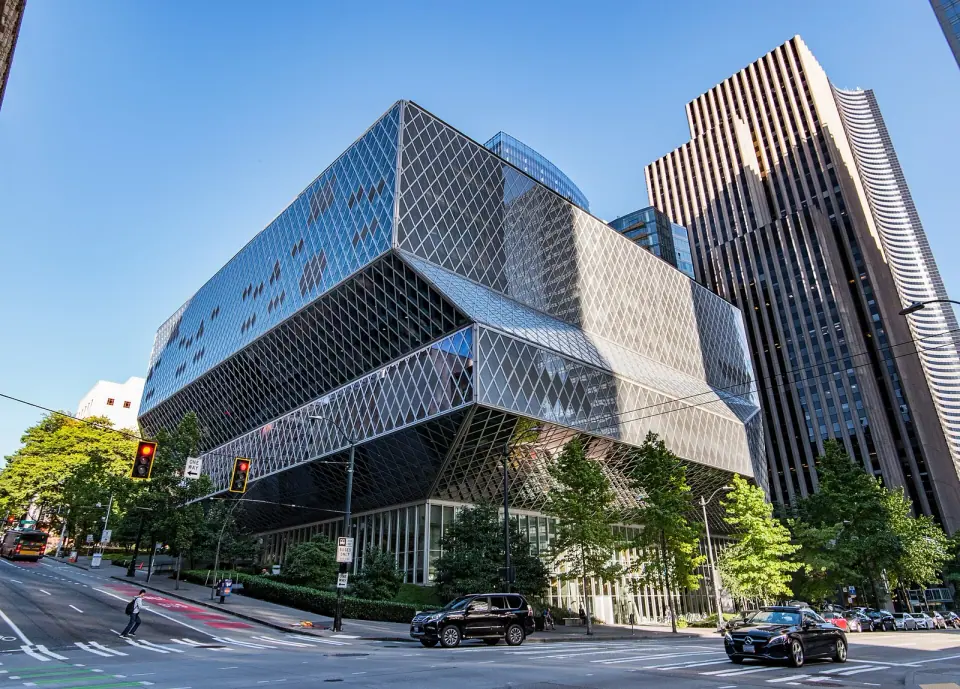
The club wandered a bit before landing on this corner. Its first home was part of James McNaught's 22-room mansion on Fourth Avenue, on ground now occupied by the Seattle Central Library. After the Great Seattle Fire of 1889 swept away most of the city, that house served as a temporary city hall, bringing still more city leaders into the club's circle.
A lease dispute then sent members to the Bailey Building at Second and Cherry, known today as the Broderick Building. From February 1893, they rented rooms in the newly built Seattle Theatre, on the spot where the Arctic Building now stands.
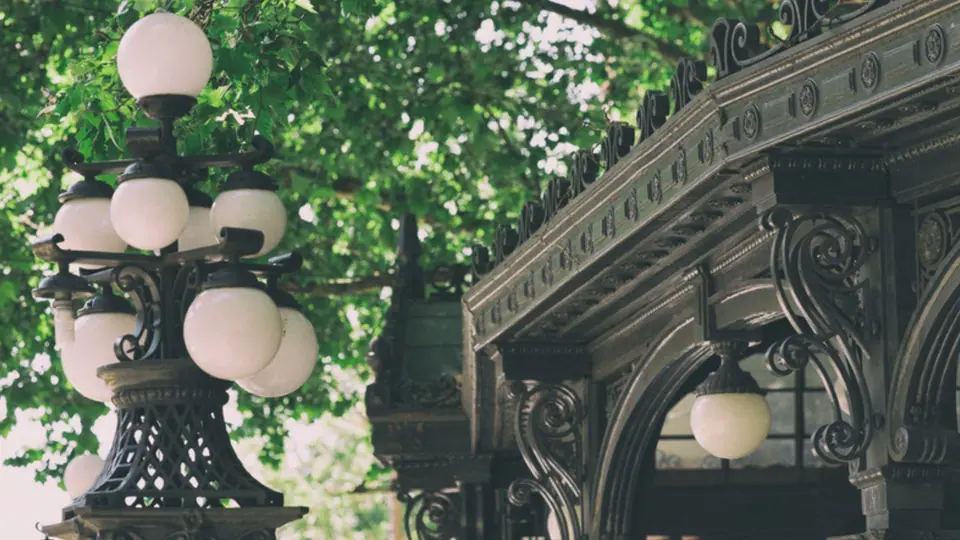
In 1903 the club bought its present property at Fourth Avenue and Columbia Street, and Spokane architect Kirtland Cutter designed the clubhouse that members moved into in 1904. Look for the work of Seattle architect Carl F. Gould, who added a south wing, the Georgian-style entrance and Art Deco details inside in 1929.
Landmark status
The clubhouse appears on the National Register of Historic Places. Through the Seattle Landmarks Preservation Board process, it became a City of Seattle landmark in 1987 under Ordinance 113459, and it holds number 147 on the city's list. Browse all Seattle landmarks to plan more stops like it.
Where Expeditions and World's Fairs Began
For generations, this has been a meeting place for people shaping Seattle and the wider Northwest. In 1899, many members of the Harriman Alaska expedition set out from here: E. H. Harriman, naturalists John Burroughs and John Muir, photographer Edward S. Curtis and geographer Henry Gannett left the club for the Bering Sea islands, the Siberian coast and the Bering Strait, then came back to celebrate in the same rooms.
Gifford Pinchot stayed as a guest during the trip that led to the founding of the United States Forest Service and Mount Rainier National Park. Members including club president I. A. Nadeau and landscape architect John C. Olmsted planned the Alaska-Yukon-Pacific Exposition of 1909, held on the University of Washington campus, where its landscaping remains one of the fair's lasting marks on the city.
Century 21 and APEC
About fifty years on, members took the lead on another world's fair. Eddie Carlson, president of Western International Hotels (later Westin), drove the planning of the 1962 Century 21 Exposition, and most organizing meetings happened in the clubhouse.
In 1993, President Bill Clinton held two Asian Pacific Economic Cooperation ministerial meetings here, one with Japan and one with China. These were the first APEC meetings held in the United States, and the first high-level U.S. meetings with China since the 1989 Tiananmen Square protests.
Edward S. Curtis Photographs
If you are searching for Rainier Club photos, you will likely land on Edward S. Curtis, a member from 1903 to 1920. Curtis traveled with Theodore Roosevelt when the president visited the then-new Mount Rainier National Park.
From that journey, the club holds more than 35 photogravures, along with 27 original signed platinum and silver prints by Curtis. For a look at the building itself, the University of Washington Libraries Digital Collections keeps architectural drawings of the clubhouse.
Prohibition, Depression and Liquor Laws
As a private club, the Rainier Club sat outside Seattle's early local limits on alcohol, until Washington went dry statewide in 1916 and the drinks stopped. Throughout Prohibition, the club kept restating a rule that barred employees from buying, selling or holding liquor for sale on the premises, a rule that said nothing about what members carried in themselves.
The Great Depression arrived soon after the 1929 wing opened, and over 36 months membership fell from 851 to 615. The club trimmed its initiation fee from $500 to $200 in 1932, then to $100 in October 1933.
Repeal brought a welcome turn, since the state's new liquor rules allowed drinks by the glass only in private clubs, giving membership fresh appeal. When Washington legalized liquor by the drink more broadly in 1948, the club cut its initiation fee the next year from $650 to $400.
Who Got In, and When
For most of its history, the club admitted only white men. The Japanese consul in Seattle held a courtesy associate membership from 1923 until the attack on Pearl Harbor in 1941.
- November 25, 1966: Saburo Nishimuro became the first Japanese American member.
- July 25, 1978: contractor Luther Carr became the first African American member.
- August 22, 1978: attorney Betty Binns Fletcher became the first woman member.
Fletcher was a name partner at the firm that later became K&L Gates and served as the first female president of the Seattle-King County Bar Association, from 1972 to 1973. As of 2008, the club counted 1,300 members.
Notable members and guests
The member roll has included several people from the Blethen family, owners of The Seattle Times, as well as art collectors Dr. Richard Fuller, founder of the Seattle Art Museum, and H. C. Henry, founder of the Henry Art Gallery. Guests have ranged from John Philip Sousa, Buffalo Bill Cody and William Howard Taft to General Douglas MacArthur and his father Lt. General Arthur MacArthur, Babe Ruth and Rear Admiral Robert E. Peary.
Visiting Today
The Rainier Club is still a private club, so check its official website for current details on events or access. You will find the clubhouse at Fourth Avenue and Columbia Street in the Central Business District, right in Seattle's downtown core.
Landmarks a short walk away
This stretch of downtown is packed with designated landmarks, so pair the clubhouse with a short architecture stroll. Within about a tenth of a mile, look for:
- The former First United Methodist Church
- The Leamington Hotel and Apartments
- The Central Building
- The YMCA Central Branch South Building
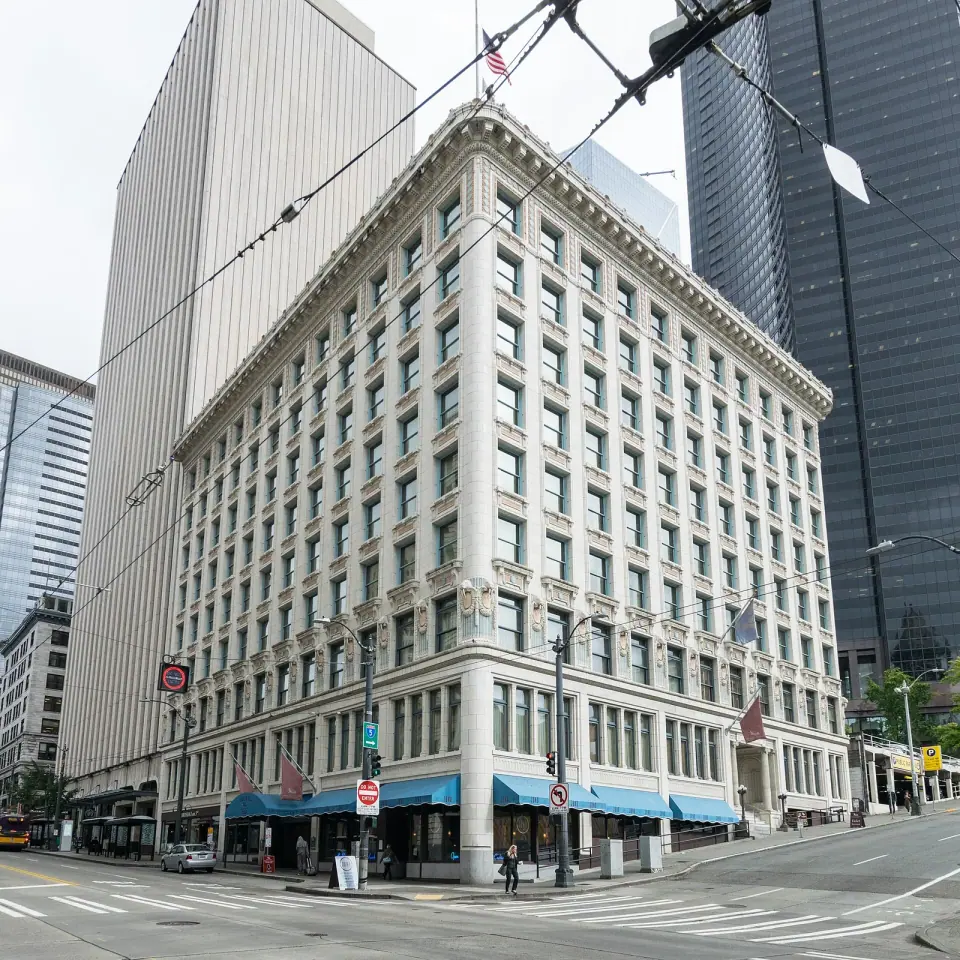
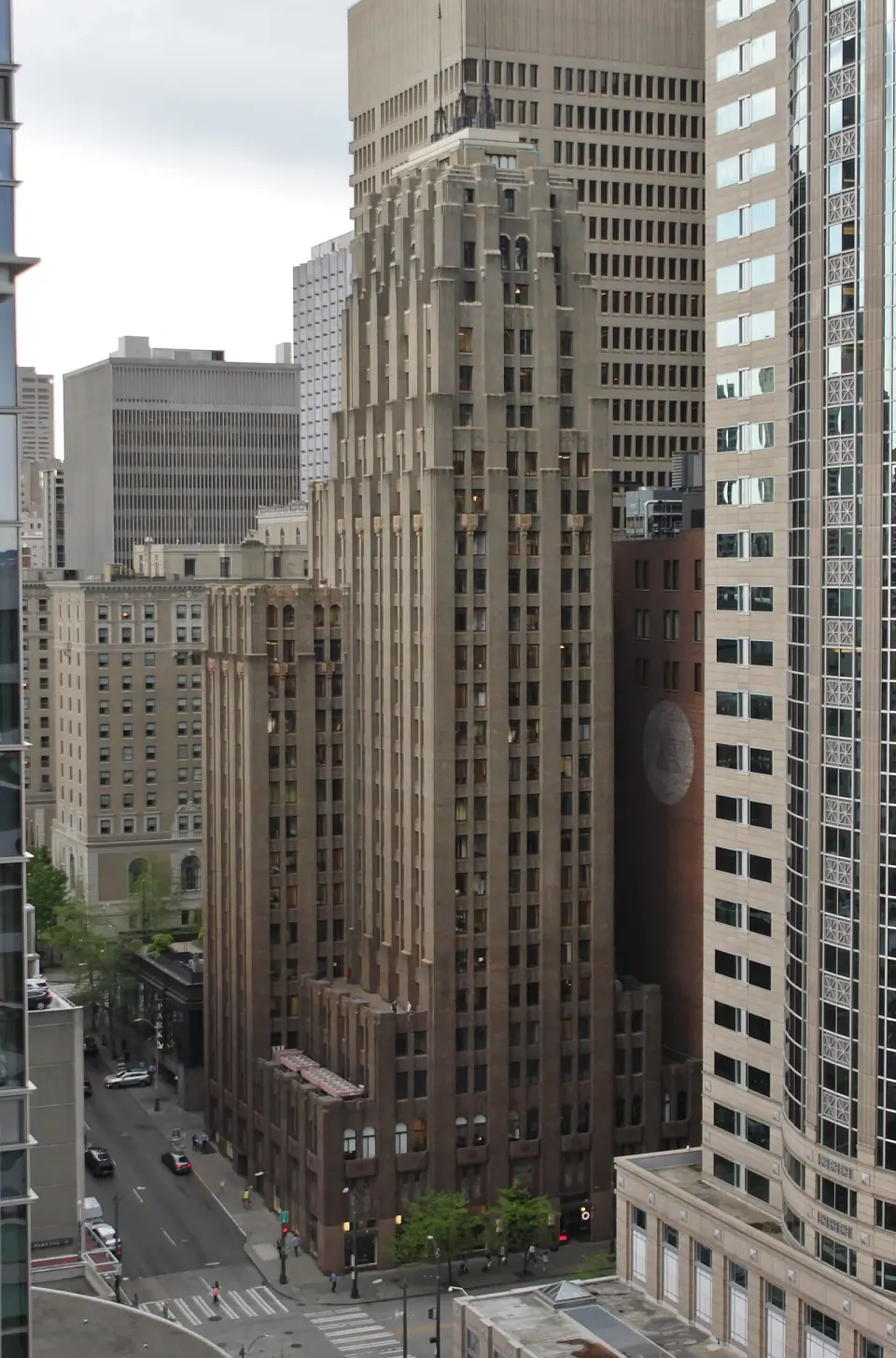
- The Arctic Building, on the site of the club's 1890s rooms
- The Chamber of Commerce Building
- The Dexter Horton Building
- The Seattle Central Library, on the site of the club's first home