What you get at the top
- The Loupe: the Space Needle bills it as the world's first and only revolving glass floor, so you can stand over the city and watch it turn slowly beneath your feet. A bar sits on the same level.
- Skyriser benches: lean back on glass benches set against floor-to-ceiling glass on the observation deck and look straight out over the city.
- The ride up: the elevator climbs to the deck in about 41 seconds, and the Needle says it usually takes around 30 minutes to get from the entrance to the top, counting security and the Building the Marvel exhibit on the way.
Space Needle vs. Kerry Park vs. Sky View Observatory
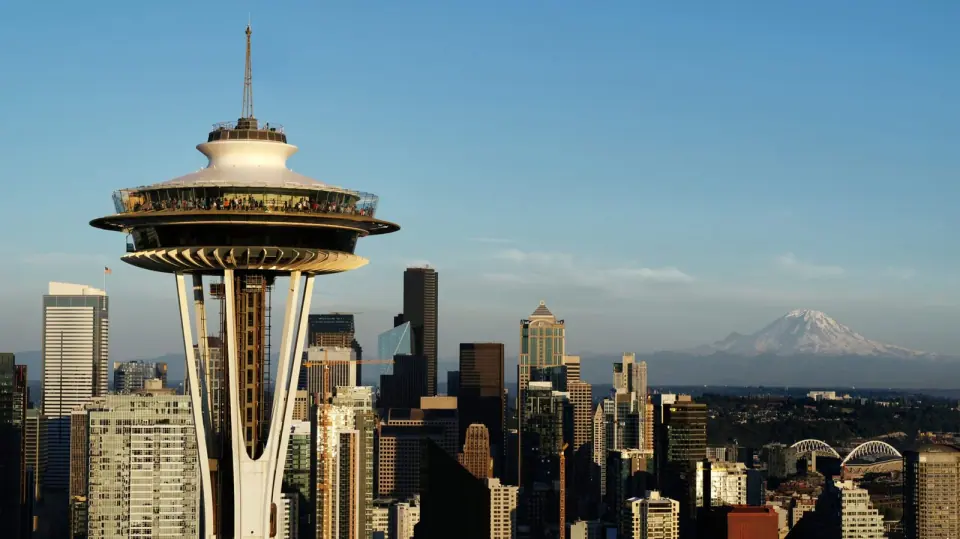
- Kerry Park: for the classic postcard shot with the Space Needle in it, walk up to this small Queen Anne park at 211 W Highland Dr. It is free, open from early morning until late evening, and the city notes that its view of Elliott Bay and the central city is especially popular with photographers at sunset and night.
- Sky View Observatory: for the highest view in town, ride to the 73rd floor of Columbia Center, the tallest building in Washington state, where you look down on the Space Needle itself from about 902 feet.
- Space Needle: pick the Needle for the experience as much as the view: the history, the fast glass elevator and The Loupe make it the most memorable of the three.
Many visitors do both: the Space Needle for the thrill and Kerry Park, up on Queen Anne, for the free sunset photo. Browse more lookouts in our guide to the best views in Seattle.
Best time of day to go
Go on the clearest day of your trip, and consider timing your visit for late afternoon so you see the mountains in daylight and stay for sunset and the city lights. The Needle is open year round, with longer hours on weekends, so check the plan your visit page for today's hours and the posted sunset time before you book.
Tickets and combo deals
Buy tickets on the official Space Needle website, where you can also find bundles that pair the tower with Chihuly Garden and Glass next door on the same day. The Space Needle is also part of Seattle CityPASS, which can make sense if you plan to see several major attractions. Prices change, so compare the current options before you buy.
How tall is the Space Needle?
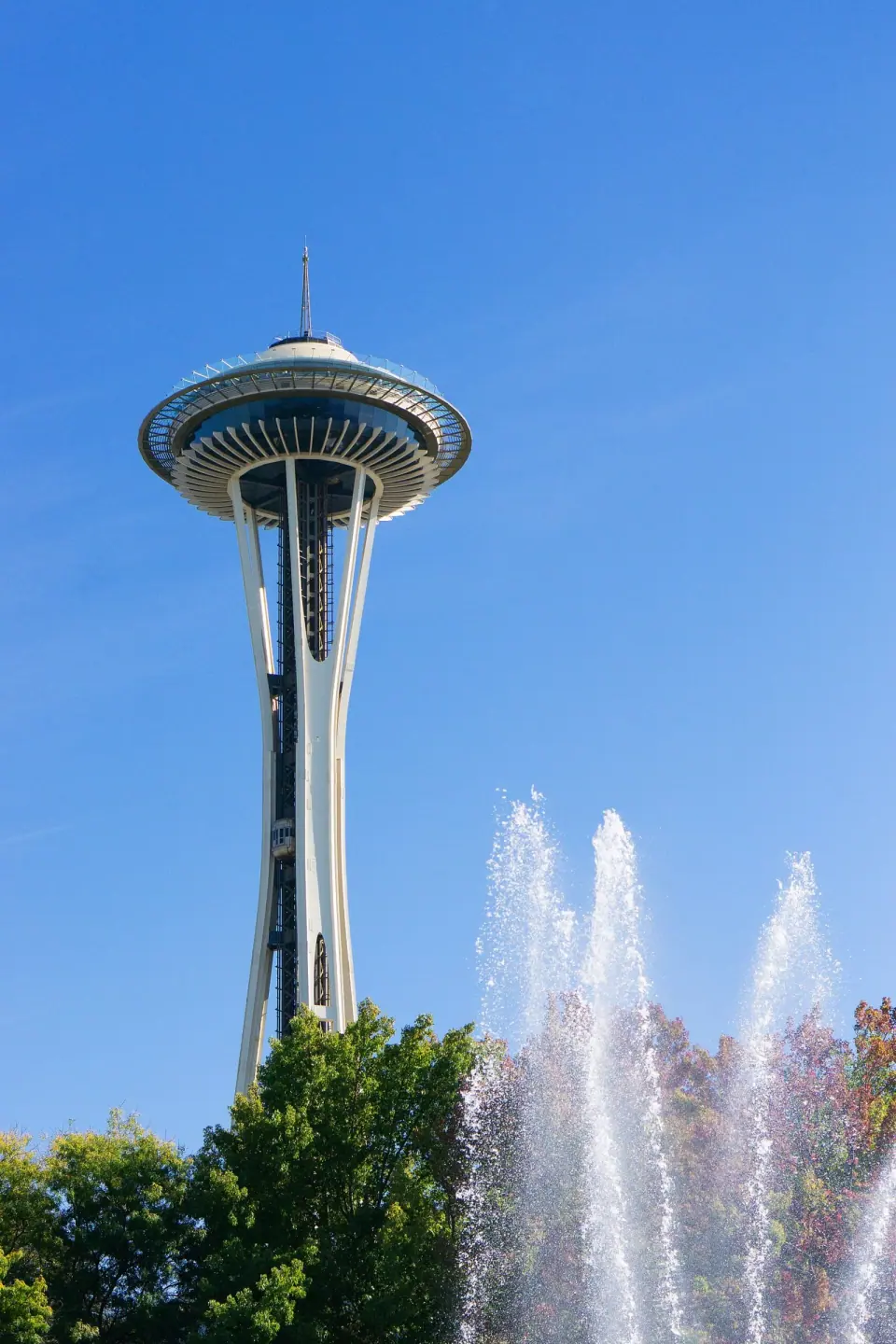
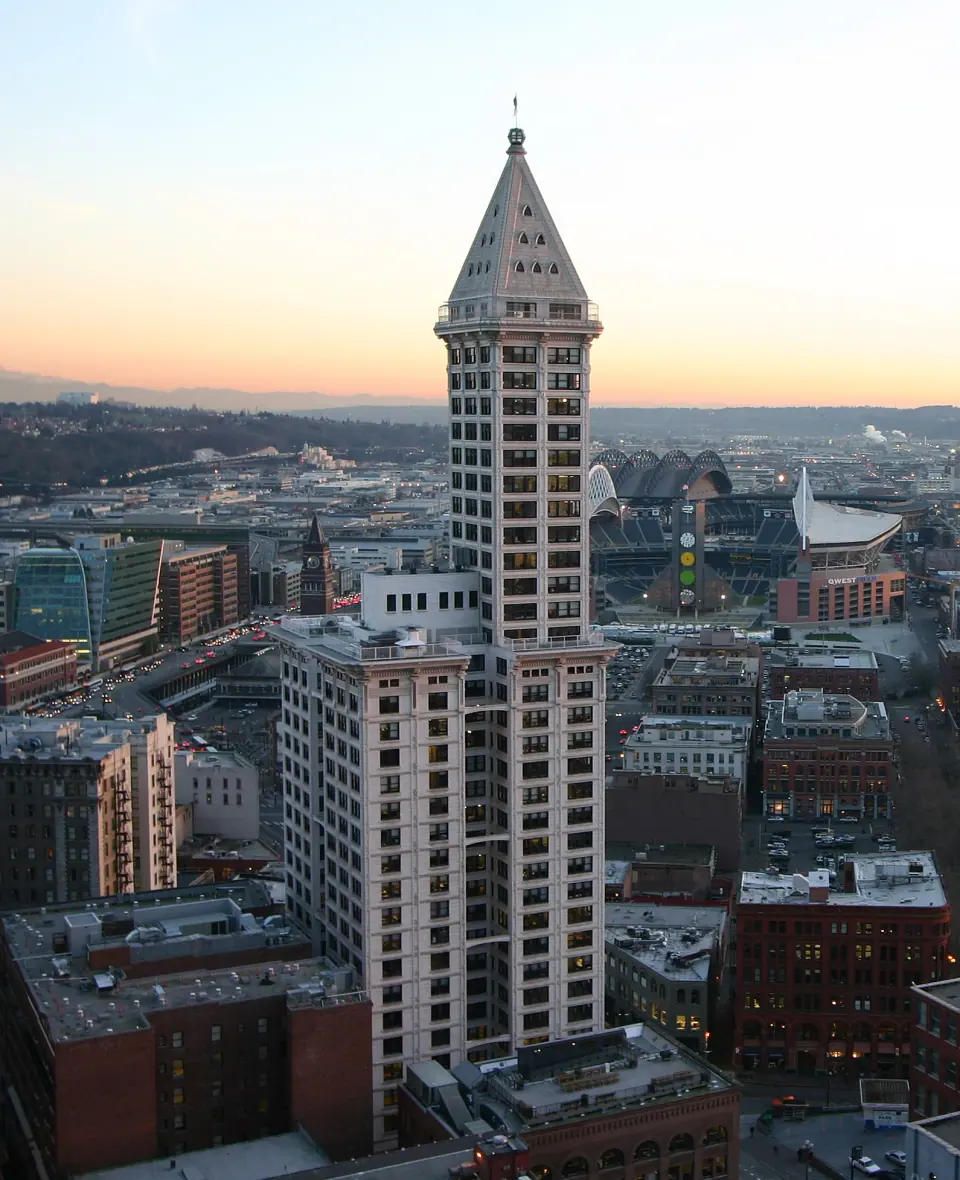
The Space Needle rises about 605 feet (184 meters) and measures 138 feet across at its widest. When it opened, no building west of the Mississippi River stood taller, and it took the West Coast height title from downtown's Smith Tower. Today taller buildings crowd the skyline, including the 967-foot Columbia Center.
Height is only part of the engineering story. The tower was designed for winds up to 200 mph, twice what the 1962 building code demanded, and it moves only about an inch for every 10 mph of wind. It is also built to ride out earthquakes approaching magnitude 9. During the 2001 Nisqually quake, water sloshed out of toilets, but the structure held.
- Total height: about 605 feet
- Observation deck: 520 feet above the ground
- Elevator ride to the deck: 41 seconds
- Stairs, basement to deck: 848 steps
- Weight: 9,550 short tons above ground, matched by a foundation of the same weight
A napkin sketch, a flying saucer and a one-year deadline
The Space Needle began with Edward E. Carlson, who chaired the 1962 fair and ran Western International Hotels. After seeing the Stuttgart Tower in Germany, he sketched a balloon tethered to the ground. Architect John Graham, known for Northgate Mall, contributed a flying saucer form and turned the planned restaurant into a revolving one.
Victor Steinbrueck gave the tower its hourglass waist and three-legged stance. Names floated before the final choice included "Star Tickler," "Top Hat" and "Big Skookum."
Finding a site
The city did not pay for the tower, so private backers had to buy land inside the fairgrounds. In 1961, with the search nearly abandoned, they found a 120-by-120-foot lot holding fire and police alarm equipment, once home to a neighborhood fire station. The city sold it for $75,000, leaving roughly a year until opening day.
Building around the clock
Crews worked day and night. Filling the 30-foot-deep foundation took 467 concrete trucks a full day, and 72 bolts, each 30 feet long, anchor the tower to it. The finished Needle cost $4.5 million and was completed in April 1962. Its last elevator car went in the day before the fair opened on April 21.
The original colors had space-age names: Orbital Olive for the body, Astronaut White for the legs, Re-entry Red for the saucer and Galaxy Gold for the roof. During the fair, close to 20,000 people a day rode to the top, about 2.56 million in total.
What you see from the observation deck
From 520 feet, the views take in downtown's towers, Elliott Bay and the islands of Puget Sound. On a clear day, Mount Rainier and Mount Baker anchor the horizon, with the Olympic Mountains to the west and the Cascades to the east.
The top of the Space Needle was reworked in a privately funded $100 million renovation called the Century Project, which began in 2017. Floor-to-ceiling glass replaced the old observation windows, bringing the deck closer to the original 1962 sketches. The restaurant level gained an all-glass floor, and elevator capacity and energy systems were upgraded.
Lights, fireworks and a Wheedle
Since December 31, 1999, a skyward beam called the Legacy Light, or Skybeam, has shone from the top on national holidays and special Seattle occasions. The idea came from the 1962 fair poster. It is lit fewer than a dozen times in a typical year, though it stayed on for eleven straight days after the September 11, 2001, attacks.
Each New Year's Eve, the Space Needle hosts a midnight fireworks show, watched by thousands from the Seattle Center grounds and broadcast on KING-TV. The roof has also worn special paint jobs over the years, from a Huskies logo after the 1992 Rose Bowl to Galaxy Gold for the 50th and 60th anniversaries.
Local kids may know the tower through Stephen Cosgrove's 1974 book Wheedle on the Needle, about a furry creature living on top whose red nose blinks at night. The Wheedle later became the Seattle SuperSonics mascot.
Landmark status and the address
The Space Needle is City of Seattle Landmark No. 211, designated under Ordinance 119428. It was 37 years old when the Landmarks Preservation Board acted, making it the youngest landmark in the city at the time. Its street address is usually given as 400 Broad Street, while the city's landmark designation lists 219 Fourth Avenue.
Planning a visit to the Space Needle
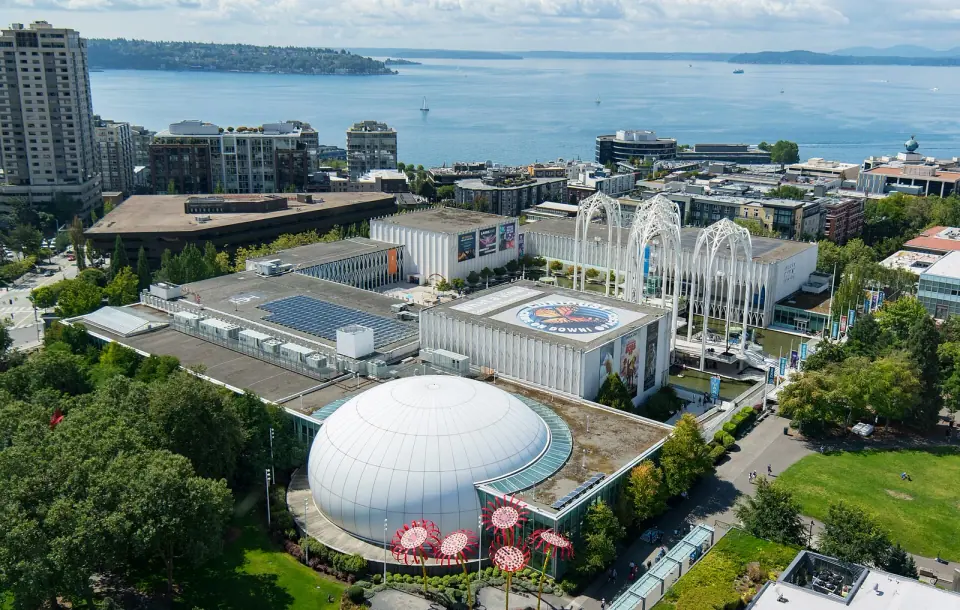
For current ticket prices, passes and opening hours, check the official Space Needle website before you go. The tower stands within Seattle Center, so it pairs easily with a walk around the Lower Queen Anne neighborhood and the rest of the campus in our Seattle Center guide. Stay close by with our list of hotels near the Space Needle.