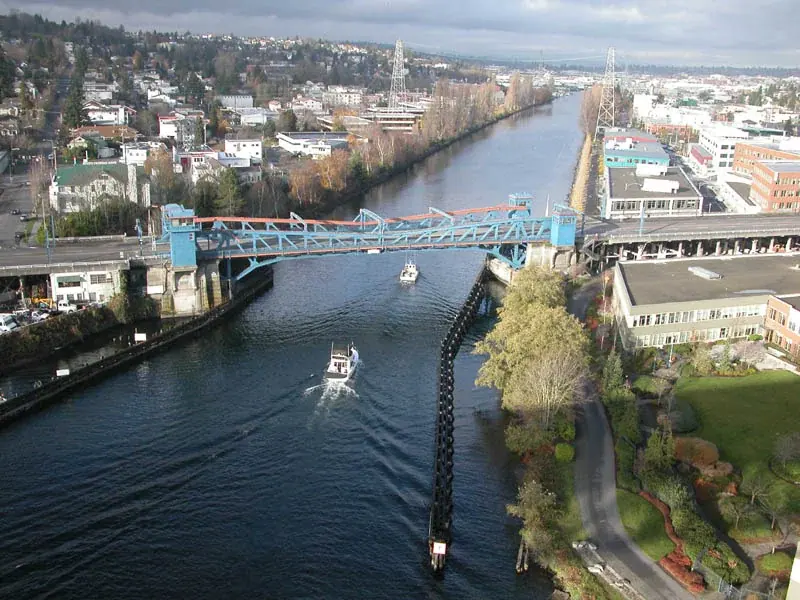
That count makes the Fremont Bridge the most frequently opened drawbridge in the United States, and one of the busiest bascule bridges in the world. Federal law gives boats the right of way over cars, buses and bikes. The one exception is rush hour, when the bridge stays closed to most water traffic so commuters can cross.
The bridge was busy on land, too. Before the Aurora Bridge was built nearby in 1932, the Fremont Bridge carried more vehicle traffic than any other bascule bridge in the country.
Opening Day in 1917 and the Bridges Before It
The current Fremont Bridge opened on Friday, June 15, 1917, and cost $410,000 to build. The very first users were the "owl cars," the final late-night trolley runs. After 5 a.m. that same day, the bridge opened to everyone else.
People sometimes give the opening date as July 4, 1917. That was actually the day the Lake Washington Ship Canal was dedicated, and because the bridge crosses the canal, the two dates often get mixed up.
The Fremont Bridge was the first of four city-owned bascule bridges over the canal. The others are the Ballard Bridge (1917), the University Bridge (1919) and the Montlake Bridge (1925).
Two trestles and a broken dam
Today's bridge is the third one at this crossing. A low trestle went up around 1890 or 1891. In 1911, with the ship canal on the way, a taller trestle replaced it, and that second bridge was always meant to be temporary.
It lasted even less time than planned. On the afternoon of March 12, 1914, the Fremont dam that held back Lake Union failed. Over roughly a day the lake dropped nine feet, leaving boats and floating homes stranded and breaking the center of the second Fremont bridge.
The nearby Stone Avenue Bridge, which included a streetcar trestle running from Westlake Avenue to Stone Way, survived. Streetcars that had used the Fremont crossing were sent over that trestle until the present bridge was finished.
From Dull Green to Fremont Orange and Blue
The Fremont Bridge started out painted a dull green. In 1972 the Fremont Improvement Committee chose a new shade called Fremont Orange, and residents signed off on the change.
The pairing of blue and orange came later. Voters at a 1985 street fair picked that color scheme, so the look of the bridge is something the neighborhood literally chose for itself. The city began a fresh repainting of the bridge in 2014.
Restoration, New Machinery and Art Lighting
In 2006 the Fremont Bridge entered a $41.9 million restoration. Crews replaced the approaches and the maintenance shop and renovated the mechanical and electrical systems that raise and lower the leaves. The new approaches were done in May 2007, and testing continued into spring 2008.
In February 2018 the bridge gained a permanent art installation through an artist residency program tied to the centennial of the Fremont Bridge and two other ship canal bascules. The Fremont Bridge received a dynamic lighting design, planned as the first of three. The Ballard and University bridges are slated for their own installations if funding comes through.
A Major Crossing for Bikes
The Fremont Bridge is a key route for people on bikes. A bicycle counter was installed on the bridge in 2012, the first of what had grown to twelve counters across Seattle by 2018.
The numbers are big. In 2019 the counter logged 1.12 million bike trips over the bridge, up 13 percent from the year before.
A Landmark Twice Over
The Seattle Landmarks Preservation Board lists the Fremont Bridge as City of Seattle landmark number 27. It was designated in 1981 under ordinance 110347. A year later, in 1982, the bridge was added to the National Register of Historic Places.
For deeper history, the William C. Ruegnitz Papers at the Labor Archives of Washington, part of University of Washington Libraries Special Collections, include details on the bridge's location, a list of materials and their estimated cost. You can also browse other designated landmarks across Seattle.
Walking Around the North End of the Bridge
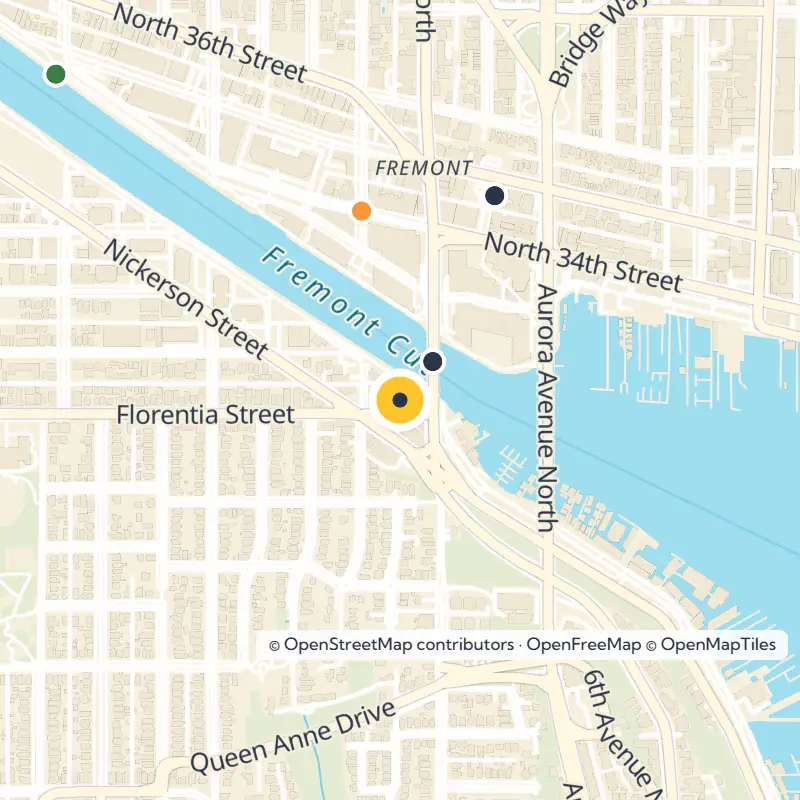
The Fremont side of the bridge is dense with places to stop. All of these are within about a third of a mile in a straight line:
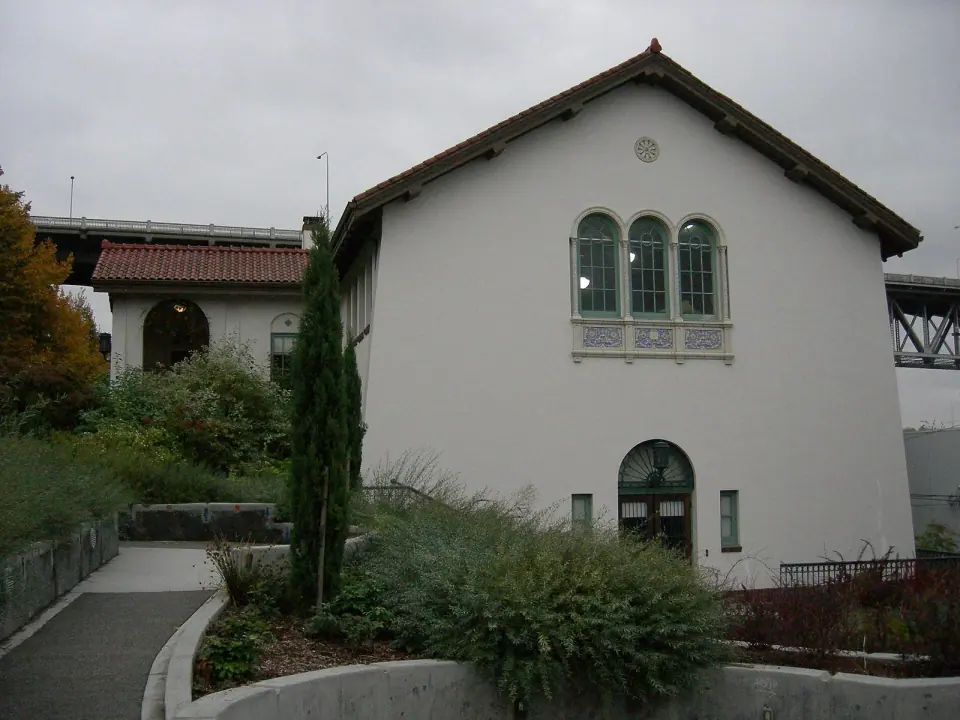
- Bleitz Funeral Home, a city landmark, under 0.1 mile away
- George Washington Memorial "Aurora" Bridge, a city landmark, about 0.1 mile away
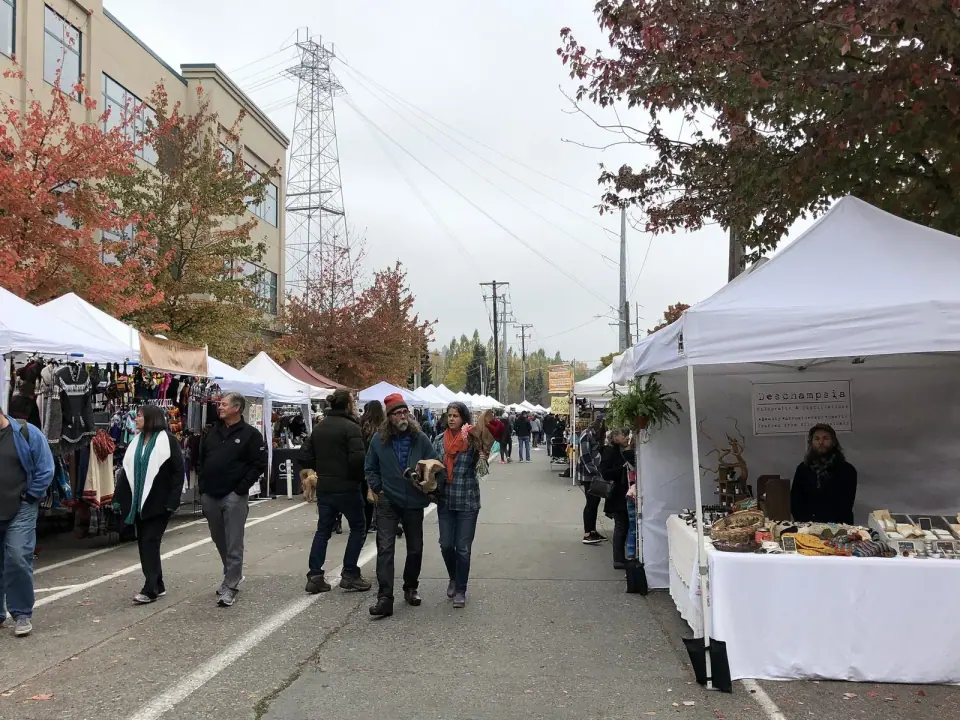
- Fremont Sunday Market, a farmers market, about 0.2 mile away
- A. B. Ernst Park, about 0.2 mile away
- Fremont Library, a city landmark that houses the Fremont Branch library, about 0.2 mile away
- Fremont Hotel, a city landmark, about 0.2 mile away
- Troll's Knoll, a community garden, about 0.3 mile away
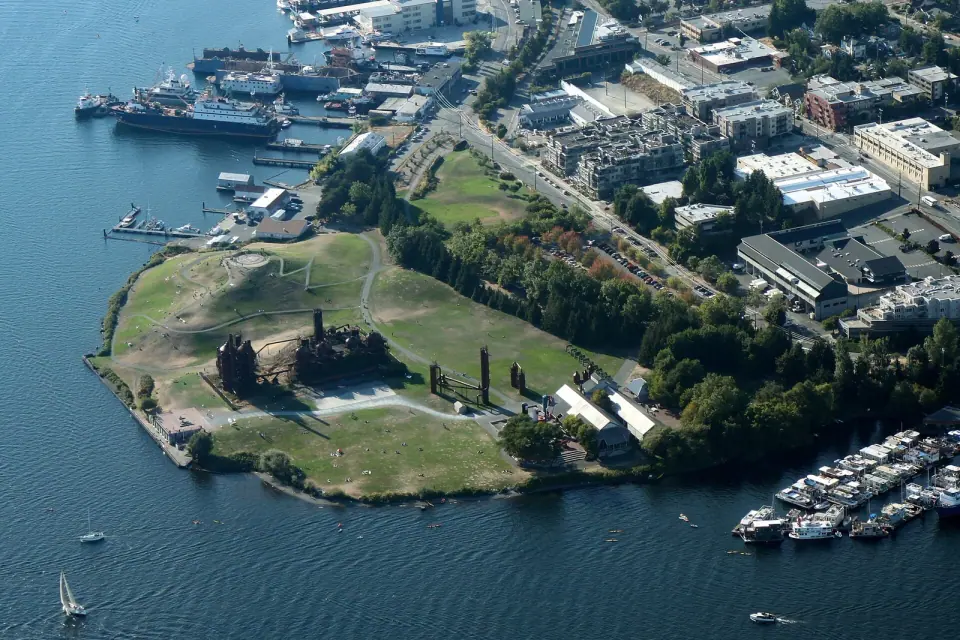
Seeing the Fremont Bridge and the Aurora Bridge together makes it easy to picture the 1932 shift, when the high span overhead took over much of the traffic the drawbridge once carried. For more stops elsewhere in the city, consider Gas Works Park, another Seattle landmark, or Kerry Park.