When an economic panic hit in the early 1890s, the Nordhoffs kept sacks of pennies on hand to give shoppers small discounts and hold on to their business. By 1896 the store was thriving enough to move closer to the business district, settling into an L-shaped building at 2nd Avenue and Pike Street.
Josephine Takes the Lead
Edward died in 1899 at age 40, probably of tuberculosis. Two years later Josephine remarried, and her new husband, Frank McDermott, ran the store alongside her and Edward's brother, Rudolph Nordhoff. Together the three grew sales from $338,000 in 1900 to $8 million in 1923, enlarging the Second and Pike store in 1902 and again in 1911.
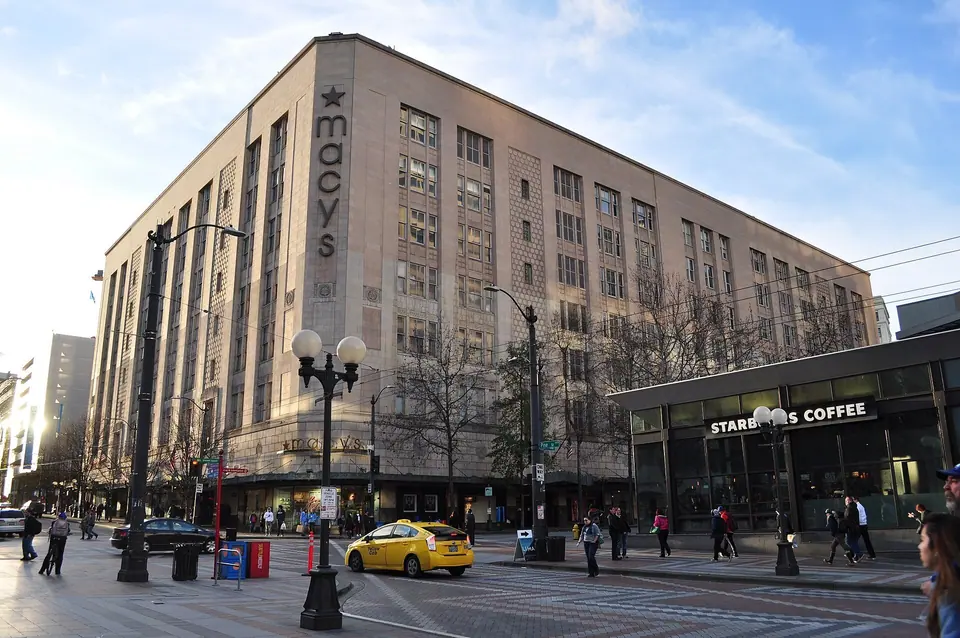
In 1929 The Bon Marche opened at Third and Pine, the location tied to today's landmark address. That same year the company was sold to Hahn Stores of Chicago.
Why It Is a City Landmark
The city designated the Bon Marche building a landmark in 1989 under Ordinance 114772, and it holds the title of Landmark No. 108 on the list kept by the Seattle Landmarks Preservation Board. The designation places the building within Seattle's protected historic fabric, alongside many other downtown structures just a short walk away. To plan more stops, browse our guide to all Seattle landmarks.
How The Bon Became Macy's
The store held on to its original name through several owners. Allied Stores bought Hahn Stores in 1934, and both companies ran it as The Bon Marche. After World War II the chain expanded, and in 1949 it anchored Northgate Mall, one of the world's first modern shopping centers.
By 1986 locals simply called it "The Bon," and the chain counted about 40 stores across the Northwest. Federated Department Stores, owner of Macy's, took over in 1992 and renamed the chain Bon-Macy's in 2003, with new signs reading only Macy's in place by January 2005. In 2008 the former Bon Marche stores were folded into Federated's Macy's West division, based in San Francisco.
The One Day Sale Jingle
Ask a longtime Seattleite about the store and you may hear a tune. Starting in the 1990s, The Bon Marche promoted its One Day Sale with a jingle based on Harry Belafonte's "Day-O," which ran on television and radio into the 2000s and became a piece of local pop culture.
Spot the Last Original Sign
Head to the corner of 4th Avenue and Olive Way and look up. Above the north entrance of the former flagship, one small piece of original Bon Marche signage survives, the only remaining example on the building and a quiet reminder of the name Seattle used for more than a century.
Nearby Landmarks Around 300 Pine Street
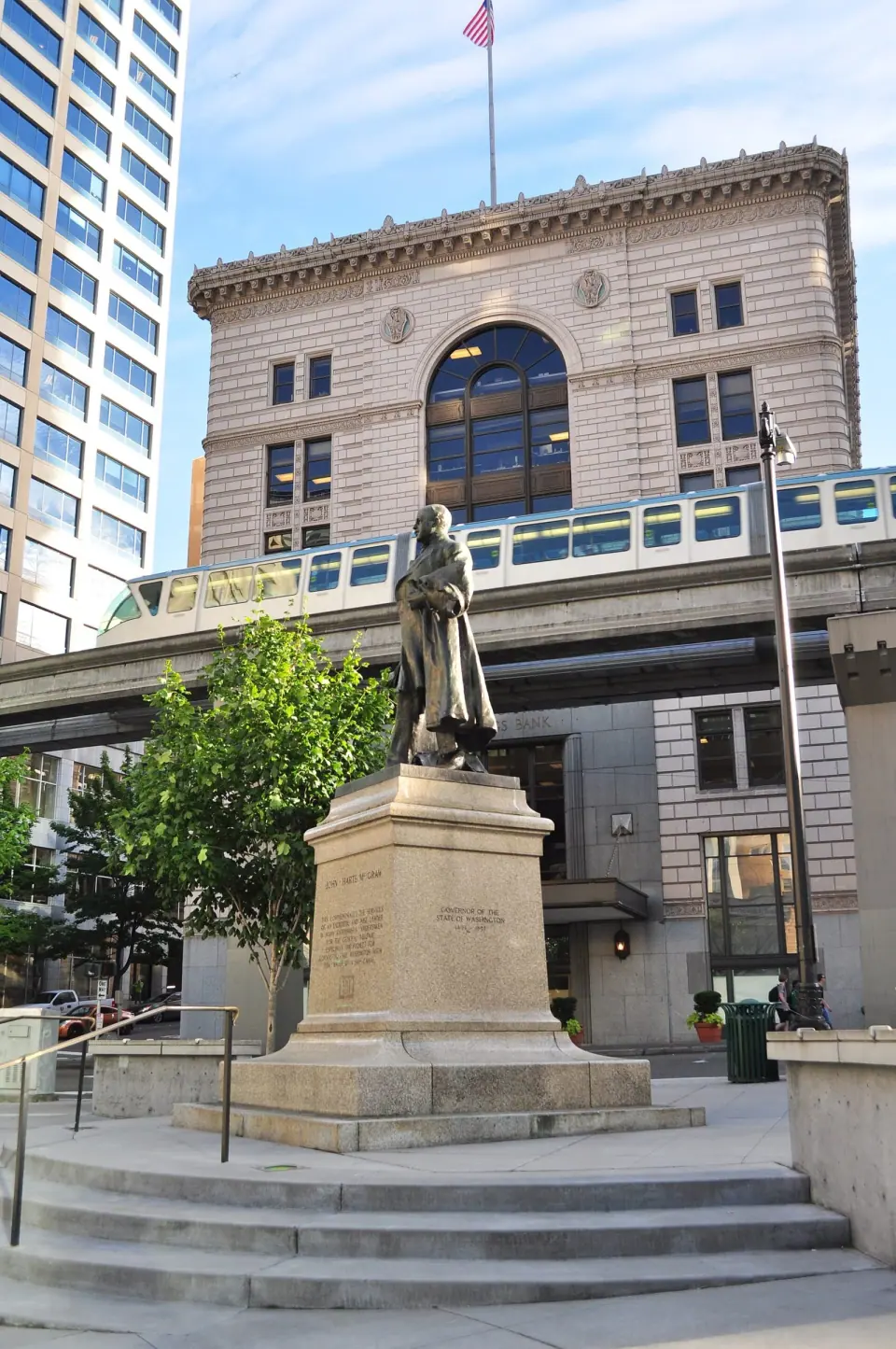
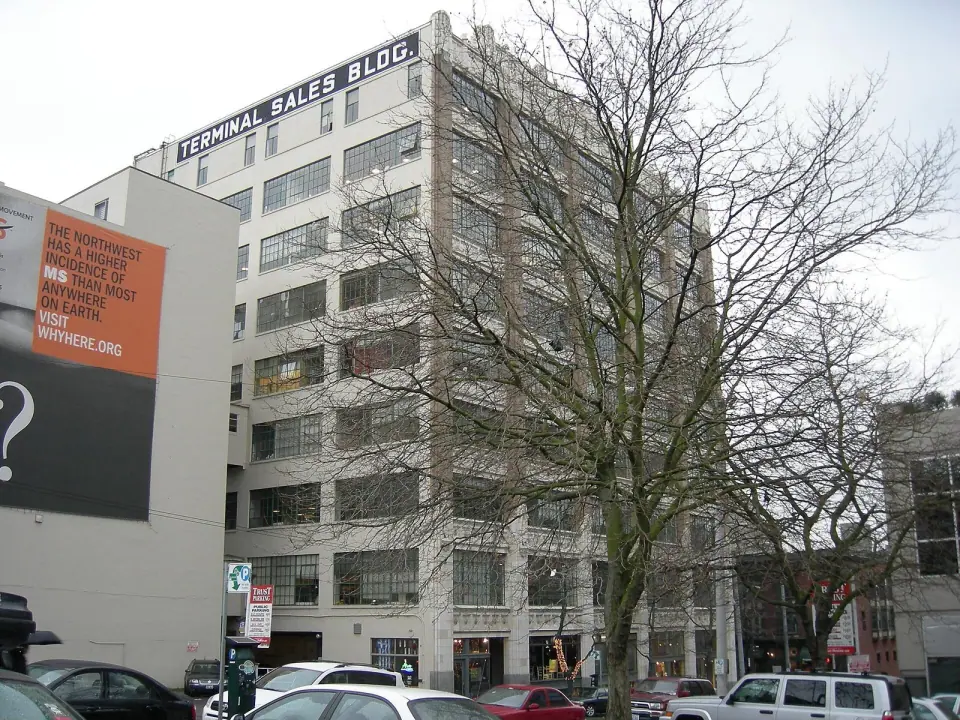
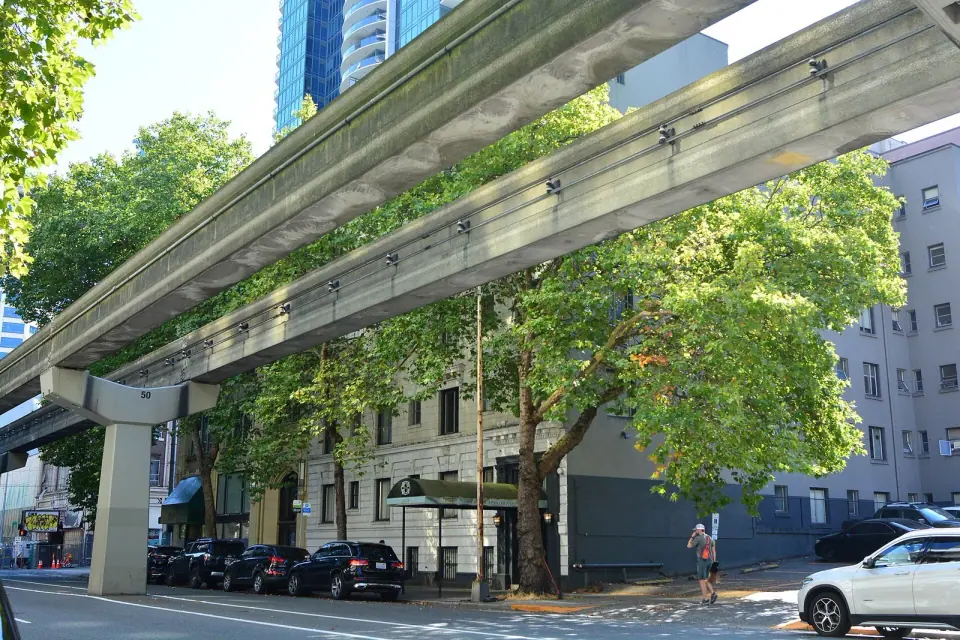
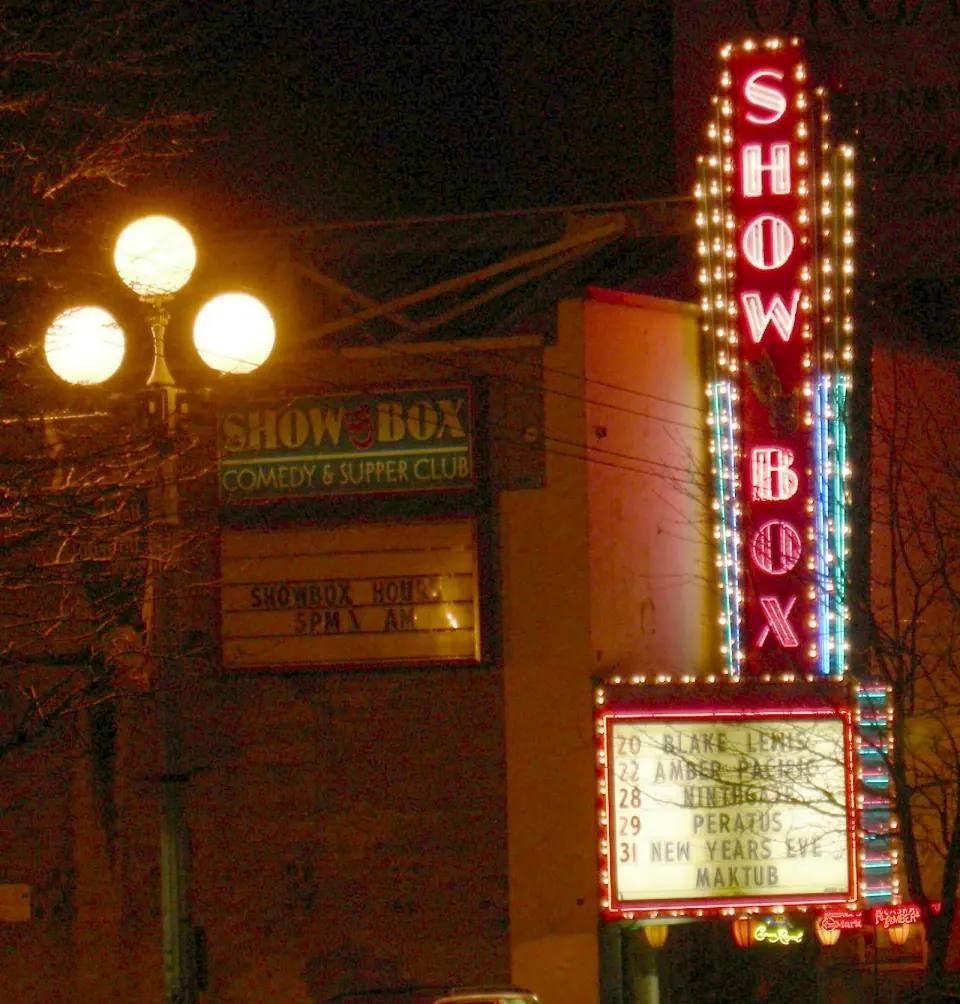
Stroll out from the Bon Marche and you will find a dense cluster of protected sites, all less than a tenth of a mile away. A short loop on foot takes in several of them:
- Securities Building
- Street Clock: Century Square
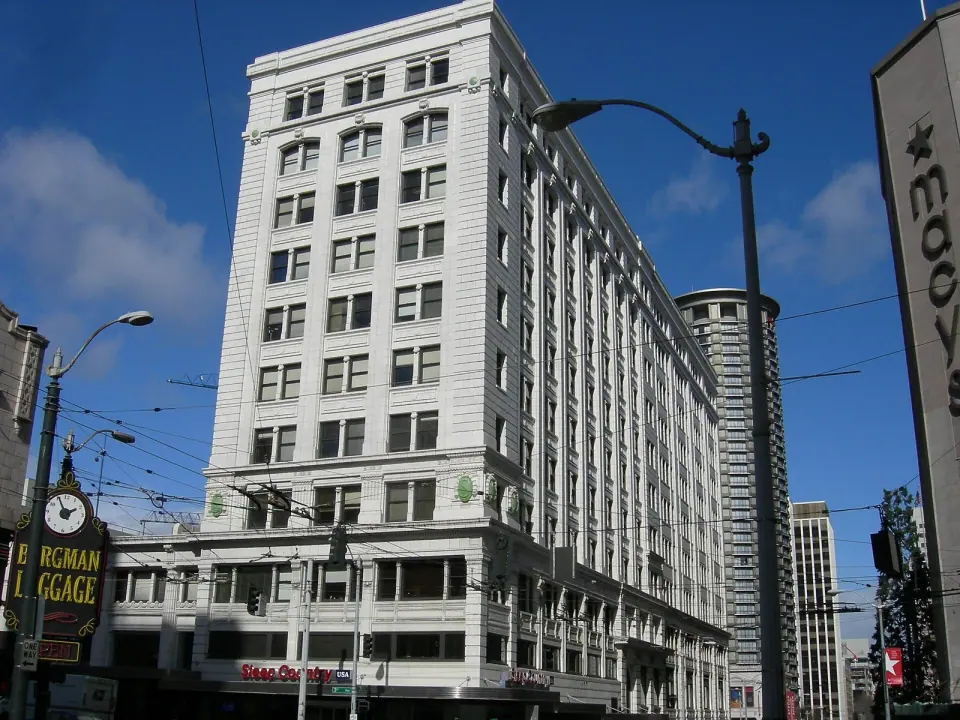
- Donahoe Building / Bergman Luggage
- Olympic Tower
- White Garage
- Josephinum/New Washington Hotel
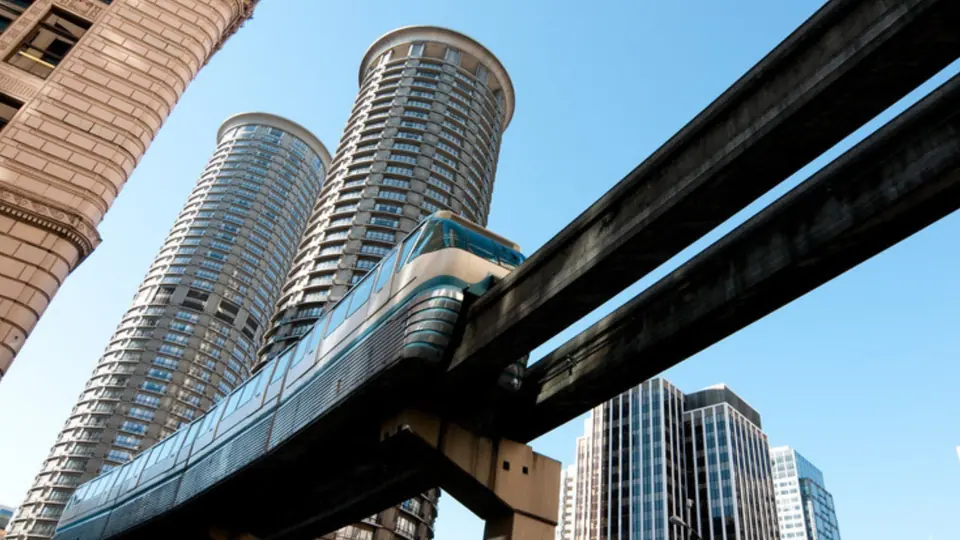
- Seattle Monorail
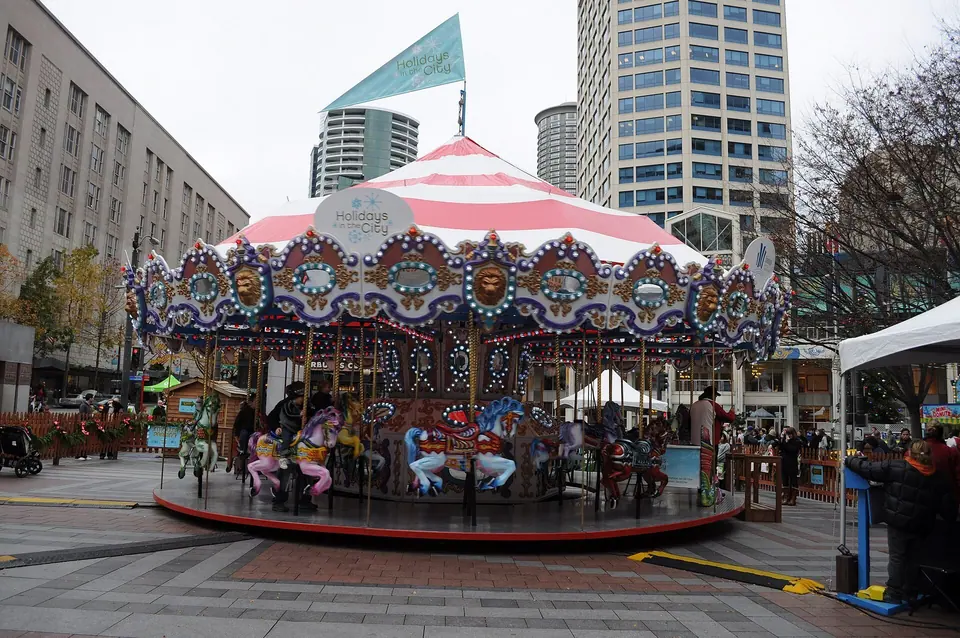
Pause between stops at Westlake Park, right nearby. To keep exploring the surrounding blocks, dip into our Central Business District neighborhood guide.