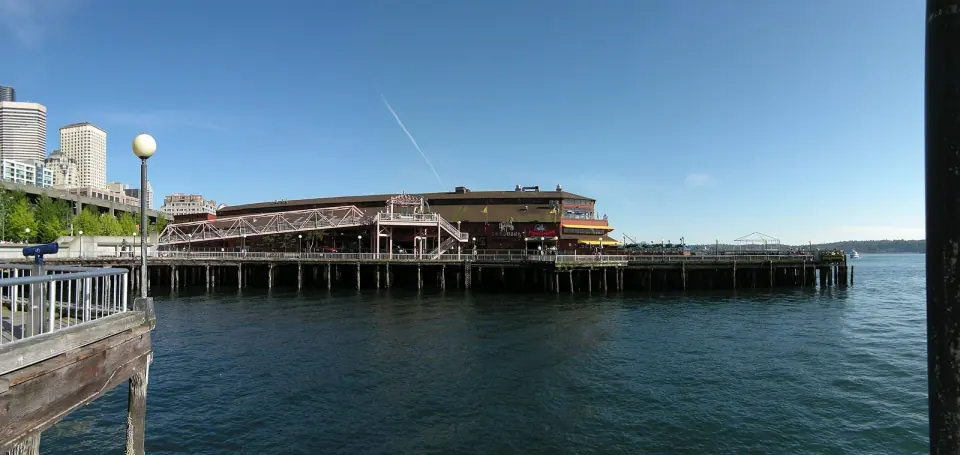
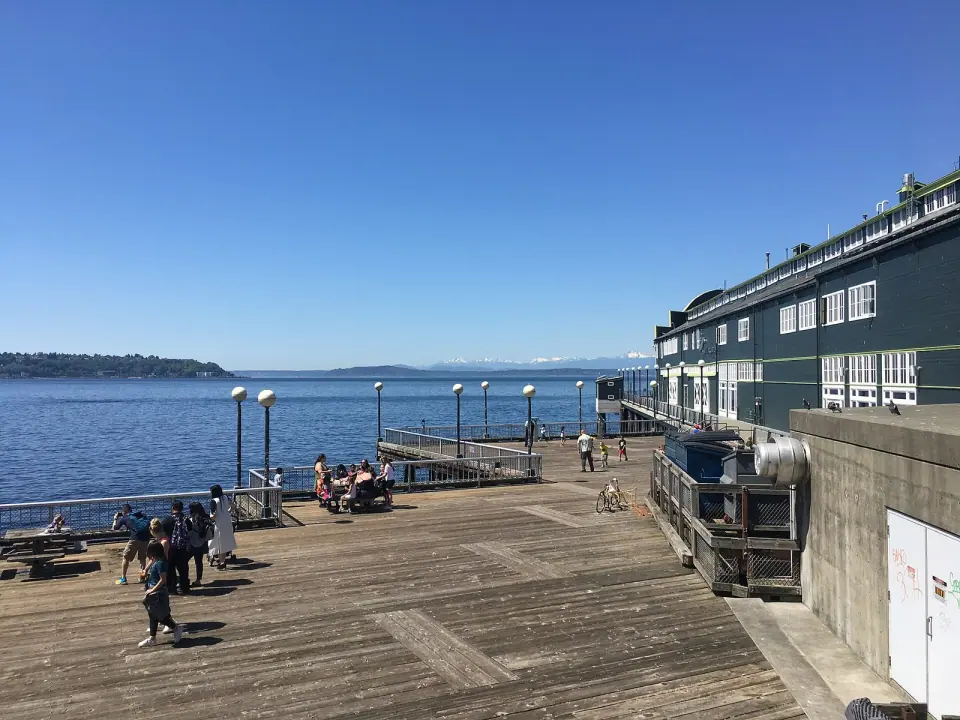
A Pier of Many Names
The number on the sign has not always read 54. The pier began life as Pier 3 and took its current number during World War II, when the city renumbered Seattle's piers.
Along the way, it collected a few nicknames worth knowing as you explore its story:
- Galbraith dock and Galbraith Bacon dock, after the firm that leased it starting in 1900
- Mosquito Fleet dock, after the many small, mostly wooden local steamships that tied up here until the 1930s
How the first pier was built
Picture Pier 3 at 300 by 150 feet, topped by a cargo warehouse measuring 284 by 130 feet that could store 10,000 tons. Two spur railway tracks ran out onto the pier, and the water alongside reached depths of 25 to 40 feet.
Galbraith, Bacon and the 1910 Fire
In 1900, Galbraith, Bacon and Co. took over the lease on Pier 3. James Galbraith and Cecil Bacon ran the firm as wholesale dealers in grain, hay, plaster, concrete and building materials.
The Belltown fire of 1910 came close to claiming the pier. Pier 3 made it through, but the nearby Galbraith, Bacon warehouse burned and 36 of the company's horses died, while workers who had been asleep in the building managed to rescue two horses, Don and Frank.
By 1917, ownership of Pier 3 had passed to the Northern Pacific Railway, which also held Piers 1 and 2.
Home Port of the Mosquito Fleet
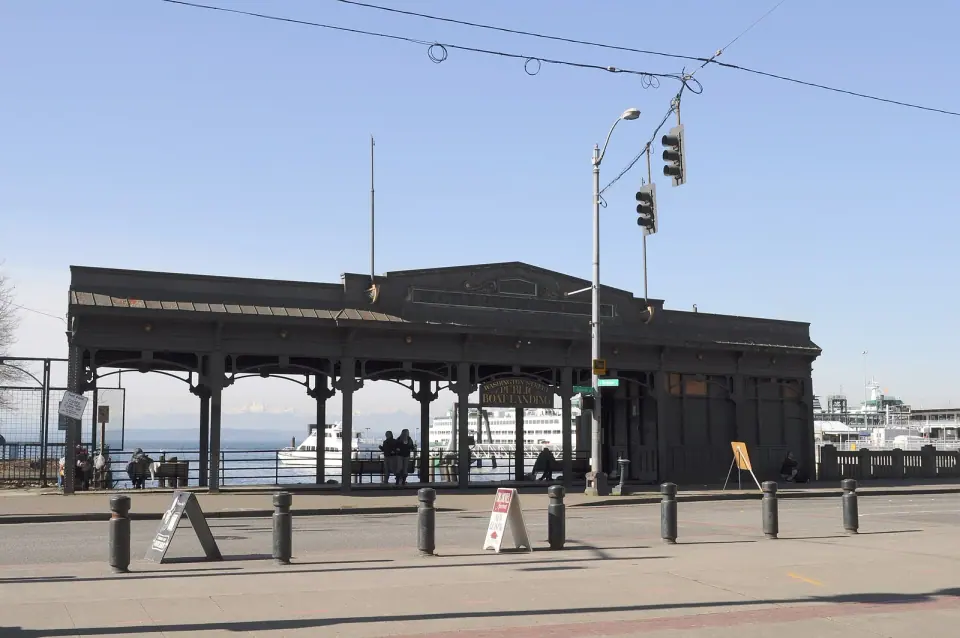
Imagine a long roster of Puget Sound shipping lines sailing from this one terminal. Pier 3 served Island Transportation Co., Merchants Transportation Co., the Puget Sound Naval Station Route, Pollard Steamship Co. and the Kitsap County Transportation Company.
Walter Galbraith, son of James Galbraith, ran the Kitsap County Transportation Company, a rival to the Puget Sound Navigation Company sailing from Colman Dock. His wooden steamers, including the Kitsap, the Utopia, the Reliance and the Hyak, called Pier 3 home. The Magnolia, Mohawk, Florence K, Dode and Monticello 2 also stopped at the pier.
Farm goods bound for Pike Place Market
Pike Place Market was within walking distance, and much of the food sold there came in by steamer through Pier 3. Farmers, or their wives, rode in each morning and headed home in the evening, carrying live hens, dressed poultry, eggs, milk in galvanized cans, sacks of potatoes, bundled rhubarb and crated fruit.
Travel along the waterfront offered little comfort in those days. Pier 3 stood out as one of the first docks to give passengers a small waiting room.
Seaplanes, Seafood and Ivar Haglund
From 1929 to the mid-1930s, the pier took to the air as general headquarters of Gorst Air Transport. The company ran a seaplane service from Pier 3 using Keystone-Loening planes, and it also operated from Bremerton across the Sound.
By 1944, the Washington Fish and Oyster Company (now Ocean Beauty Seafoods) had bought the pier and become its main tenant. Engineers at Reese and Callender Associates helped reinforce the structure and adapt it for that work.
Ivar's Acres of Clams
The pier's best-known chapter opened in 1938, when Ivar Haglund rented the northeast corner of the pier shed. There he set up a one-room aquarium with a small fish and chips stand, the beginnings of Ivar's Acres of Clams.
Around 1945 the aquarium closed, and the restaurant moved to the southeastern corner with a Streamline Moderne redesign. In June 1966, Haglund bought Pier 54 for $500,000, turning the Washington Fish and Oyster Company into his tenant. Several rounds of redesign and expansion followed, bringing the restaurant to roughly its present layout before Haglund died in 1985.
What to Visit at Pier 54 Today
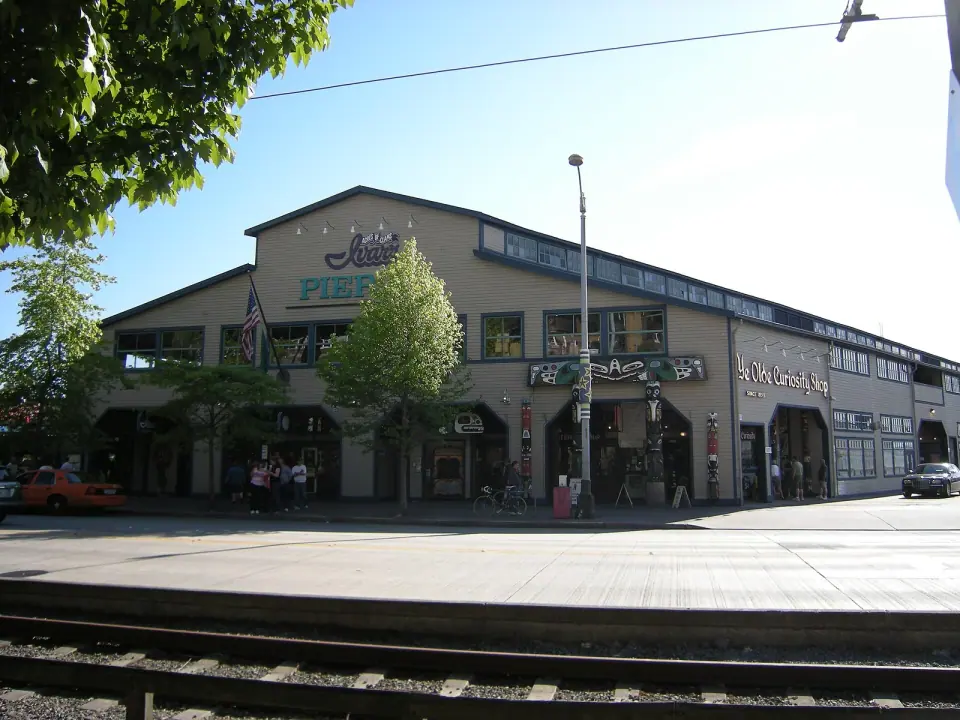
Since 1988, two longtime waterfront businesses have shared the pier, so plan time for both:
- Ivar's Acres of Clams, the restaurant that grew from Haglund's 1938 fish and chips stand
- Ye Olde Curiosity Shop, founded in 1899 and one of the oldest businesses still operating on the Seattle waterfront
Check with each business directly for current hours and details before you go.
Landmarks a Short Stroll Away
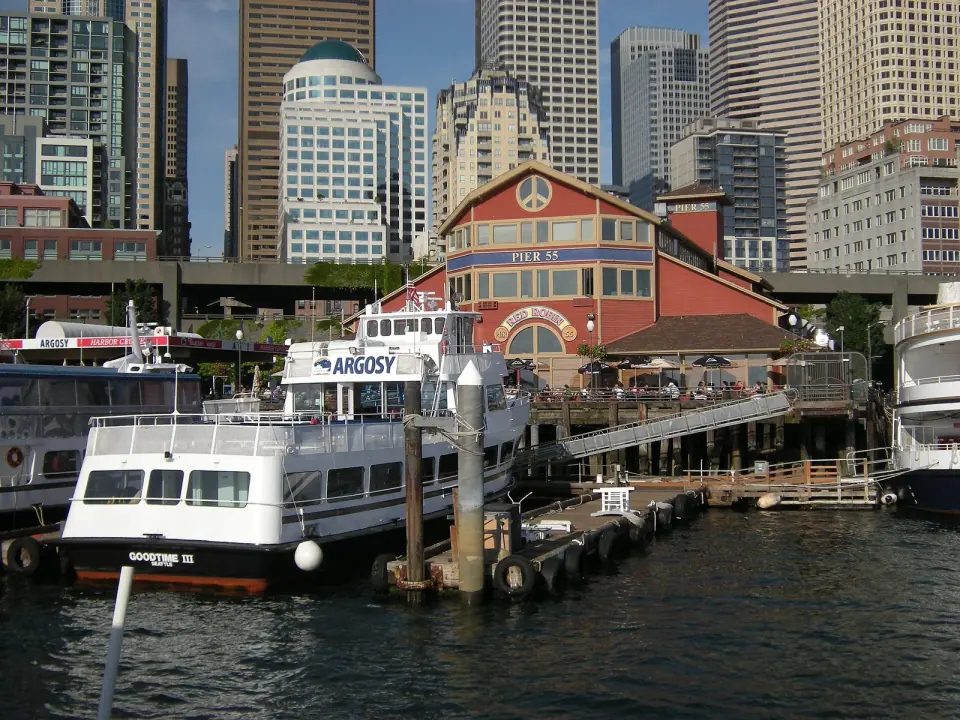
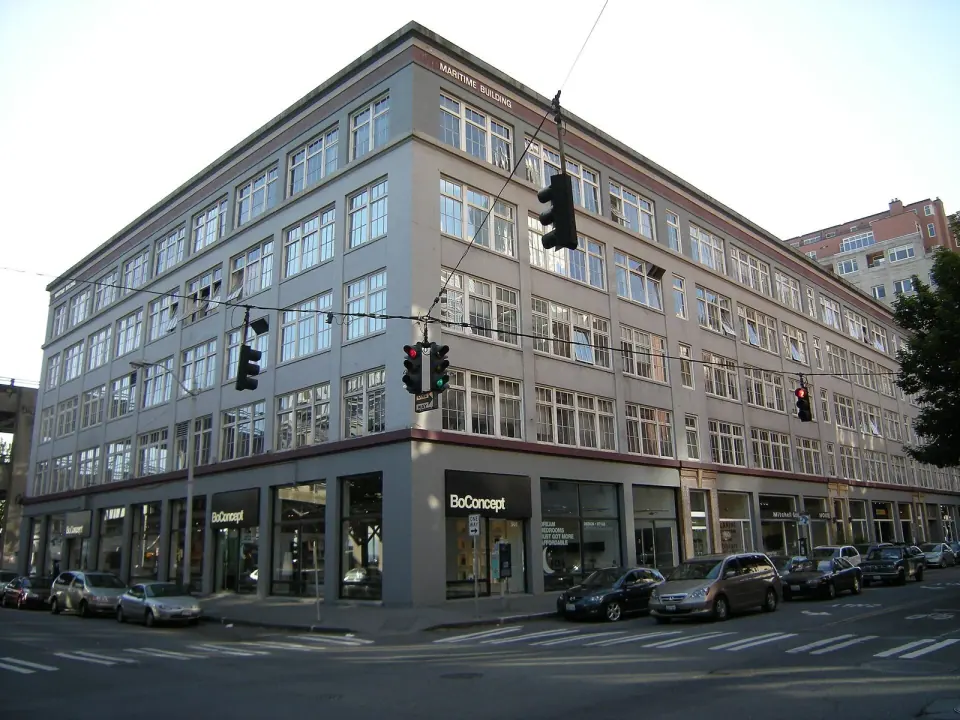
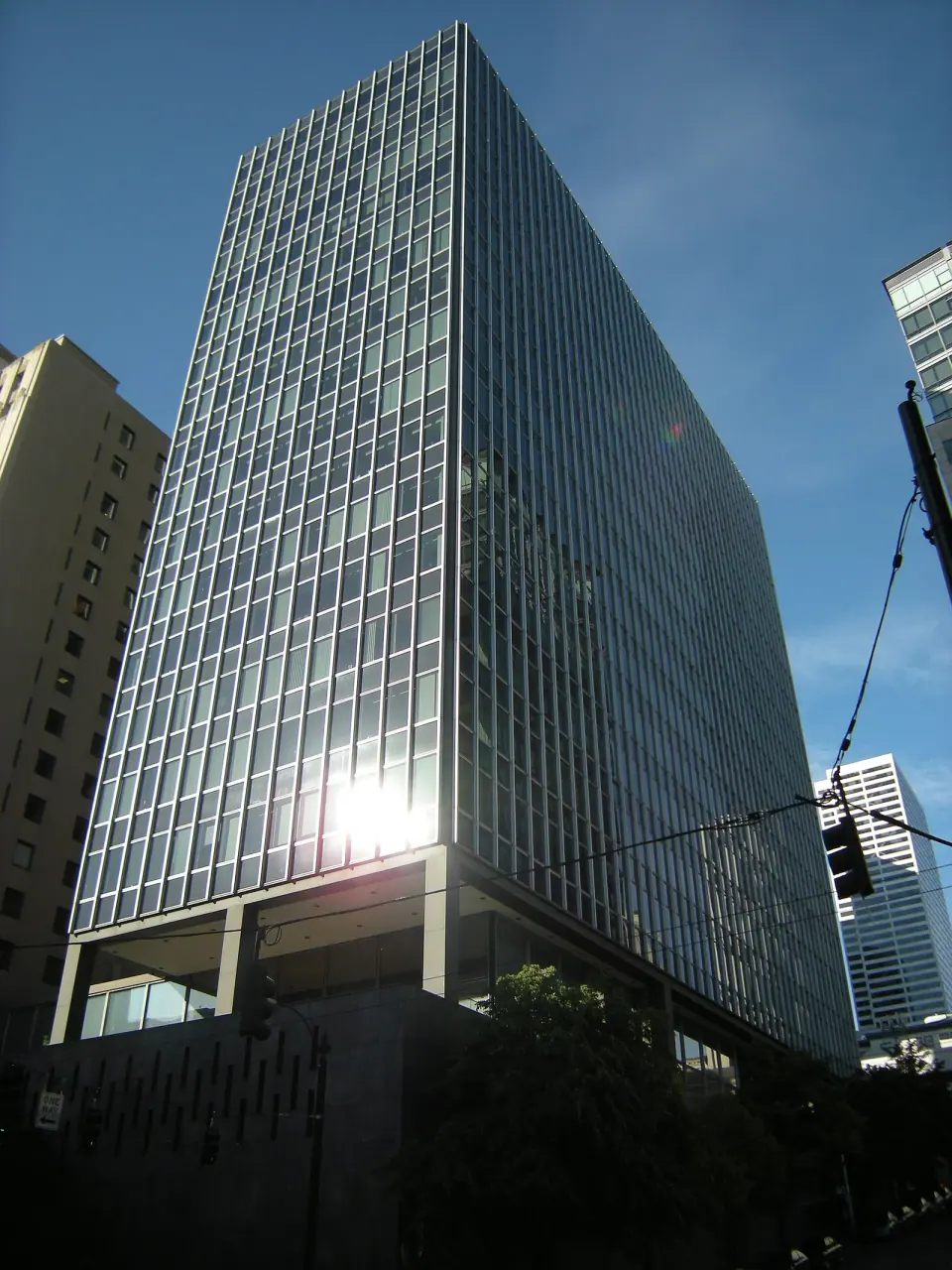
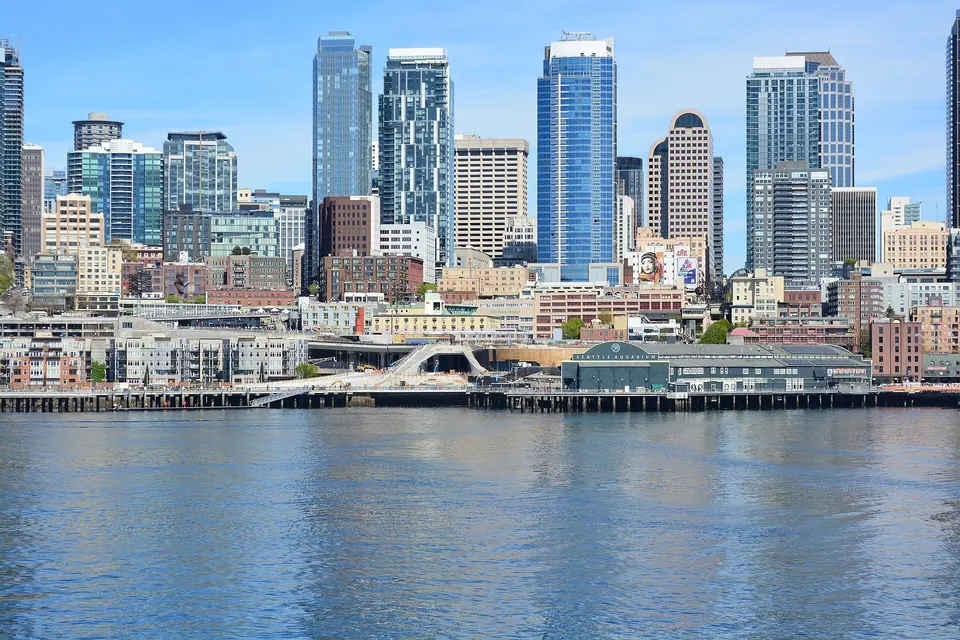
Step off Pier 54 and you are in one of the densest clusters of designated landmarks in the city. Several sit less than a tenth of a mile away:
- Fire Station #5
- Pier 55
- Maritime Building
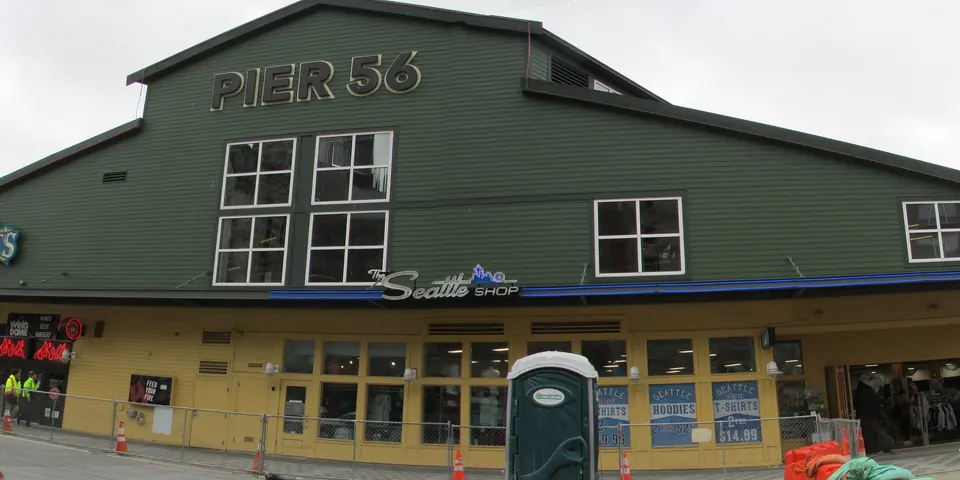
Wander about a tenth of a mile and you can also reach:
- Pier 56
- Olympic Warehouse and Cold Storage Building
- National Building, Colman Building and Beebe Building, part of the 1st Avenue Groups/Waterfront Center
To stretch your walk, browse the full list of Seattle landmarks, or spend more time exploring the downtown Central Business District.