What not to miss
- The flower stalls: pick up a bouquet from the farm stalls, and arriving early, as the market's local tips suggest, gets you less crowded hallways and the first pick of fresh flowers.
- The flying fish: at Pike Place Fish Market, when a customer buys a fish, it is tossed from the front display to the fishmongers behind the counter to be wrapped. The market's visitor FAQ says you can catch the show throughout the day.
- Independent shops and the lower levels: wind down the stairways below the Main Arcade to find art galleries, record stores and a magic shop, then keep going onto the storefronts of Western Avenue.
- The MarketFront and waterfront views: step out onto the MarketFront Sundeck for a view over Puget Sound, or seek out the quieter Secret Garden in the market's southwest corner, which also overlooks the water.
- The original Starbucks: the store at 1912 Pike Place still keeps its early look and draws a line of fans; read the full story below.
- Post Alley: beyond the Gum Wall, the alley holds improv at Unexpected Productions, the Rabbit Box speakeasy below the Corner Market and Can Can Culinary Cabaret off Pine Street.
Best times to go to avoid crowds
Arrive in the morning. The market's official answer is that mornings before noon are generally less crowded and that the market is fullest Thursday through Monday, so a Tuesday or Wednesday morning is your calmest bet. Vendors start setting up as early as 7 am and most businesses are open by 9 am, while produce and seafood sellers start earliest of all.
Plan Your Pike Place Market Visit
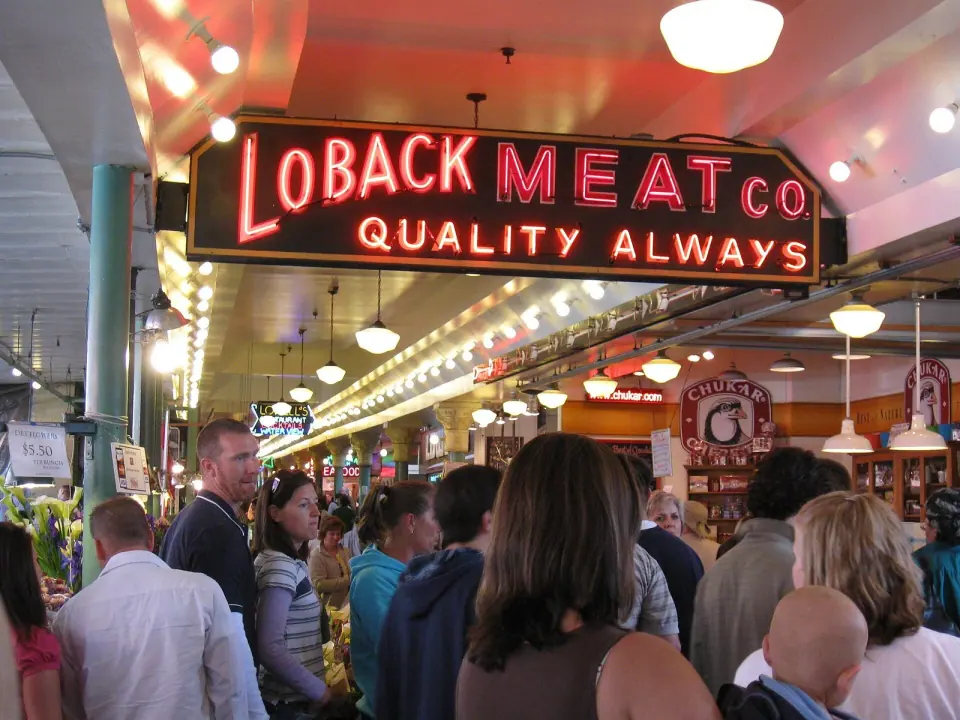
Expect company, since the market draws more than 20 million visitors a year and rarely feels empty, according to its history. You are exploring one of the oldest continuously operated public farmers markets in the United States, now home to about 500 small businesses spread across several levels on a hillside.
Hours and timing
The market is open seven days a week and closes only on Thanksgiving and Christmas Day. Most of it is active from mid-morning to late afternoon, produce and seafood stalls open earlier, and some restaurants stay open late into the night, so check the official visit page and its "See Who's Open" list before you head out.
Getting there and parking
The market sits downtown near the waterfront, a few blocks from Westlake light rail station and an easy walk from many central hotels and attractions. If you drive, the market garage on Western Avenue has early-bird and evening specials, and vehicle access on Pike Place itself is limited during the day, so look up current rates and street access on the official market website before you go. Pets stay outside, since only trained service animals are allowed inside market buildings.
Landmarks to Photograph
Nearly every corner here is ready for its close-up, but a few spots draw the biggest crowds. Arrive early to catch them, or settle in and wait your turn.
The neon sign and Rachel the Piggy Bank
Look up at the red Public Market Center sign at First and Pike, a fixture since 1927 and among the oldest outdoor neon signs on the West Coast. For a calmer shot, stroll a block east up Pike Street, where the sign frames Puget Sound and sometimes a ferry arriving from Bainbridge Island.
Right beneath the sign stands Rachel the Piggy Bank, the market's 550-pound bronze mascot. Drop in a coin and it goes through the Pike Place Market Foundation to support the market's social services. Her equally hefty cousin, Billie the Pig, waits for photos at the MarketFront.
Flying fish
Just behind Rachel, the shouting crew at Pike Place Fish Market sends fish that customers have just bought flying across the stand. Catch one of the most watched shows in the city, and a favorite with kids.
The Starbucks story
You will hear the Starbucks on Pike Place called the first, but that is only nearly true. The company opened its first store in 1971 at 2000 Western Avenue and, after five years there, moved to 1912 Pike Place, where the shop has kept its early appearance. Fans come for the original mermaid logo and merchandise sold only at this location, so expect a line.
The Gum Wall in Post Alley
Duck into Post Alley to find the Gum Wall, coated in layer upon layer of chewed gum in every color. Crews once scraped away 2,350 pounds of it, and visitors quickly built the collection back up. Bring a fresh piece if you want to add your own.
What to Eat at the Market
The best way to eat here is to graze. Gather small bites from several counters for a fine lunch, or build a picnic as you go, the way many visitors do.
Produce, cheese and picnic supplies
Taste your way through the produce stalls, which often hand out fruit samples, from crisp Washington apples to peaches when they are in season. Pair the fruit with cheese and charcuterie from DeLaurenti, a classic stop for picnic fixings. Grab a bowl at Beecher's Handmade Cheese, a Seattle staple known for its mac and cheese, and sample the inventive flavors at Hellenika, a local Greek cultured creamery.
Pastries and sweets
Join the line outside Piroshky Piroshky, which moves for a reason. Its Russian pastries are a favorite, especially the beef and cheese. If you want something first, Le Panier and Michou Deli are just a few doors away.
At Daily Dozen Doughnut Company, mini doughnuts are tossed in cinnamon and sugar and handed over hot in a paper bag. For edible souvenirs, pick up cookies, chips and other snacks from Bite Society, packed in decorated tins that travel well.
Something to drink
Stop at Rachel's Ginger Beer in Post Alley for fruity nonalcoholic ginger beer and ginger beer floats, with Moscow mules on tap for adults. Over at the MarketFront, Old Stove Brewing Co. keeps 16 beers on tap.
Beyond food
Head down to the lower levels to browse. Teens tend to gravitate to Golden Age Collectables, with its comic books, graphic novels and movie memorabilia, Star Wars items included.
How the Market Survived
The story begins in August 1907, when eight local farmers opened the market hoping to sell directly to shoppers without a middleman. Within three months it had grown to 76 stalls, and by 1922 it filled 11 buildings across nine acres near the waterfront.
World War II hit hard. Executive Order 9066 sent two-thirds of the market's vendors, all of Japanese descent, to internment camps, and the market never fully recovered. By the 1960s it faced demolition to make way for offices and a large parking garage.
Architect and activist Victor Steinbrueck, who helped design the Space Needle, led the Friends of the Market campaign. A 1971 vote created a seven-acre historic district and saved the market you stroll through today.
Today the market is run by the Pike Place Market Preservation and Development Authority, a public body, and it is still a neighborhood as much as a shopping stop: nearly 500 people live in eight buildings across the market. Farmers and craftspeople rent their tables by the day, true to the founding idea of letting you "Meet the Producer."
The MarketFront and the Waterfront Below
Step out onto the MarketFront, opened in 2017 just south of Victor Steinbrueck Park, for open-air vendor space, new restaurants and a public plaza looking out over Puget Sound and the Olympic Mountains. True to the market's community roots, it also added a neighborhood center and low-income housing.
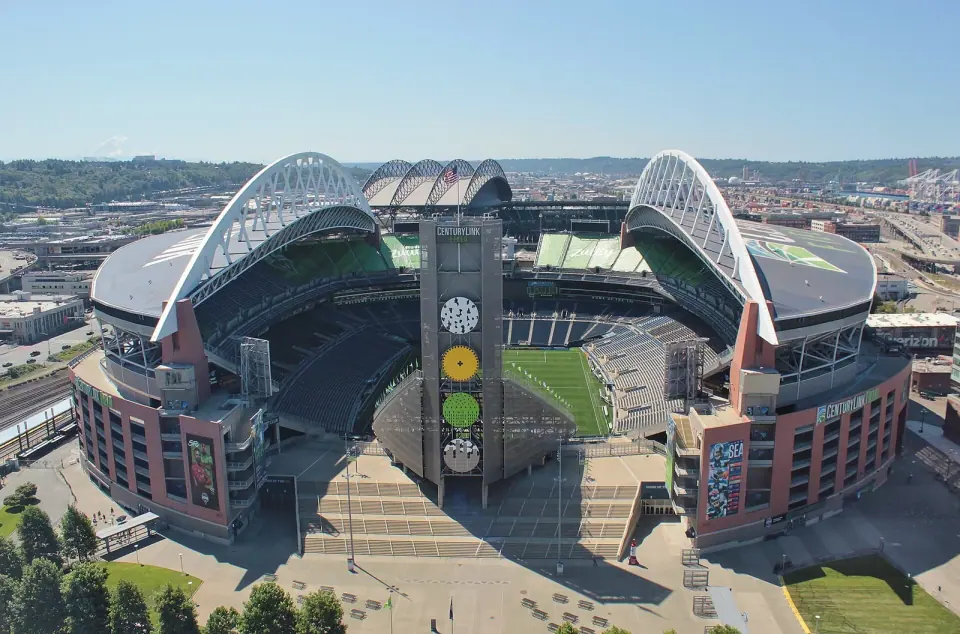
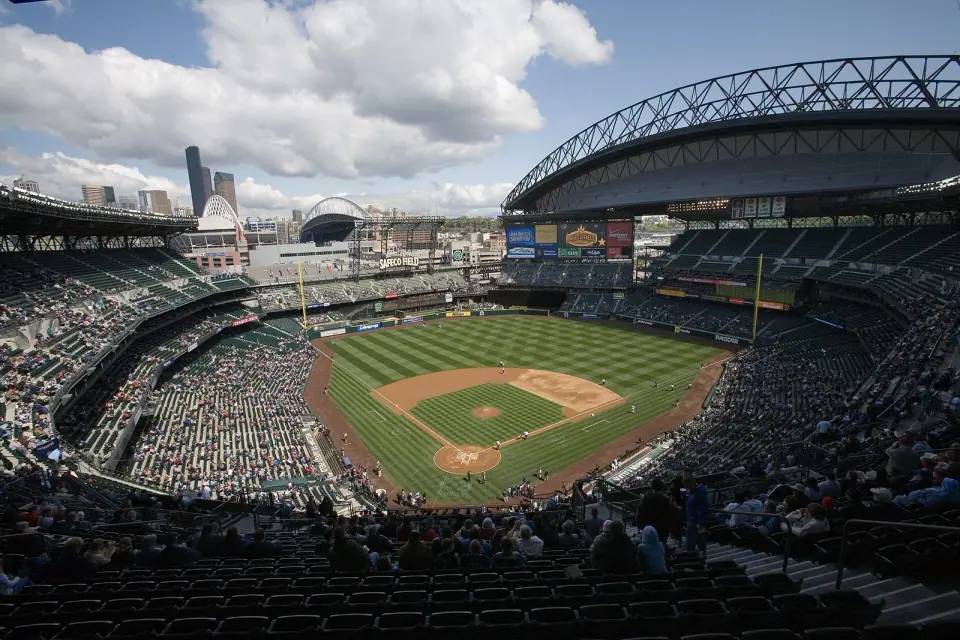
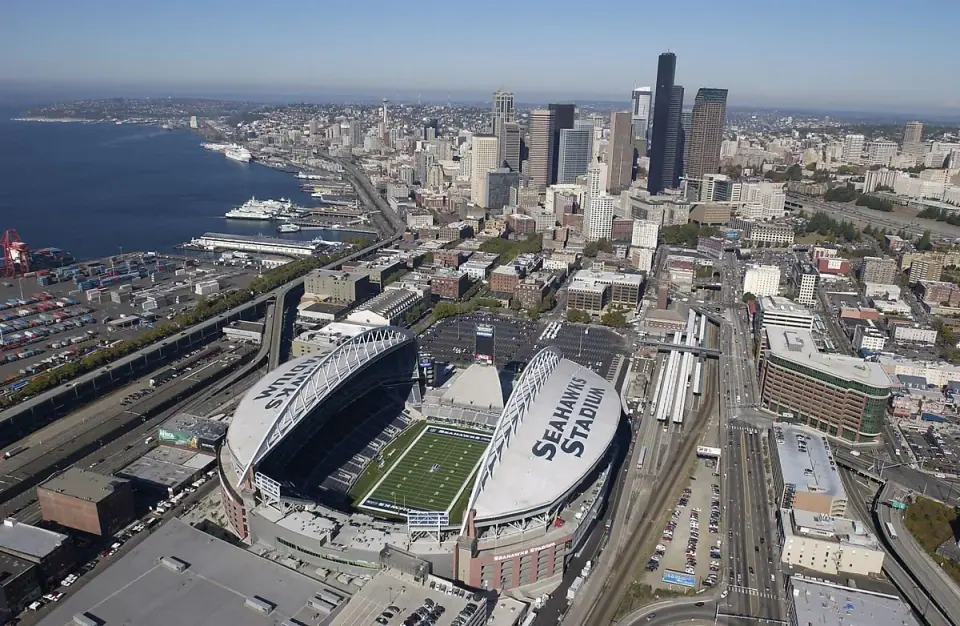
Below the market, the City of Seattle's Office of the Waterfront reshaped 17 blocks along Alaskan Way after the old viaduct came down in 2019, and new paths now link the stadiums, Pike Place and Belltown. Walk south through Waterfront Park toward Pioneer Square, where Occidental Square offers shade trees, ping-pong tables, bocce courts and a playground.
Hungry for a sit-down meal after your wander? See our guide to restaurants at Pike Place Market, and find a room steps away in our list of hotels near Pike Place Market.