A fight over what to keep
The City of Seattle began buying the abandoned site in 1962 for $1.34 million, paid with Forward Thrust bonds. Not everyone wanted a park here, but advocates led by city councilwoman Myrtle Edwards won the debate. In 1970 the Seattle Park Board hired landscape architect Richard Haag, who saw the plant as the last of its kind and argued for saving parts of it rather than clearing the ground.
Haag's 1971 master plan reused the buildings, the machinery and even the soil itself, and it won unanimous approval from the Park Board. Daviscourt Construction Company of Seattle carried out the conversion, the park opened to the public in 1975, and Haag received the American Society of Landscape Architects President's Award of Design Excellence for the work.
The name that moved across town
The park was first named for Myrtle Edwards, who died in a car crash in 1969. Because the design kept the old plant standing, her family asked in 1972 that her name be taken off, and in 1976 the city gave it instead to Elliott Bay Park, north of Belltown, now Myrtle Edwards Park. Today Gas Works Park is both a Seattle city landmark (No. 225, designated in 2002) and a Washington State landmark, and it joined the National Register of Historic Places on January 2, 2013.
What to explore at Gas Works Park
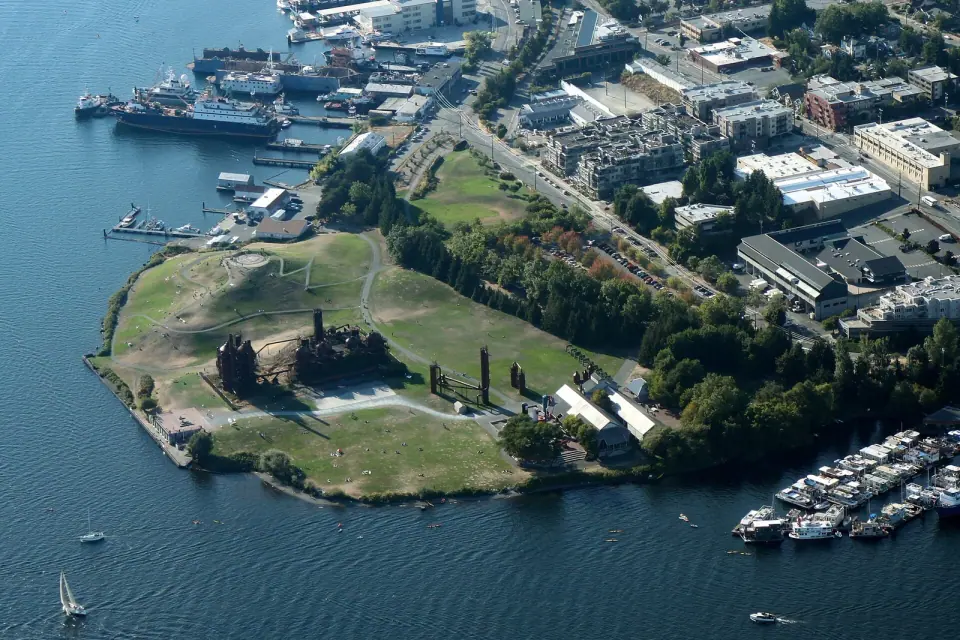
The site juts about 400 feet into Lake Union and wraps you in roughly 1,900 feet of shoreline. Wander through its seven areas: the Earth Mound, North Lawn, Towers, Prow, Picnic Lawn and Shelter, Play Barn, and South Lawn. Spread out on the mound, the Prow or the lawns, open ground made for lounging, games and soaking up the views over the water.
Climb the Earth Mound
Bring a kite to the Earth Mound, a man-made hill built just for flying them. At the top, find the sculpted sundial set into the summit, then linger at this favorite spot for looking out across Lake Union.
Let kids loose in the Play Barn
Some of the old plant equipment was cleaned up, painted and folded into a children's play barn. Part of the structure comes from the plant's former exhauster-compressor building, so kids get to play inside a real piece of Seattle's industrial history.
Admire the towers
The tall gas towers are the image most people picture when they think of this park. They stand as ruins rather than restored machinery, so take them in from the ground, where they are best enjoyed.
Stay off the towers
The industrial towers carry a serious safety record. Since 2008 there have been at least 14 documented fall incidents there, including three deaths (in 2012, 2022 and 2025) and many life-threatening injuries, and in 2025 a 15-year-old fell 50 feet to his death while trying to climb them.
Seattle Parks recommended removing the ladders, catwalks and platforms, but the Landmarks Preservation Board rejected that proposal in fall 2025 and asked for more study. In October 2025 the boy's parents filed a lawsuit asking that the towers be declared a public nuisance. Whatever the outcome, the guidance for your visit is simple: do not climb the structures, and keep a close eye on children near them.
A cleanup still underway
Decades of gas making left the soil and groundwater contaminated. The 1971 plan relied on plants and natural processes to clean the ground, and state and federal regulators later required more work, including removing and capping waste. Today there are no known areas of contaminated surface soil, though tar sometimes seeps up in spots and is isolated and removed.
The Washington State Department of Ecology plans a final soil and shoreline cleanup covering about 50 acres around the park, scheduled to start in 2027 at an estimated cost of $73 million. If it succeeds, it could open official public access to the waters of Lake Union from the park.
Fireworks, bike rides and big-screen moments
Catch the Fourth of July here, where the park has long hosted one of Seattle's two major Independence Day fireworks shows, and in 2009 it was the only one. The park was once the sole home of a summer Peace Concerts series, which now rotates among several city parks. It is also the traditional finish for the Solstice Cyclists and the starting point for Seattle's World Naked Bike Ride.
The grounds carry a political history too. A peace concert in August 1990 grew into a seven-month vigil against the Gulf War, known as PeaceWorks Park, which drew Mike Lowry, Timothy Leary and Allen Ginsberg. Movie fans may recognize the scenery from Singles and 10 Things I Hate About You, while the park served as the finish line of The Amazing Race season 3, the start of season 10, and the host of the Seattle Kraken's 2021 NHL expansion draft.
Getting to Gas Works Park on North Northlake Way
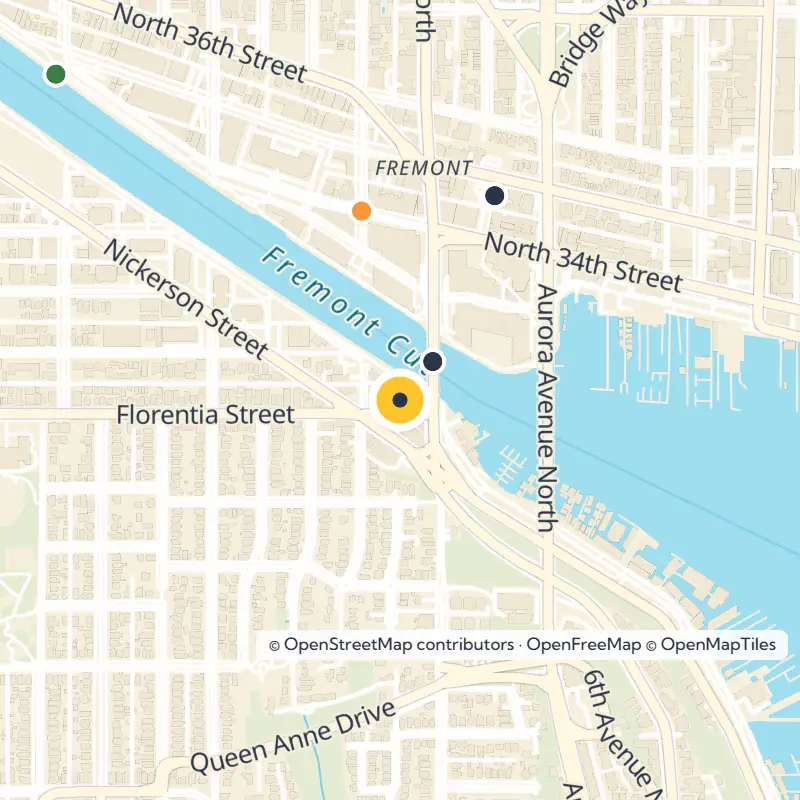
Head to 2101 N Northlake Way, Seattle, WA 98103. North Northlake Way runs along the north edge of the park, with Lake Union wrapping around the east and south sides. Arrive through the landscaped parking area, or come on foot or by bike along the Burke-Gilman Trail, a walking and cycling path between Puget Sound and Lake Washington. A grassy, tree-lined berm following an old railroad right-of-way separates the parking area from the park itself.
The park once marked one end of the Burke-Gilman Trail, which follows the old Seattle, Lake Shore and Eastern Railway route, and today you can keep riding several miles northwest past Fremont toward Ballard. For current hours, rules and event details, check with Seattle Parks and Recreation before you go.
Small parks and landmarks a short walk away
Stretch your lakeside stroll to the small public spaces in the surrounding blocks, and dig deeper with our guide to the Wallingford neighborhood.
- Waterway 19, a park about 0.1 mile away
- Wallingford Steps, a park about 0.1 mile away
- Roanoke St. Mini Park, about 0.3 mile away
- Sunnyside Ave N Boat Ramp, about 0.4 mile away
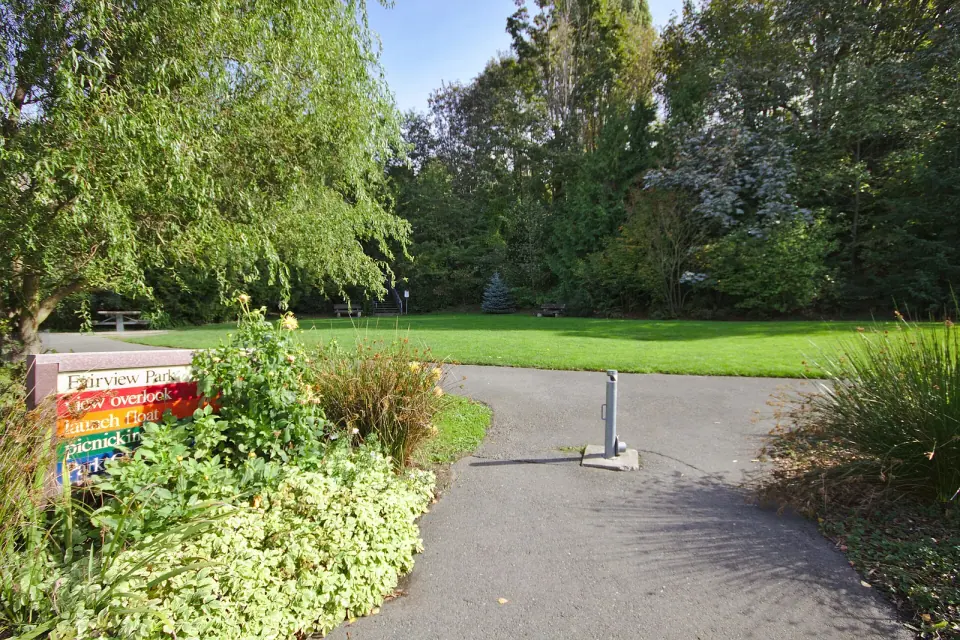
- Fairview Park, about 0.5 mile away
- Eastlake community garden, about 0.5 mile away
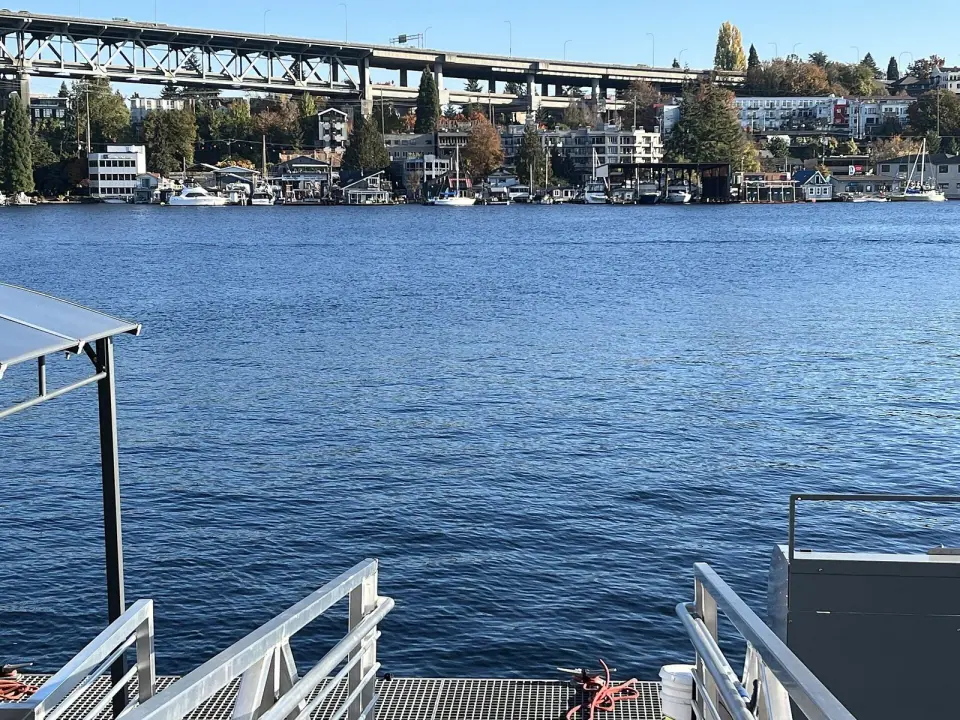
- Wagner Floating Home, a landmark about 0.5 mile away
Ready for more green space? Browse all of Seattle's parks and plan your next outing.