Skip to content
Peace Park

Peace Park

Climb a small hillside park near the north end of the University Bridge, built by volunteers under Floyd Schmoe and dedicated to the memory of Hiroshima survivor Sadako Sasaki and her paper cranes.

Part ofWallingfordParks in Seattle

Frequently asked questions

Peace Park is on NE 40th Street near NE Pacific Street, close to the north end of the University Bridge. It sits where Wallingford meets the University District.

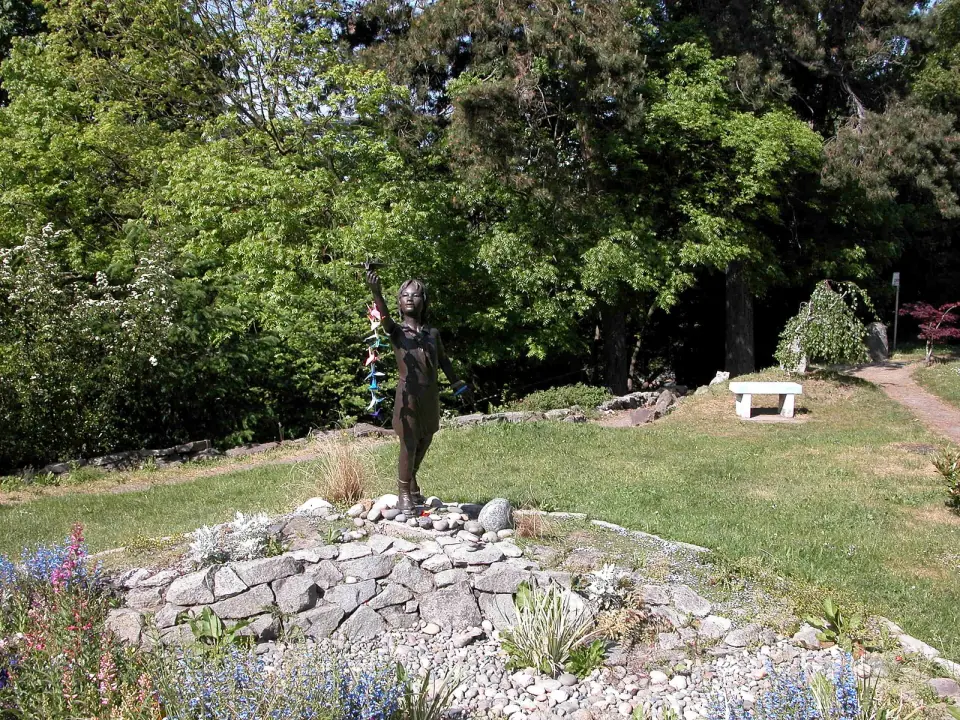
The bronze honored Sadako Sasaki, who survived the Hiroshima bombing at age two and died of leukemia about ten years later. Sculptor Darryl Smith created it, and visitors often hung strings of paper cranes on it.

On July 12, 2024, the Seattle Police Department reported the statue stolen, with only the feet left behind. It had earlier been vandalized in 2003 and 2012 and repaired both times. Check with Seattle Parks and Recreation for updates.

Peace activist Floyd Schmoe led volunteers who cleaned up and landscaped the site. He used the $4,000 from his 1988 Kiyoshi Tanimoto Peace Award toward the project, and the park was dedicated on August 6, 1990.

Yes. A 2008 renovation added sidewalks, a stairway and pathways linking the park to nearby trails, including the Cheshiahud Lake Union Loop two streets south.

The full guide

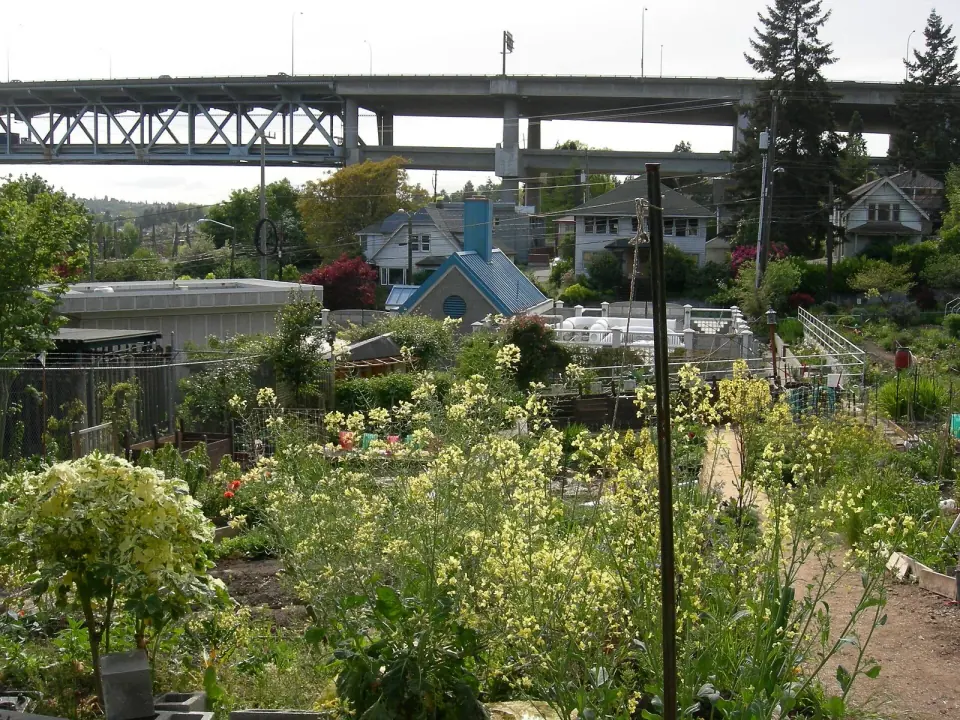
A stairway and footpaths climb a small green slope off NE 40th Street, close to the north end of the University Bridge, right where Wallingford meets the University District. This is Peace Park in Seattle, built by volunteers led by Floyd Schmoe and dedicated on August 6, 1990, 45 years after the atomic bombing of Hiroshima. Come for its best-known feature, a memorial to Sadako Sasaki and her paper cranes.

Floyd Schmoe and the Making of the Park

Picture this hillside before 1990: an undeveloped patch where drivers parked illegally and trash piled up. Peace activist Floyd Schmoe saw something better, and he rallied volunteers to clear the ground and landscape it into the park you can walk through today.

The project was personal for him. As a University of Washington student during the incarceration of Japanese Americans, Schmoe helped classmates affected by Executive Order 9066. Decades later, in 1988, the Hiroshima Peace Center gave him the Kiyoshi Tanimoto Peace Award, often called the Hiroshima Peace Prize.

Read the full guide

The award came with $4,000, and Schmoe put that money straight into the park. He also urged the city government to create a peace park, and his prize helped draw grants that carried the work forward.

Sadako and Her Thousand Cranes

At the heart of Peace Park stood a life-size bronze of Sadako Sasaki titled Sadako and the Thousand Paper Cranes. Sadako survived the Hiroshima bombing at age two, and about ten years later she died of leukemia.

From her hospital bed, she set out to fold one thousand origami cranes. By one account she had finished 644 when she died, and the people around her kept folding in her place. Her story turned the paper crane into a symbol of peace shared around the world.

Darryl Smith's sculpture

Sculptor Darryl Smith created the Seattle statue and donated much of the labor himself. He shaped the figure from a classroom photo of Sadako, from Eleanor Coerr's 1977 book Sadako and the Thousand Paper Cranes and from his own knowledge of anatomy.

Look for what sculptors call alightment, the sense that the figure is poised at the edge of a drop, just about to release a crane into the air. As of 2023, the statue was the only outdoor monument in Seattle's municipal art collection honoring a female historical figure.

Seattle's Sadako has relatives elsewhere. In 1991 Smith cast an identical twin, The Peace Child of Hiroshima, which stands at the University of Utah in Salt Lake City. A bronze crane by Smith in Mukilteo, Washington, rounds out a set of three, honoring early Japanese Americans in Mukilteo and reconciliation after the incarceration.

Why people leave paper cranes

In Japanese, the folded crane is the orizuru, a figure rich with meaning. Tradition says that folding a thousand of them will make a wish come true, and after Sadako the practice also became a gesture for peace.

Here at Peace Park, schoolchildren and other Seattle residents often draped strings of cranes over the statue. The same custom lives on at Sadako's statue in Hiroshima.

Vandalism, Repairs and the Statue Theft

The statue has weathered more than one attack. In December 2003, vandals damaged an ankle and cut off the right arm, and with the original mold gone, Smith took an impression from the matching statue in Utah to restore the Seattle figure exactly.

Afterward, several people, including members of Sadako's family, asked that the statue move to busier Green Lake Park. The Seattle Parks Department kept it at Peace Park instead, reinstalling it in mid-January 2005. Community donations helped cover the repair, and neighbors gathered to celebrate Sasaki's legacy.

Vandals struck again in September 2012, and the statue was repaired once more. Then, on July 12, 2024, the Seattle Police Department reported it stolen: thieves cut the bronze away above the ankles, leaving only the feet. A local historian concluded the theft was likely about the value of the metal rather than a political act. Check with Seattle Parks and Recreation for any updates on the memorial.

Paths Down to the Lake Union Loop

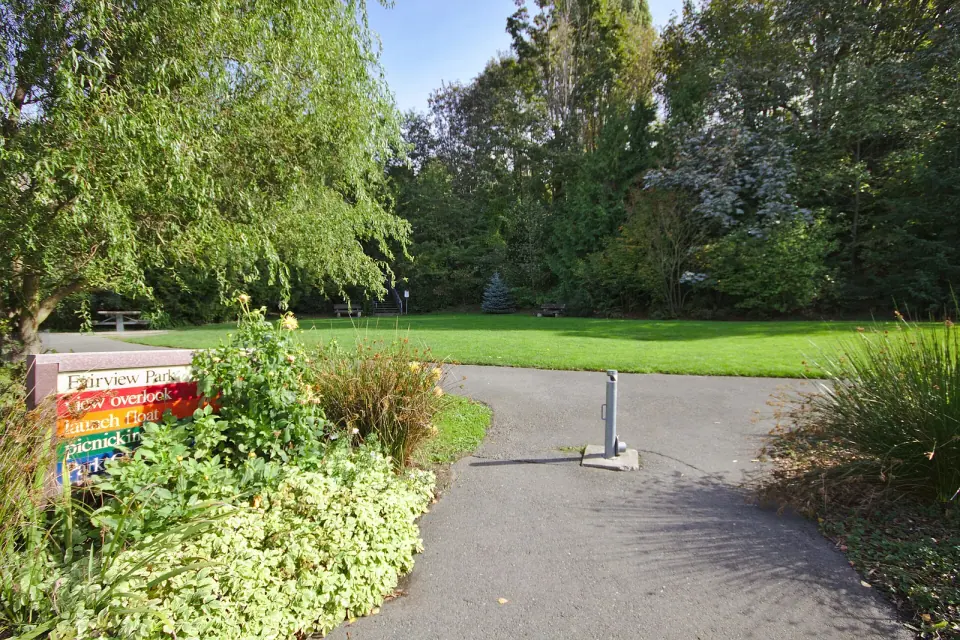
A 2008 renovation by Seattle Parks and Recreation added sidewalks, a stairway and pathways that link the park to nearby public parks and trails.

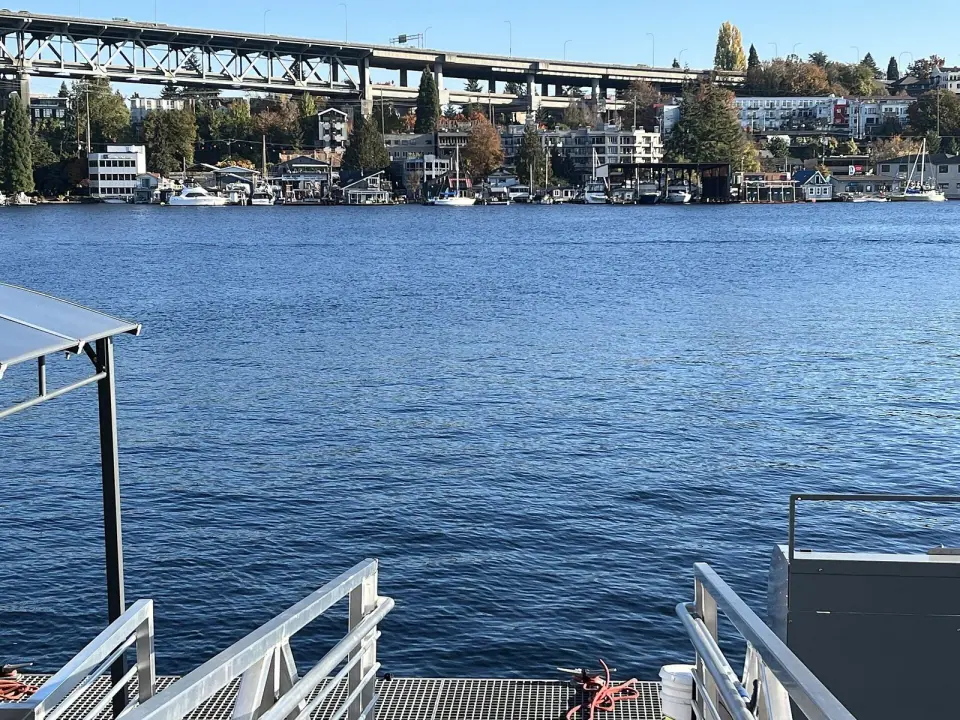
One of those links leads to the Cheshiahud Lake Union Loop, just two streets south. Make Peace Park an easy pause on a walk or ride around the lake.

Plan Your Visit

  • Location: NE 40th Street near NE Pacific Street, ZIP 98105, by the north end of the University Bridge.
  • Terrain: the park sits on a slope, with a stairway and paths added in 2008.
  • August 6: the dedication date falls on the Hiroshima anniversary, giving the day special meaning here.
  • Current details: for hours and the latest on the statue, see Seattle Parks and Recreation.

Keep exploring with our Wallingford neighborhood guide, or find your next patch of green in our guide to Seattle parks.

Small Parks and Landmarks Nearby

Stretch your visit into a neighborhood stroll: several parks and historic buildings sit within half a mile of Peace Park.

  • Latona School, a landmark about 0.1 mile away
  • North Passage Point Park, about 0.1 mile
  • Northlake Park, about 0.1 mile
  • University District community garden, about 0.2 mile
  • South Passage Point Park, about 0.2 mile
  • Anhalt Hall, a landmark about 0.3 mile away
  • Christie Park, about 0.3 mile
  • El Monterey, a landmark about 0.4 mile away