The gates open every day of the year. Hours, ticket prices and membership options change, so check the zoo's official website before you set out.
From a lumberman's menagerie to a city zoo
The story starts with Guy C. Phinney, a Canadian-born lumber mill owner and real estate developer who kept a small collection of animals on his estate. Six years after his death, on December 28, 1899, his widow sold the 188-acre property to the city for $5,000 in cash plus the assumption of a $95,000 mortgage.
Mayor W. D. Wood found that price steep enough to veto the purchase, but the city council overruled him. In 1902 the city brought in the Olmsted Brothers of Boston to design its parks, Woodland Park among them, and a year later animals from the private menagerie at Leschi Park moved up to Phinney Ridge.
A large expansion won approval in 1968 under the Forward Thrust ballot measures. Architect George Bartholick drew a master plan that would have capped Aurora Avenue with a lid and pushed new exhibits into the eastern half of the park, but neighbors pushed back and Seattle voters rejected the plan in November 1974.
The gorilla habitat that changed zoo design
In 1975, zoo director David Hancocks reimagined the gorilla exhibit around a simple idea: place the animals in a landscape as close to their native habitat as possible, then place visitors inside that same landscape. Natural plantings and rockwork shaped the space, and acoustic treatment kept it soft and quiet.
Many experts doubted the plan at first, worried about keeping the vegetation alive, whether visitors could see the gorillas and how Washington's temperate climate would treat the soil. The habitat opened in the late 1970s and is widely considered the world's first immersion exhibit, and its approach became the standard for naturalistic zoo design copied around the globe.
The awards have kept coming. The zoo has earned several Best National Exhibit awards from the Association of Zoos and Aquariums, a total second only to the Bronx Zoo.
Touring the habitats
Tropical Asia
Start in Tropical Asia, the zoo's largest section, which celebrates South and Southeast Asia across three areas. The Assam Rhino Reserve, built on the former Elephant Forest, opened for an Indian rhinoceros in May 2018. Banyan Wilds has housed Malayan tigers, sloth bears, Asian small-clawed otters and a small aviary, while the Trail of Vines has been home to orangutans, siamangs, pythons and Malayan tapir.
African Savanna
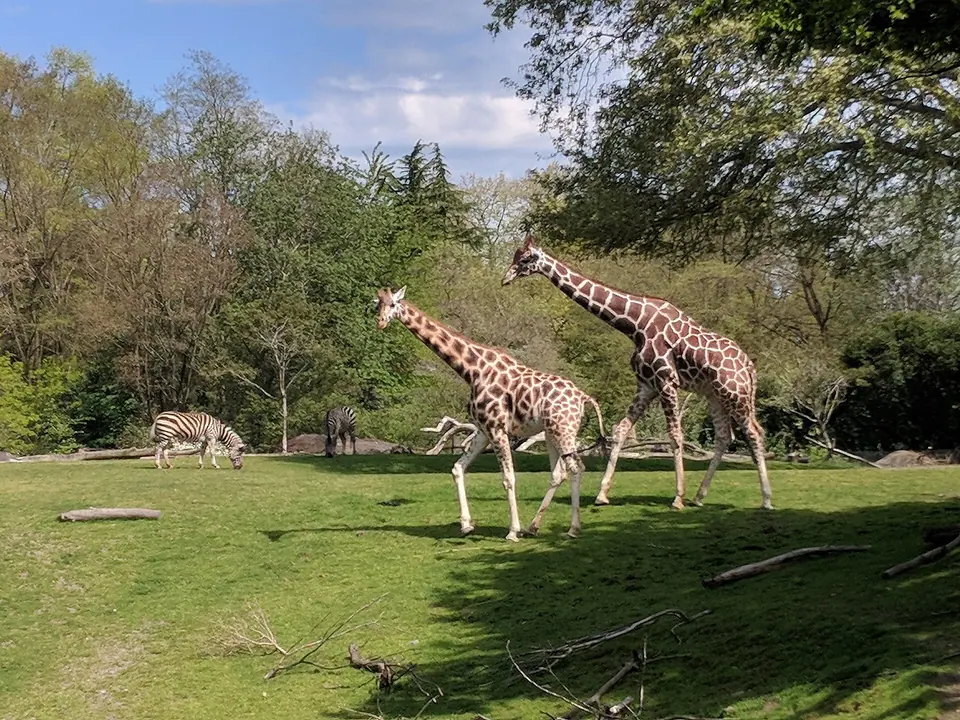
Head next to the African Savanna, where the biggest exhibit is a shared grassland for giraffes, Burchell's zebras and ostriches. Nearby enclosures hold lions, warthogs, Patas monkeys, spotted hyenas and savanna birds, plus a recreated East African village, and the section won the AZA exhibit award in 1981.
Tropical Rainforest
Step into the jungles of South America and Africa in Tropical Rainforest, with jaguars on one side and western lowland gorillas, ring-tailed and red ruffed lemurs and colobus monkeys on the other. This section took the AZA exhibit award in 1993.
Living Northwest Trail
Follow the Living Northwest Trail, modeled on a real trail in Denali National Park in Alaska. Along the way, watch for grizzly bears, mountain goats, elk, river otters, wolves and a Steller's sea eagle. The trail won the AZA exhibit award in 1995.
Temperate Forest and red pandas
Seek out the zoo's red pandas in Temperate Forest, where you will also find southern pudu, Chilean flamingos, red-crowned and white-naped cranes, maned wolves, a wetlands area and a conservation aviary for rare birds. Duck into the Bug House here to see Partula snails.
Australasia and penguins
In Australasia, emus, wallaroos and red-necked wallabies share one outdoor exhibit. Next door at Willawong Station, you can feed Australian parrots with a seed stick for a small fee, and a snow leopard enclosure sits close by.
Catch the Humboldt penguin colony, which numbers several dozen birds. A 2009 remodel gave the habitat underwater viewing and green energy, and it earned the AZA Top Honor Award in 2010.
More to discover
Smaller stops round out the day: a butterfly garden, a raptor center for birds of prey, and the Trail of Adaptations building with Komodo dragons and meerkats. Keep an eye out for Indian peafowl wandering the grounds freely. Animals come and go, so check the official website for the current list.
For families: Zoomazium, the carousel and the farm
Bring little ones to Zoomazium, an indoor play space where young children can climb, explore and learn, a welcome retreat on a rainy Seattle day. At the farm exhibit in Temperate Forest, kids can pet Kunekune pigs, sheep, goats and miniature Jersey steer.
Save time for a spin on the carousel, which has a long history of its own. The Philadelphia Toboggan Company built it in 1918 for the Cincinnati Zoo, and the Alleniana Foundation later refurbished it and donated it to Woodland Park Zoo, where it now runs on solar power.
ZooTunes summer concerts
Spend a summer evening at ZooTunes, the zoo's concert series, which has run since 1983 and raises money for zoo programs. For each show, the North Meadow becomes an outdoor amphitheater holding 3,700 people. Find lineups and ticket details on the zoo's official website.
Animals with a story
- Bobo, a western lowland gorilla raised by a family in Anacortes, lived at the zoo from 1953 to 1968. He ranked among Seattle's top attractions, and his popularity helped fund a new primate house.
- Yola, a gorilla, was born at the zoo in December 2015 to Nadiri, who was born there too.
- Lulu, a giraffe, arrived on June 20, 2017, standing 5 feet 7 inches tall and weighing 149 pounds.
- Aibeck, a male snow leopard born the same summer, carries a name meaning "long life" in Kyrgyz.
- Juniper and Fern, two orphaned female brown bear cubs, came to the zoo from Alaska and Montana in 2022.
Some longtime residents have moved on. The zoo phased out its elephant program in 2015, when its last two Asian elephants went to the Oklahoma City Zoo, and in September 2024 Guadalupe, the last hippopotamus, moved to the San Diego Zoo.
Conservation beyond the gates
Woodland Park Zoo works with the Oregon Zoo, the U.S. Fish and Wildlife Service and conservation groups on recovery projects for threatened and endangered species, including the Oregon silverspot butterfly and the western pond turtle. It also runs education programs for schoolchildren and partners with universities in the state, such as the University of Washington.
Rose gardens and green space nearby
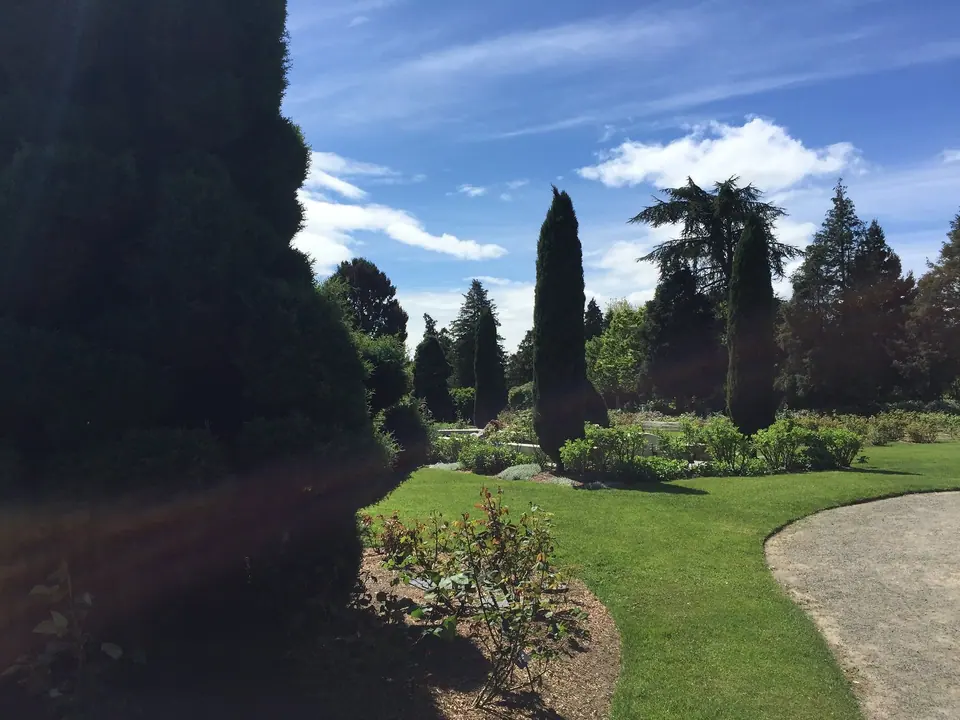
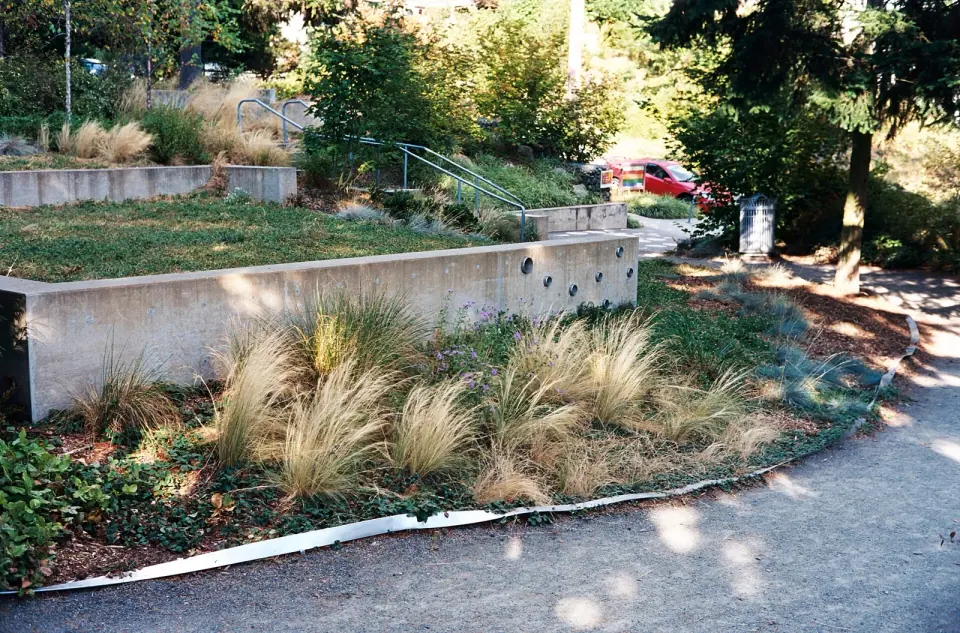
Stroll over to the Woodland Park Rose Garden, less than 0.1 mile from the zoo, for an easy add-on before or after your visit. The rest of Woodland Park is about 0.3 mile away, and the Woodland Park dog park is about 0.4 mile off. Within half a mile, you can also find small neighborhood parks such as Sunset Place, Cascade Place, Rainier Place and Fremont Peak Park, along with the Fitch/Nutt House, a city landmark.
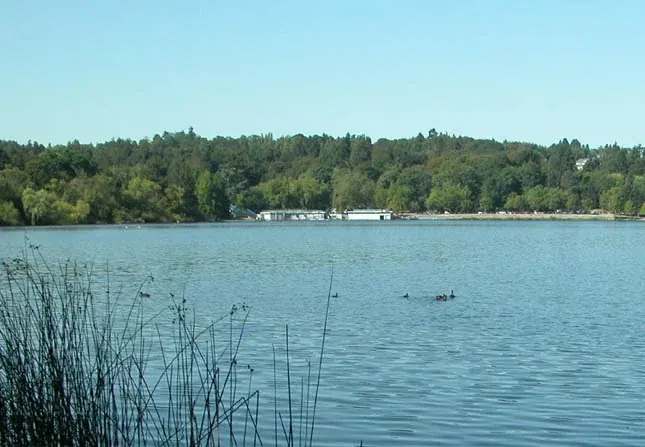
Keep exploring with our guide to the Phinney Ridge neighborhood, plan a walk at Green Lake Park, or browse every park in Seattle.