- January: high 48, low 38, 5.8 inches of precipitation
- February: high 50, low 38, 3.8 inches
- March: high 54, low 40, 4.2 inches
- April: high 59, low 43, 3.2 inches
- May: high 66, low 49, 1.9 inches
- June: high 71, low 53, 1.5 inches
- July: high 77, low 57, 0.6 inches
- August: high 78, low 57, 1.0 inch
- September: high 72, low 54, 1.6 inches
- October: high 61, low 47, 3.9 inches
- November: high 52, low 41, 6.3 inches
- December: high 47, low 37, 5.7 inches
November is the wettest month on average and July the driest. As the climate overview on Wikipedia explains, Seattle has cool, wet winters and warm, dry summers, and day-to-day weather in the wet season is mostly light rain and overcast skies rather than heavy downpours. For packing advice and what each season feels like on the ground, see our Seattle weather guide.
March to April: blossoms between showers
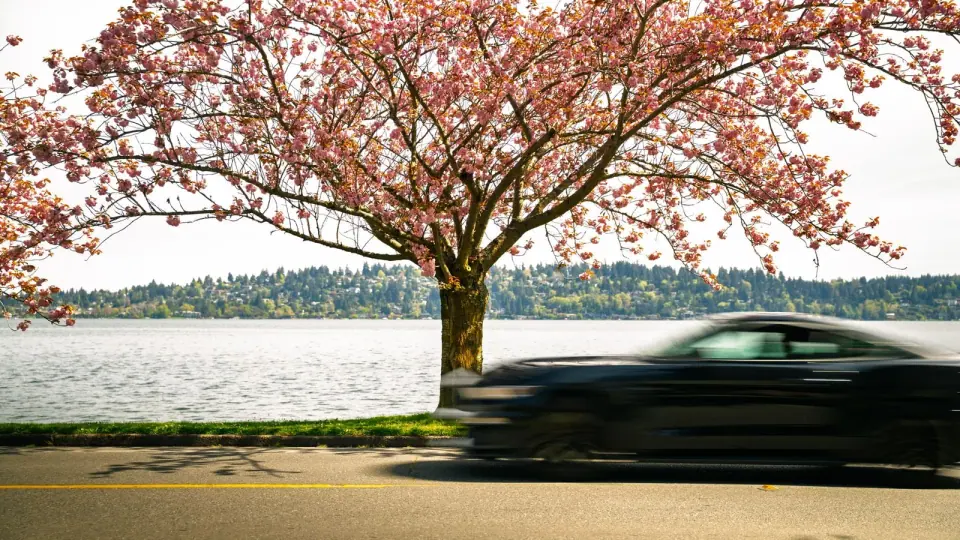
Spring arrives in Seattle in soft pinks and greens, with highs climbing from the mid-50s in March to about 59 in April and showers that come and go. Head to the University of Washington Quad, where the UW's Yoshino cherry trees typically bloom from March through April, and check the university's bloom watch and live cam before you go, since peak timing shifts every year.
Plan an indoor backup for each day, pack a light rain jacket, and browse our cherry blossom guide and Seattle in spring for more places to catch the bloom.
May to June: long days and festival season
Late spring is one of the best balances of weather and value, with highs in the mid-60s to low 70s and rainfall dropping sharply from April. Days stretch long, gardens peak, and the festival calendar fills up.
- Northwest Folklife Festival: A community arts and music festival held at Seattle Center over Memorial Day weekend, running since 1971.
- Seattle International Film Festival: Held each year since 1976, SIFF usually runs in late May at SIFF Cinemas and venues around the city.
July to August: peak summer
This is Seattle at its sunniest and driest, with average highs around 77 to 78 degrees and less than an inch of rain in each month. It is the best time for ferry rides, kayaking, beach days and hikes near Seattle, and the long evenings leave time for a sunset at the end of each day.
- Seafair: The city's summer festival series builds to the Seafair Weekend Festival in late July or early August, with an air show and hydroplane races on Lake Washington. Our Seafair and Blue Angels guide covers where to watch.
- Capitol Hill Block Party: A ticketed summer music weekend on Capitol Hill that bills itself as Seattle's biggest party; see our Block Party guide.
Book hotels and popular tours early for summer dates. Hot spells do happen, and the city's spray parks, beaches and air-conditioned museums are the easiest ways to cool off; our Seattle in summer guide rounds them up.
September to October: golden light and fewer crowds
September is a local favorite, still dry and warm with highs around 72, while October cools to about 61 and the rain returns as the month goes on. The parks put on their fall color, and the arts season gets going.
- Bumbershoot: The long-running arts and music festival fills the Seattle Center campus over Labor Day weekend.
- Refract: The Seattle Glass Experience: Each October, Refract celebrates the region's glass art with events, exhibitions and open artist studios across the city.
- Fall color in the city: Stroll the Japanese maples at the Washington Park Arboretum, the ponds and bridges of Kubota Garden and the bluff trails of Discovery Park.
- Golden larches: Out in the North Cascades, larches turn gold for a brief window in fall, so check the Washington Trails Association for current trail conditions before you go.
Harvest season also fills the city's farmers markets with apples, squash and late berries, and Pike Place Market is open all year. See our fall in Seattle guide for more ideas.
November to February: cozy, wet and festive
Winter is the wet season, with highs in the upper 40s to about 50 degrees and November, December and January each averaging more than five inches of precipitation. Snow comes and goes, averaging about 6 inches a year in the city but varying widely from one winter to the next.
Lean into it. Seattle Center's Winterfest runs for about five weeks from late November through New Year's Eve with ice sculpting, the Winter Train and Village and weekend entertainment, and our Christmas lights guide maps the best holiday displays. On rainy afternoons, head indoors to the museums, theaters and cafes in our rainy day guide, then read Seattle in winter for the rest of the season.
Which season is right for you?
- For the best weather and outdoor time: July to September.
- For a balance of decent weather and smaller crowds: May to June or September to October.
- For blossoms: March to April, timed to the UW bloom watch.
- For holiday lights, theater and indoor culture: late November through December.
Festival dates change from year to year, so confirm on each event's official site before you book.