Space Needle
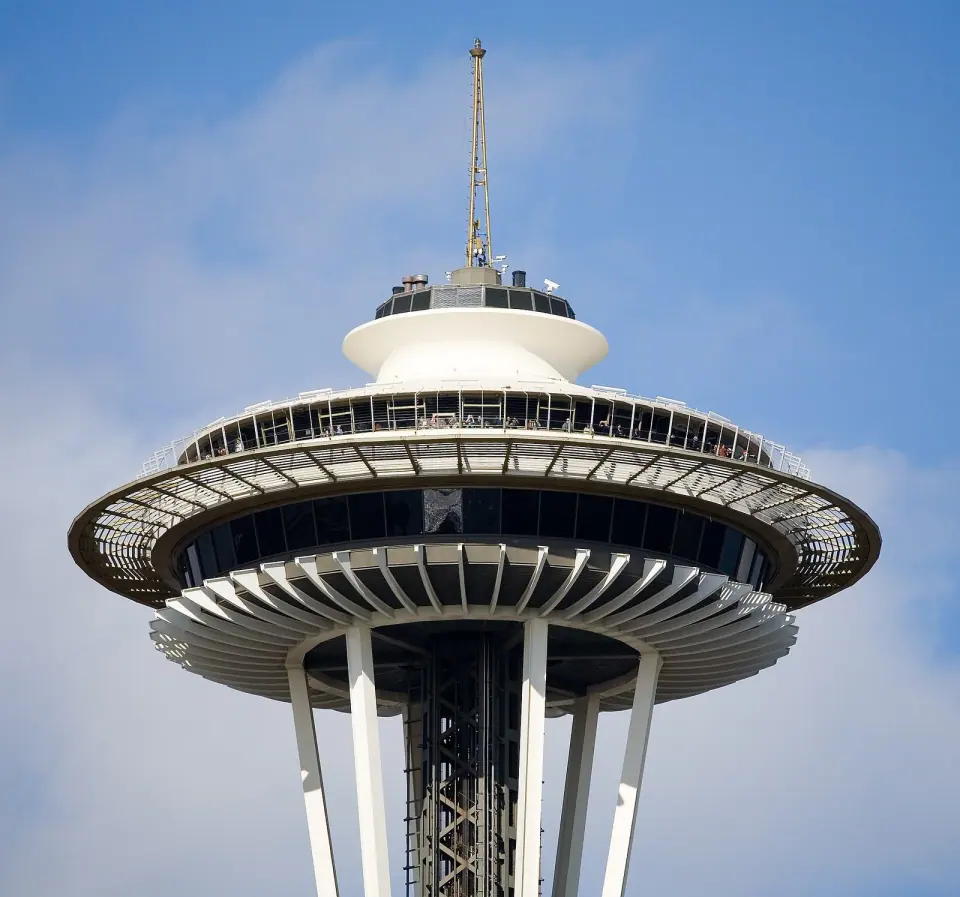
Seattle's best known silhouette started life as a quick napkin sketch by fair commissioner Eddie Carlson, inspired by a tower in Stuttgart, Germany. Three architects turned that doodle into steel. Victor Steinbrueck, later known for defending Pike Place Market, worked on the base, John T. Ridley led the crown, and John Graham, Jr. shaped the flying saucer top.
The 605-foot tower rose in under a year and opened wearing eye-catching colors called Orbital Olive, Re-Entry Red and Galaxy Gold, and for a time it was the tallest structure west of the Mississippi. A major remodel finished in 2018 added a rotating glass floor on the lower observation level and angled glass up top. Dig into the details in our Space Needle history guide, and check the official site for current tickets and hours before you go.
Pacific Science Center
Fair planners asked for something disposable for their science pavilion, but architect Minoru Yamasaki, who later designed New York's World Trade Center towers, gave them something built to last. Drawing on Gothic arches, Islamic architecture and Japanese design, he raised slender white arches above a courtyard fountain.
Step inside the designated city landmark and you will find a busy museum with two IMAX theaters, a Laser Dome, a planetarium and hundreds of hands-on exhibits. Our Pacific Science Center guide covers both the building and what waits inside.
The Monorail and More Fair Survivors
Hop aboard the Monorail, which still does exactly what it was built for, gliding along a short elevated run between Westlake Center downtown and the old fairgrounds. Expect it to be busiest during festivals and games, and both stations were upgraded to handle Seattle Kraken crowds. Its story also includes roughly a decade of votes on a citywide expansion that was never built.
Nearby, look up at the arena roof Thiry designed to echo a Native American rain hat. The building has gone from Seattle Center Coliseum to KeyArena to Climate Pledge Arena, now home to the Seattle Storm and the Kraken. Then wander over to the International Fountain by Japanese architects Kazuyuki Matsushita and Hideki Shimizu, another design inspired by space exploration, which often plays to music.
Downtown Towers That Once Ruled the Skyline
Long before the fair, Seattle measured its ambition in stories. Take a short walk through Pioneer Square and the downtown core to see how the city kept reaching higher.
Smith Tower
Opened in Pioneer Square in 1914 and listed by the city as the L. C. Smith Building, Smith Tower reigned as the tallest building on the West Coast for nearly five decades, giving up the title only when the Space Needle rose in 1962. Get the full story in our Smith Tower guide.
Hoge Building and Seattle Tower
Find the 17-story Hoge Building at Second Avenue and Cherry Street, which briefly held the title of Seattle's tallest building and became a city landmark in 1984. A few blocks north stands Seattle Tower, opened in 1928 as the Northern Life Tower and the city's first Art Deco skyscraper. Its brick skin shifts through 33 shades, dark at the street and pale at the top, so the whole building seems to grow lighter as it climbs.
Arctic Building
This downtown building once served as headquarters for a club of Klondike Gold Rush veterans, and the details give it away. Look for the terra cotta walrus heads lining the exterior, a playful nod to the members' northern adventures.
Landmarks With Unusual Second Lives
Some of Seattle's most loved landmarks were never meant to be attractions at all. Their charm comes from how cleverly the city put them to new use.
Gas Works Park
Head to a point jutting into Lake Union in Wallingford, where Gas Works Park keeps the rusting towers and machinery of the last surviving coal gasification plant in the United States. That industrial skeleton takes center stage, framed by open lawns and skyline views. Our Gas Works Park guide explains the cleanup story and its landmark status.
Fremont Bridge
Built in 1917, this double-leaf bascule bridge spans the Fremont Cut and lifts about 35 times a day, making it the most frequently opened drawbridge in the country. Pausing while boats pass is practically a Fremont ritual, so enjoy the wait. See our Fremont Bridge guide for more.
Freeway Park
Officially named Jim Ellis Freeway Park, this 5.2-acre landmark caps Interstate 5 with concrete terraces and greenery. Walk through and you will cross from downtown to First Hill and the convention center, as a freeway gap becomes a green space made for strolling.
Stages and Halls With Big Names
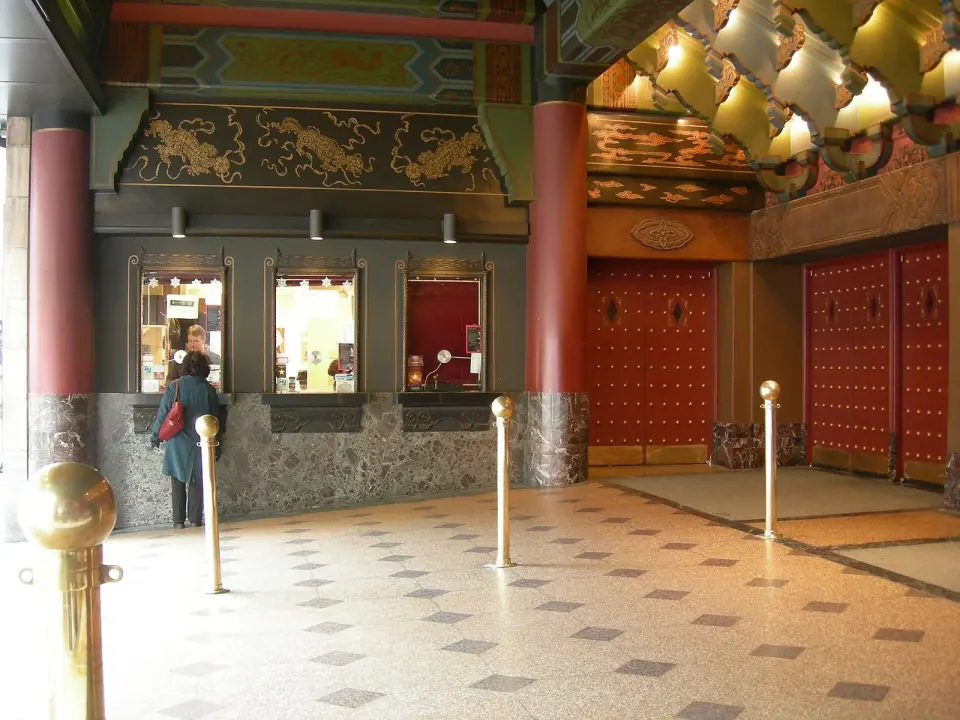
Catch a show at the Paramount Theatre, which opened in 1928 as a Paramount Pictures movie palace. Today this City of Seattle landmark hosts live performances in a 2,807-seat downtown house.
In the Central Area, Washington Hall began in 1907 as a fraternal hall. Its upstairs stage later welcomed Duke Ellington, Billie Holiday and Jimi Hendrix, and the building still works as an events and performance space.
The Waterfront Piers
Stroll the central waterfront, where several piers are protected city landmarks. Pier 54 went from a busy steamer and seaplane dock to the longtime home of Ivar's Acres of Clams. Pier 55 was rebuilt in 1902 after its predecessor collapsed and now serves as the Seattle terminal for Argosy Cruises, while Pier 57, also dating to 1902, holds the Seattle Great Wheel along with the shops and restaurants of Miners Landing.
Modern Buildings Joining the List
Seattle's newer architecture is fast earning icon status of its own. Spend time in the daylight-filled Central Library, designed by Dutch architect Rem Koolhaas and opened in 2004, where the Books Spiral carries the collection on shelving that curves continuously through the top four stories. Our Central Library guide covers a visit.
Back at Seattle Center, Frank Gehry's Museum of Pop Culture opened in 2000 wrapped in rippling steel and aluminum, and one of its colors, purple haze, honors Seattle-born Jimi Hendrix. In South Lake Union, The Spheres opened in 2018 on Amazon's campus: three linked glass domes holding more than 40,000 plants, many of them on a four-story living wall.
Touring the Landmarks With a Guide
For deeper context, join a guided walking tour of the city's notable buildings with the Seattle Architecture Foundation. Historic Seattle also offers events such as tea in a historic private estate. Offerings change, so check with each organization for current schedules and booking details.