The idea grew out of conversations among Seattle art patrons, including Virginia and Bagley Wright, Mary and Jon Shirley, and then museum director Mimi Gardner Gates. It picked up speed in 1996, when Gates, Robert Measures and Martha Wyckoff were stranded on a fly fishing trip in Mongolia after a helicopter crash. Soon after, Wyckoff, a trustee of the Trust for Public Land, began hunting for a location.
Mary and Jon Shirley became the foundational donors with a $30 million gift. Weiss/Manfredi Architects led the design, collaborating with Charles Anderson Landscape Architecture, Magnusson Klemencic Associates and other consultants.
A loss for streetcar fans
Part of the site once held the maintenance and storage barn for the Waterfront Streetcar, and building the park meant tearing it down. Museum staff offered to adapt the carbarn into a sculpture, but the building was demolished and the line stopped running in November 2005, a route that both tourists and locals had loved.
An award winner
Honors arrived quickly after opening. In 2007 the park earned Harvard Graduate School of Design's Veronica Rudge Green Prize in Urban Design and a General Design Honor Award from the American Society of Landscape Architects. In 2008 it added a World Architecture Festival Nature Category Award, a Travel + Leisure Design Award for best cultural space, and a Top Restored Beach Award from the American Shore and Beach Preservation Association.
Meet the Sculptures
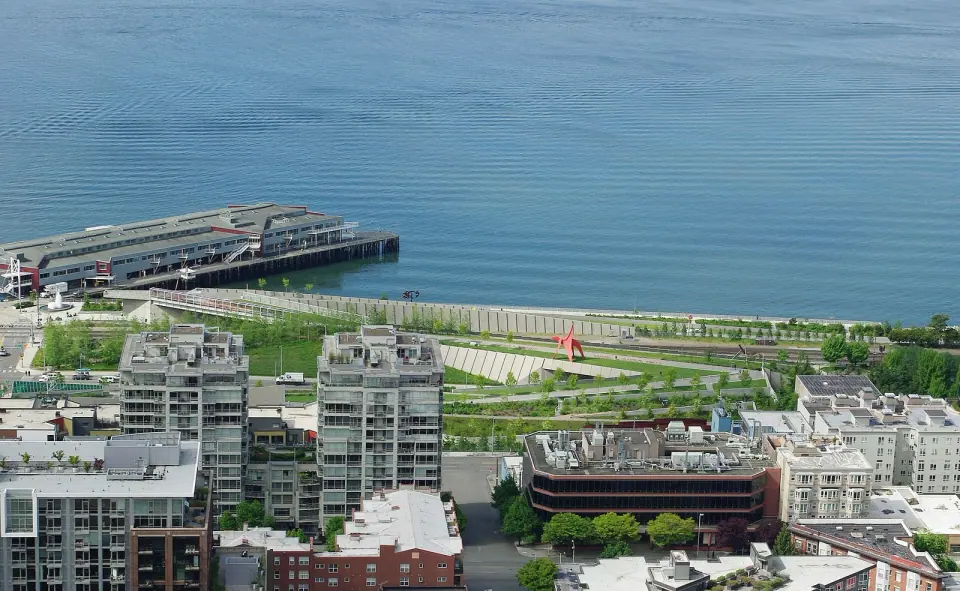
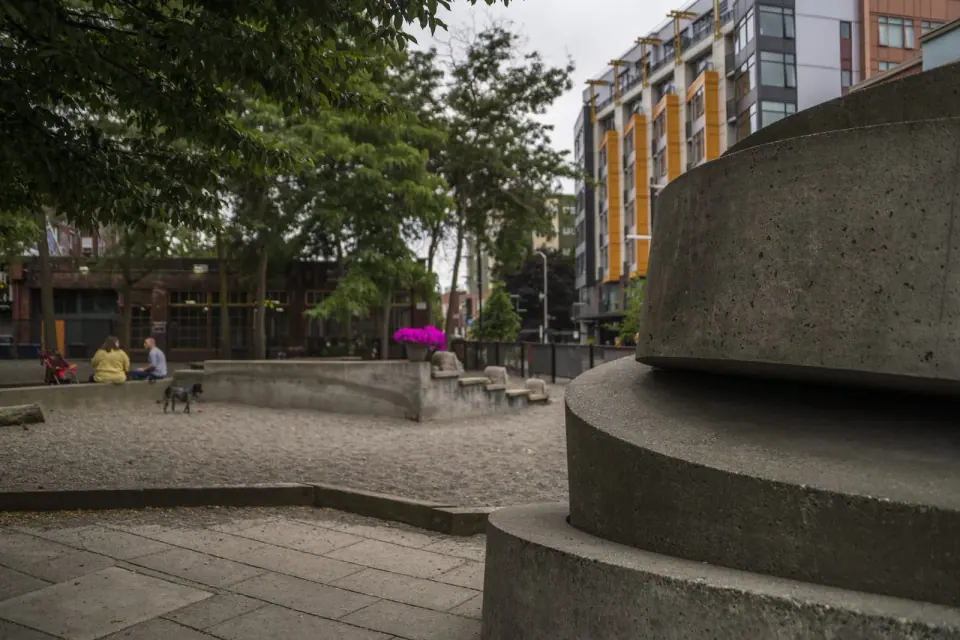
Stroll the grounds and you are walking through a survey of major 20th and 21st century sculptors. Most pieces are big enough to spot from a distance, and the paths carry you from one work to the next as views of the water open up around you.
Monumental steel and bold color
- Eagle (1971), a painted steel work by Alexander Calder
- Wake (2004), Richard Serra's corten steel piece with its rusted surface
- Bunyon's Chess (1965) and Schubert Sonata (1992), both by Mark di Suvero
- Wandering Rocks (1967) and Stinger (1999), both by Tony Smith
- Curve XXIV (1981), Ellsworth Kelly
- Persephone Unbound (1965) and Perre's Ventaglio III (1967), both by Beverly Pepper
- Sky Landscape I (1983), Louise Nevelson
- Two Plane Vertical Horizontal Variation III (1973), George Rickey
Pause at Stinger for a curious story. Tony Smith drew the design in 1967 and built a plywood mock-up in 1968, yet the painted steel version you see here was fabricated in 1999, after his death, and his estate donated it to the Seattle Art Museum.
Louise Bourgeois and works made for the site
Look for Louise Bourgeois twice: her Eye Benches I, II and III (1996) and the fountain sculpture Father and Son (2004 to 2006). Nearby you will find Jaume Plensa's Echo (2011), Roxy Paine's steel tree Split (2003) and Teresita Fernández's Seattle Cloud Cover (2006).
Make time for Mark Dion's Neukom Vivarium (2006), along with two works by Roy McMakin, Love & Loss (2005) and an Untitled piece (2004 to 2007). Ginny Ruffner's Mary's Invitation: A Place to Regard Beauty (2014) completes the lineup.
Rotating installations and past favorites
Each visit can bring something new, since the Seattle Art Museum regularly brings in a major rotating artwork. Earlier installations came from Victoria Haven (2016 to 2017), Spencer Finch (2017 to 2019) and Regina Silveira (2019 to 2020).
A few well-known pieces have moved on. Claes Oldenburg and Coosje van Bruggen's Typewriter Eraser, Scale X was on loan from Paul Allen when the park opened and relocated to Seattle Center in 2016, and Anthony Caro's Riviera is also a former work.
A Shoreline Rebuilt for Young Salmon
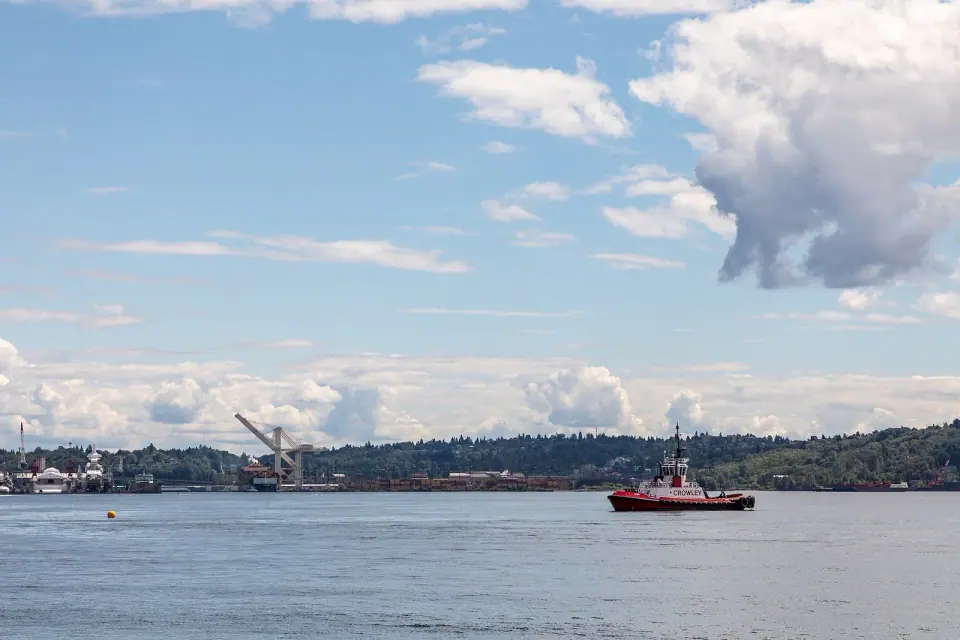
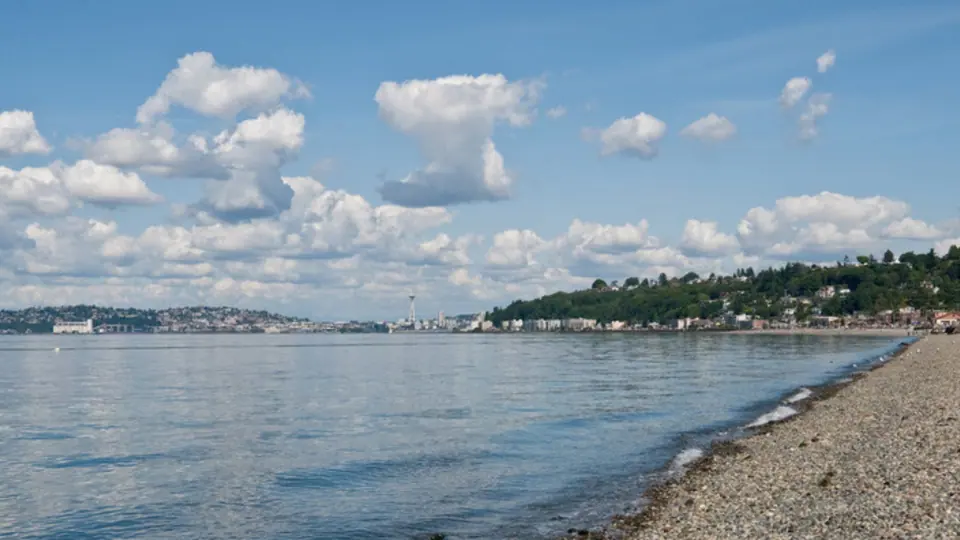
Head down to the beach and you are standing on a working restoration project. During construction, $5.7 million went into rebuilding 1,000 feet of seawall and underwater shoreline inside Myrtle Edwards Park.
Crews placed 50,000 tonnes of riprap to shape a three-level underwater slope. Large rocks on top break up the waves, a flat middle bench recreates an intertidal zone, and smaller rocks below are meant to draw in sea life and kelp, all to help juvenile salmon from the Duwamish River and to test methods for future shoreline projects.
Look, Don't Touch
Keep your hands to yourself here, thanks to a no-touch policy set by the museum's chief conservator, Nicholas Dorman. Oils from skin can permanently change the art, which matters especially for Serra's Wake, whose rusted corten steel surface gives it that deep color.
Salt air drifting off Puget Sound is tough on the collection too. Bunyon's Chess, made largely of exposed wood and metal, needed conservation work that the museum completed in 2018. Calder's Eagle faces its own threats: birds can damage the paint, so gardeners trim the grass around its base with scissors instead of a mower, and in 2020 the museum tented it under a large tarp and fully repainted it with fresh primer.
Plan Your Visit
Walk right in, since entry is free, and you will be joining the hundreds of thousands of visitors who come each year. Check the Seattle Art Museum's official website before you go for current hours, pavilion details, parking and a map.
- Admire the sculptures, but keep your hands off them.
- Save time for the beach and the shoreline path toward Myrtle Edwards Park.
- See what is on view, because the museum rotates a major installation.
Watch for occasional special programs as well. In June 2026 a nine-hole mini golf course opened for a three-month run, with each hole designed by an artist and set among the sculptures.