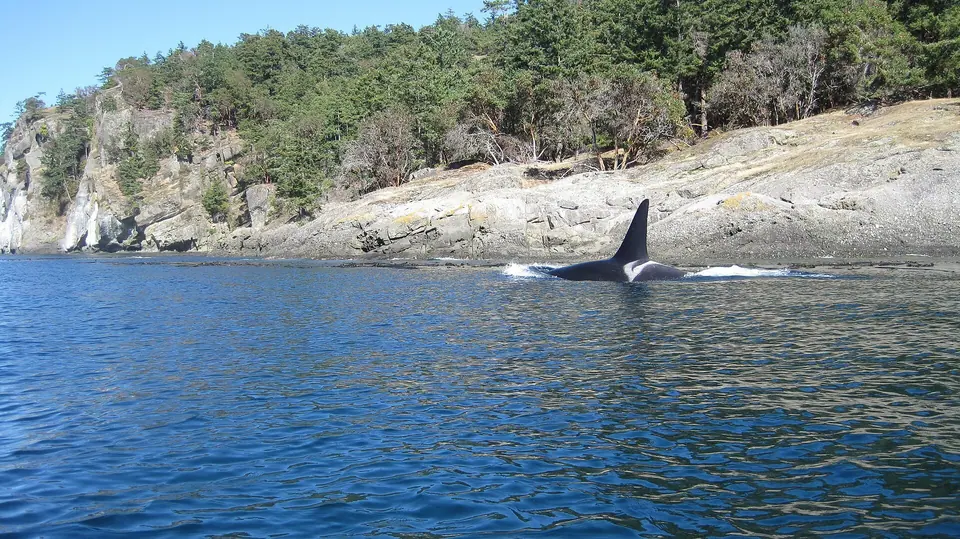
Bigg's, or transient, orcas
Transient orcas, also called Bigg's orcas, hunt marine mammals rather than fish. You will find them patrolling Puget Sound regularly, searching for harbor seals, sea lions and porpoises. Because they follow their prey, they can turn up near the city in any season.
Alki Beach: Your Classic Shore Spot
Start at Alki Beach, the easiest place in the city to try your luck from land. It sits in West Seattle, a short drive from downtown, and you can skip the car entirely by catching the water taxi. The ride across the bay makes a pleasant opening to the outing.
The orcas come here for a practical reason. Seals and their pups haul out to rest along this stretch, which makes the beach a natural stop for hunting transients. Your odds climb in fall and winter, but transient orcas can appear year round.
Bring binoculars, because whales often surface well offshore, and a good pair turns a distant fin into a real sighting. Dress for wind and damp air, since you may spend a while standing and scanning the water.
More Seattle Parks for Spotting Orcas
Stroll any of several city parks along the water for strong wildlife viewing, with orcas among the possible sightings. Even when the whales stay away, these spots reward the trip with birds, turtles and big open views of the Sound.
- Discovery Park spreads wide stretches of shoreline and bluff across Magnolia, where bald eagles and herons often keep you company.
- Lincoln Park in West Seattle pairs nicely with Alki for a full day of scanning the water.
- Golden Gardens in Ballard gives you a sandy beach facing the Sound and a relaxed place to wait with binoculars.
- Carkeek Park in north Seattle rounds out the list with beach access and forest trails.
For recent sightings and viewpoints beyond the city, browse the Orca Network's online map of whale viewing spots across the region. A quick look before you head out can point you toward the shoreline with the latest activity.
Head Out on a Tour for Better Odds
Watching from shore takes patience and luck. A tour puts you on the water with crews who track whale movements, and many operators put your chance of a sighting at around 90 percent. Some even offer a free return trip if you see no whales, so read the policy before you book.
Leaving straight from Seattle
Hop aboard the FRS Clipper for a half-day trip from the city devoted entirely to whales. An onboard naturalist guides the cruise, and you may also spot sea lions and seabirds along the way. It is a good fit when your time in town is limited.
Short trips north of the city
Puget Sound Express is a third-generation family business, and that long history gives its crews deep local knowledge. Boats leave from Edmonds, about 17 miles north of Seattle, or from Port Townsend, and all three ships have indoor seating for chilly days.
Heading to the San Juan Islands
During Southern Resident season, the islands are where the action is. Some outfitters run full-day trips that pick you up downtown and drive north to Anacortes, sometimes stopping at Deception Pass State Park on the way. Others in Friday Harbor offer packages that begin with a Kenmore Air seaplane flight from Lake Union or Lake Washington, so you can watch for whales from the air.
Grab a paddle to get even closer to the water. Crystal Seas Kayak leads kayak trips through the islands lasting from a few hours to a full day, plus a ship-based cruise if you would rather stay dry. Check each operator directly for current schedules and prices, which can change.
Give the Whales Room
Whales are protected under the federal Endangered Species Act, and boats must keep their distance. The regulated distance is 100 yards for most whale species and 200 yards for Bigg's orcas, rising to 1,000 yards for the endangered Southern Residents. Reputable tours follow these rules, and if you are kayaking, you should know them too.
What to Pack
On a beach or a boat, a little preparation makes the wait far more comfortable.
- Warm layers, since the water stays cold and the wind picks up quickly
- Binoculars for spotting distant fins and spouts
- A camera, ideally with a zoom
- Snacks, especially for longer trips
A Waterfront Backup Plan
If the whales do not cooperate, keep the marine theme going at the Seattle Aquarium. Its Ocean Pavilion, opened in 2024, showcases sharks, rays and coral from the Coral Triangle, and a large oculus window above the entrance gives passersby a free peek inside.
From the pavilion, step into Waterfront Park and follow its promenade for an easy stroll along the bay. Bird lovers can also look into the Owl Prowl night hikes at the Seward Park Audubon Center, held in the park's old-growth forest.