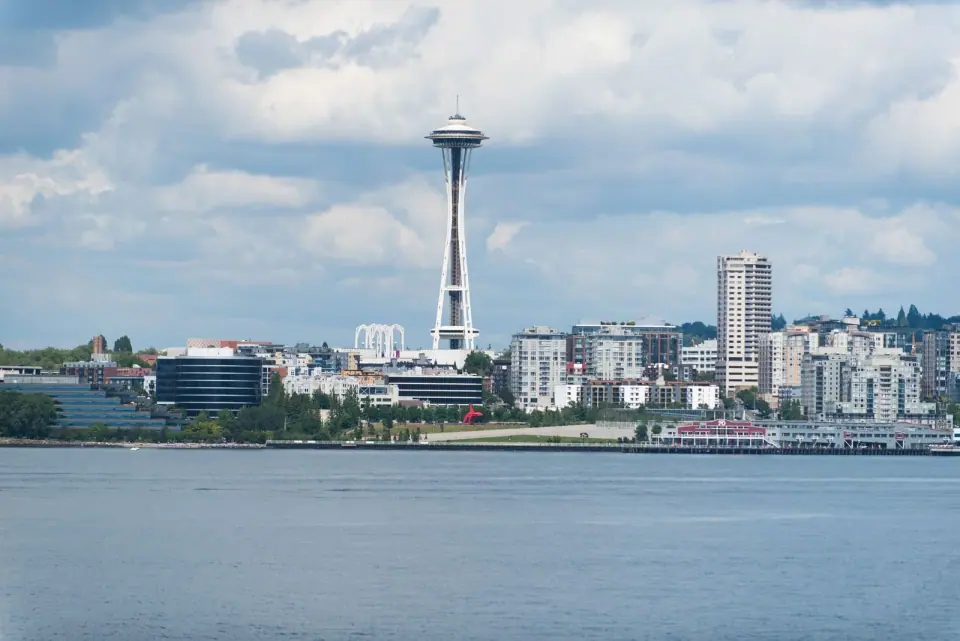
Giving your feet a break
Hop on Link light rail, which runs underground through the Downtown Seattle Transit Tunnel between Westlake and Chinatown-International District stations. That single line carries you the length of downtown in minutes. Plenty of bus routes also cross the core, and the monorail leaves from Westlake Center for Seattle Center.
Your Walkable Day of Things to Do in Downtown Seattle
This loop moves roughly north along the water, then curves south through the middle of downtown. Feel free to shuffle the order to suit the weather or your interests, and check official websites for current hours before you go, since schedules change.
Morning: Pike Place Market and the bluff
Begin at Pike Place Market, where farm produce, fish and crafts have been sold above Elliott Bay since 1907. Considered the oldest continually operating farmers market in the United States, it still anchors downtown life. Arrive early to watch vendors setting up before the crowds build.
Step just northwest of the market to Victor Steinbrueck Park, a small lookout facing the bay that reopened in March 2025 after a major renovation. Then follow the Overlook Walk, a landscaped elevated path that opened in 2024, as it carries you from the market down toward the aquarium and the redesigned waterfront.
Late morning: along the waterfront piers
The Seattle Aquarium spreads across three buildings at Piers 59 and 60. Peer into Puget Sound tide pools and watch the sea otters, then cross to the Ocean Pavilion, opened in 2024, for sharks and rays from the Coral Triangle. For families, it is the strongest stop on the water.
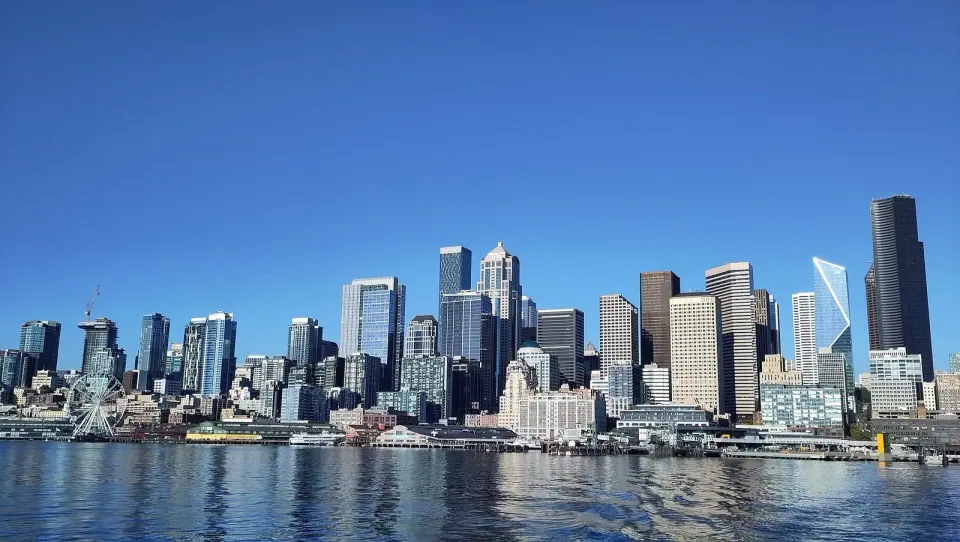
Stroll south along Alaskan Way and the piers start telling their history. Pier 57, a 1902 working pier and City of Seattle landmark, holds the Seattle Great Wheel, rising 175 feet, along with a vintage carousel, shops and seafood restaurants. Next door, Pier 55 was rebuilt in 1902 after a collapse and now serves as the downtown terminal for Argosy Cruises.
At the foot of Spring Street, Pier 54 is where wooden steamers once tied up and where Ivar Haglund opened his first aquarium and fish and chips stand. Washington State Ferries also leave from the downtown waterfront, so catch one across to Bainbridge Island or Bremerton if a ride on the water tempts you.
Midday: north to the sculpture park and Belltown
Head north along the shore to the Olympic Sculpture Park, run by the Seattle Art Museum. Opened in January 2007 on a former industrial site, this free, nine-acre park sets nearly 20 large works beside a rebuilt Puget Sound shoreline and wide views of the bay.
Climb into Belltown on the way back. Bell Street Park, built in 2014, is a curbless shared street where walkers and drivers use the same space. A few blocks away, pause at Tilikum Place, a small triangular plaza with James Wehn's life-size statue of Chief Seattle.
Afternoon: the retail core and the library
Westlake Park, at 4th Avenue and Pine Street, acts as downtown's town square and reopened after a makeover in May 2026. Right beside it, the monorail terminus at Westlake Center offers about a one-mile ride to Seattle Center. Nearby McGraw Square, one of the smallest parks in the city, pairs a 1913 bronze of Governor John McGraw with the South Lake Union Streetcar stop.
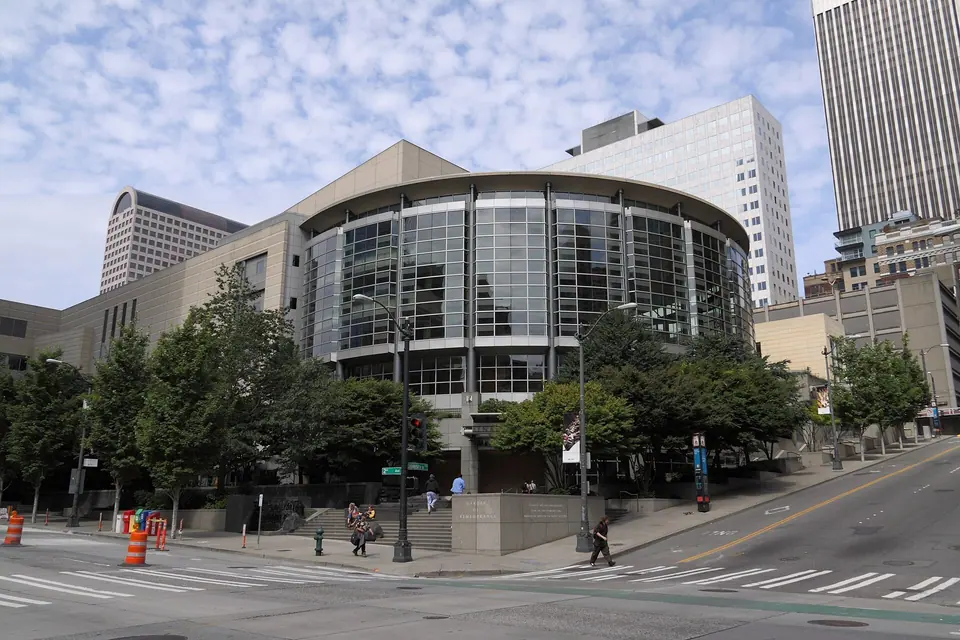
Walk south to the Central Library at 1000 4th Ave, an 11-story glass and steel building designed by Rem Koolhaas. Ride up through the Books Spiral, seek out the Red Floor and settle into the tenth-floor reading room. Wandering costs nothing, and it makes a welcome rest stop.
Take a short detour east to Freeway Park, a 5.2-acre green space built right over Interstate 5. Opened in 1976 and now a Seattle Landmark, it links downtown with the Seattle Convention Center and First Hill, and it feels surprisingly calm given the traffic rushing below.
Late afternoon: Pioneer Square
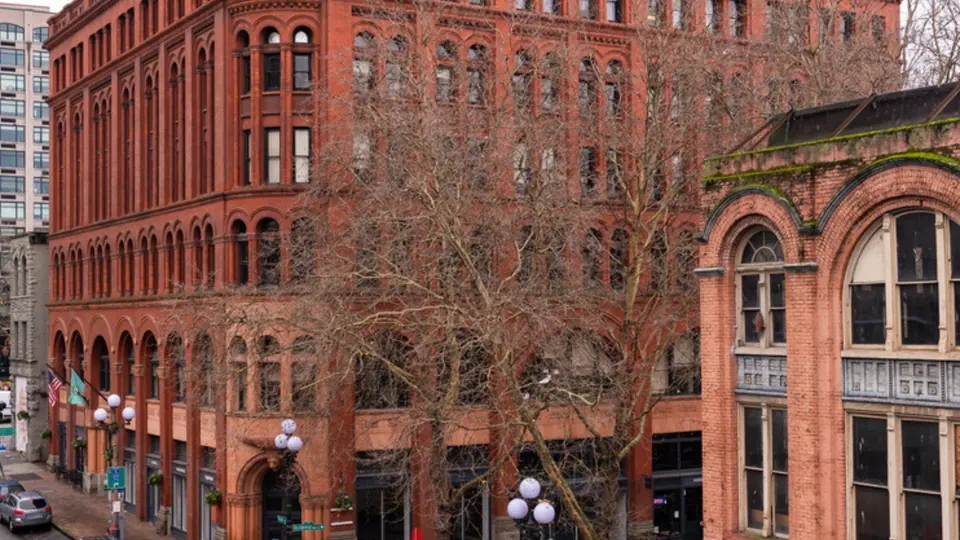
Pioneer Square is where the city began, when the Denny Party settled a marshy spot with a deep harbor here in 1852. After the Great Seattle Fire, the business district shifted into the area that is now downtown.
Look up at Smith Tower, the white terra cotta skyscraper that opened in 1914 and stood as the tallest building on the West Coast until the Space Needle arrived in 1962. Then visit Pioneer Square Park at 100 Yesler Way, home to a 50-foot Tlingit totem pole that is a National Historic Landmark.
Use Occidental Square as an easy base for admiring the Hoge Building and other nearby towers. City Hall Park, beside the King County Courthouse, reopened in 2023 with a restored lawn and a nightly art installation honoring Coast Salish voices. Down by the water, find the 1920 pergola at the Washington Street Public Boat Landing, listed on the National Register of Historic Places.
Evening: Chinatown-International District
Wrap up your day a few blocks southeast at Hing Hay Park, the neighborhood's community square. Look for its pavilion donated by the mayor of Taipei and a dragon mural from 1977. In summer the park hosts tai chi, and it is the site of the annual Dragon Fest.
Kobe Terrace, named for sister city Kobe, Japan, holds the Danny Woo International District Community Garden. Families should seek out Dragon Park at 700 S Lane St, where a bronze dragon by Gerard Tsutakawa honors volunteer first responder Donnie Chin. On Maynard Avenue South, the 1911 Eastern Hotel, built for the Wa Chong Company, is a city landmark worth a look.
Architecture Worth Tilting Your Head For
Columbia Center climbs 76 floors, more than any other building west of the Mississippi, yet some of the older, shorter buildings are more rewarding. The Seattle Tower, the city's first Art Deco skyscraper, opened in 1928, and its brick skin shifts through 33 shades from dark at the base to light at the top.
On Cherry Street, spot the terra cotta walrus heads along the facade of the Arctic Building, built for Klondike Gold Rush veterans. The Rainier Club, founded in 1888 before statehood, occupies a 1904 clubhouse at Fourth and Columbia, while the Washington Athletic Club has filled a 21-story Art Deco tower on Sixth Avenue since 1930.
Keep your eyes open at street level too. Downtown once had dozens of street clocks advertising businesses, and only four remain as of 2024.