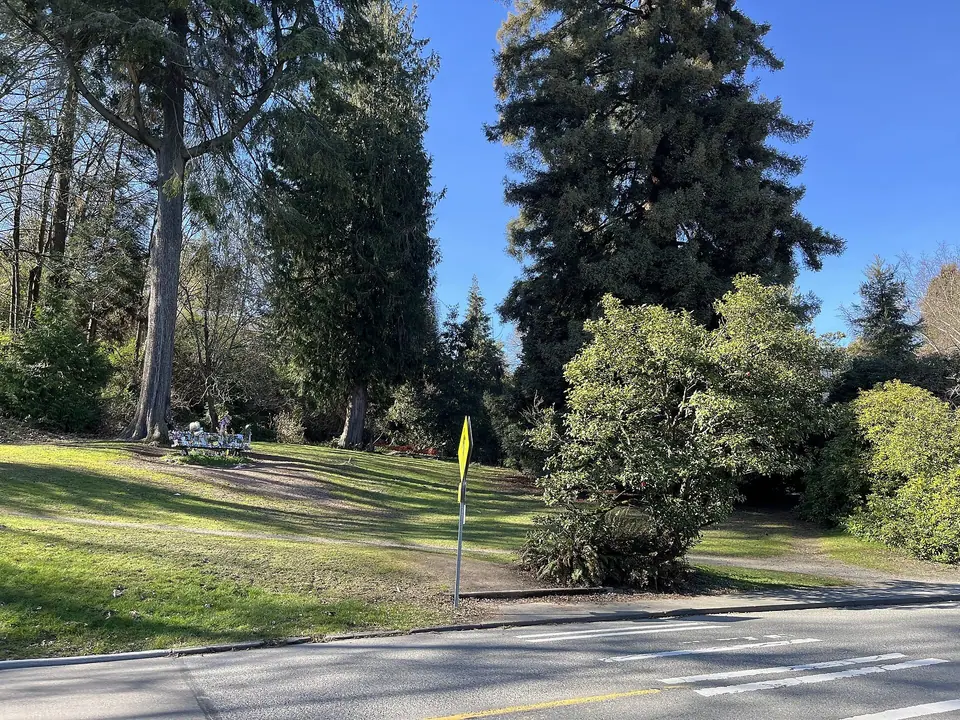
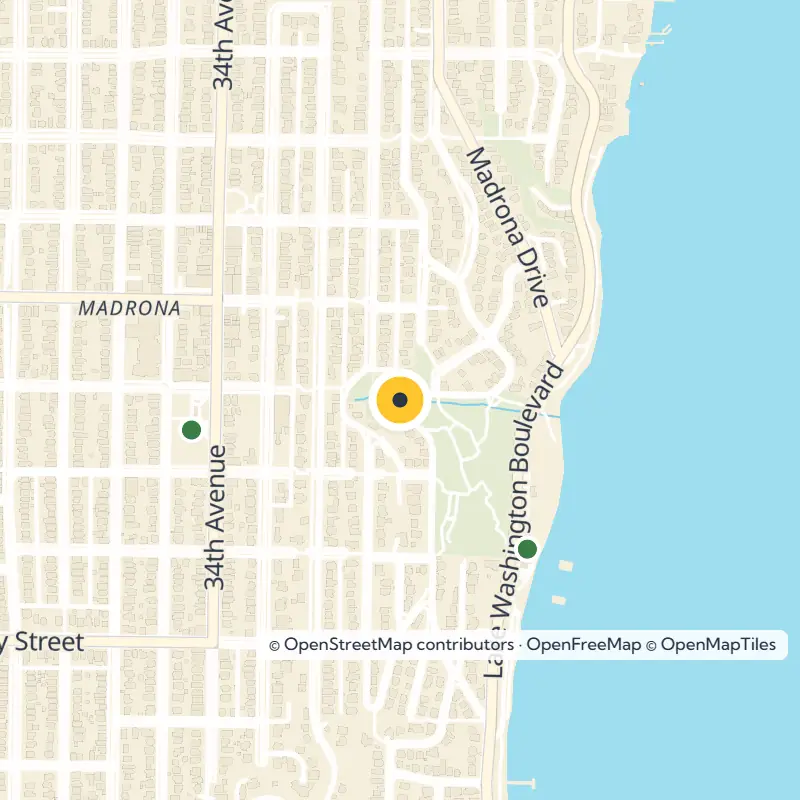
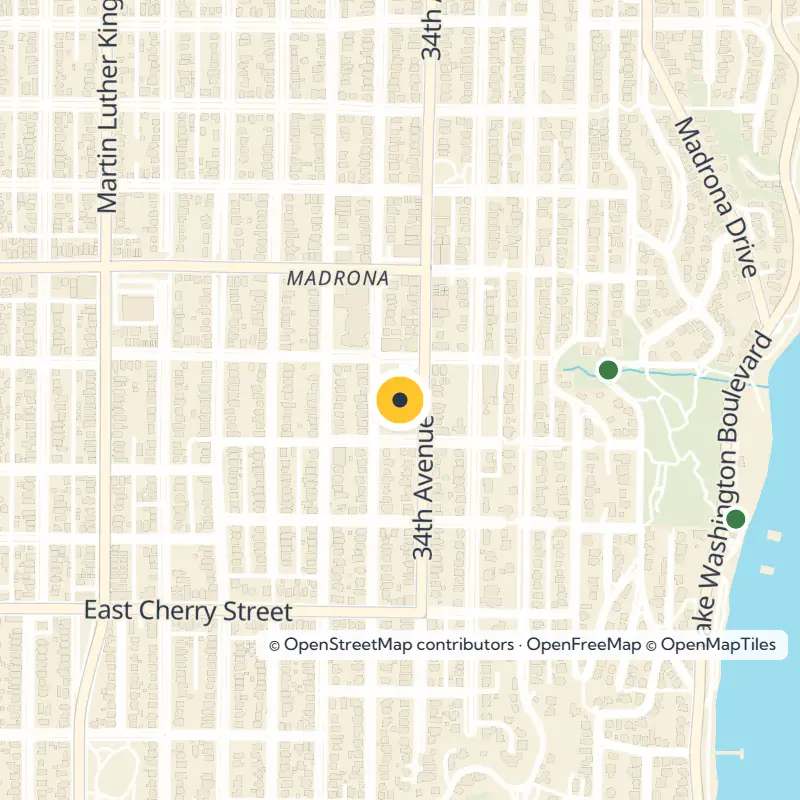
The park sits in the Harrison/Denny-Blaine neighborhood, a quiet residential pocket of the Central Area district. Park in the lot at the top, right beside the oval loop of E Denny Blaine Place, and walk down toward the water.
Three Tiers Stepping Down to the Lake
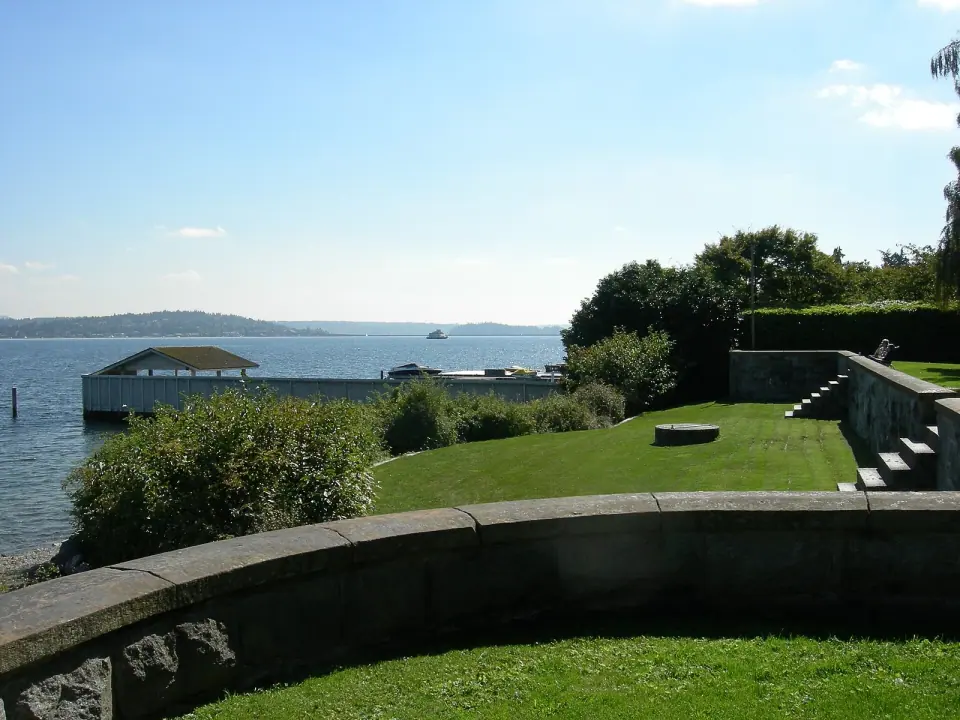
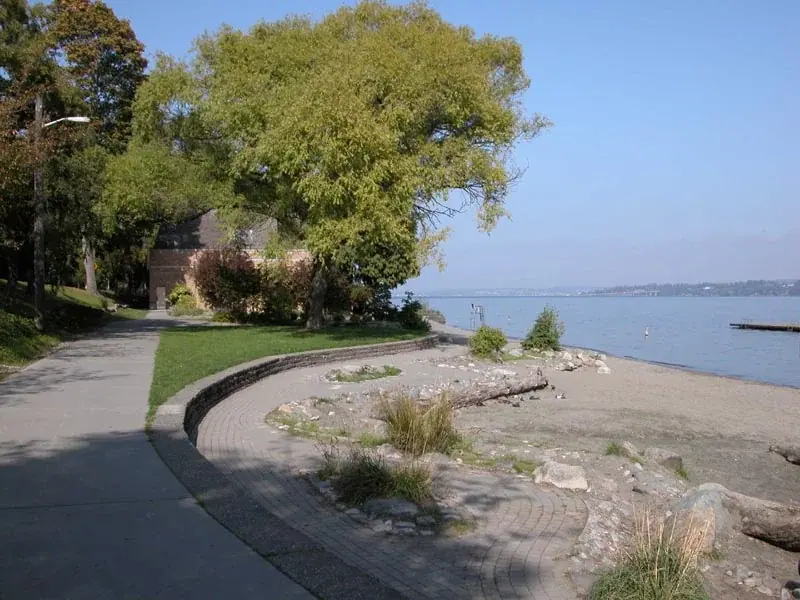
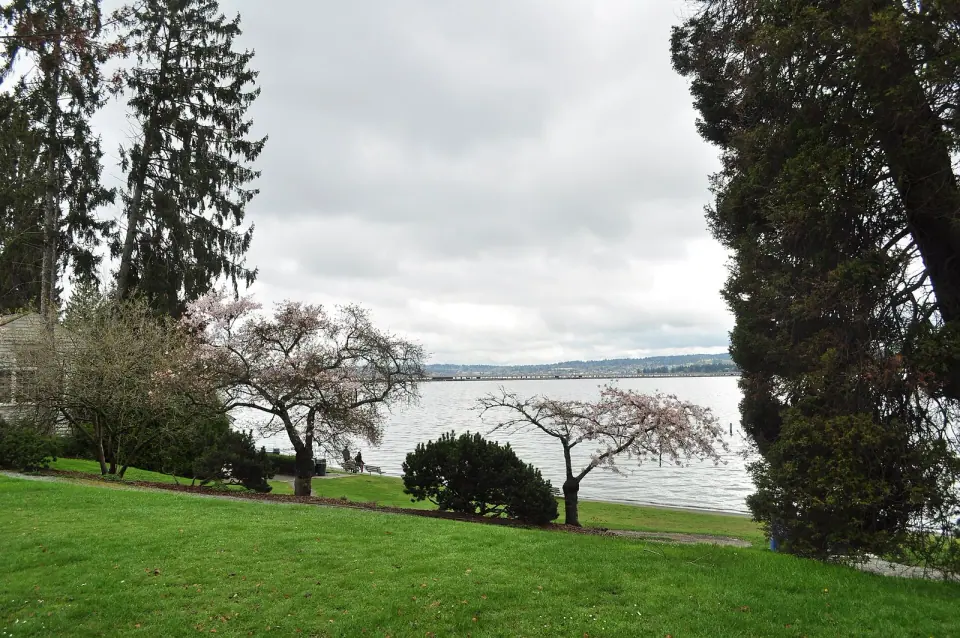
Picture the park as three levels descending toward the lake, plus a grassy patch tucked inside the oval loop of E Denny Blaine Place. Each tier has its own character, so get to know the layout before you choose where to spread out.
- Upper tier: a lawn stretching between the parking lot and the old seawall, shaded by several large trees.
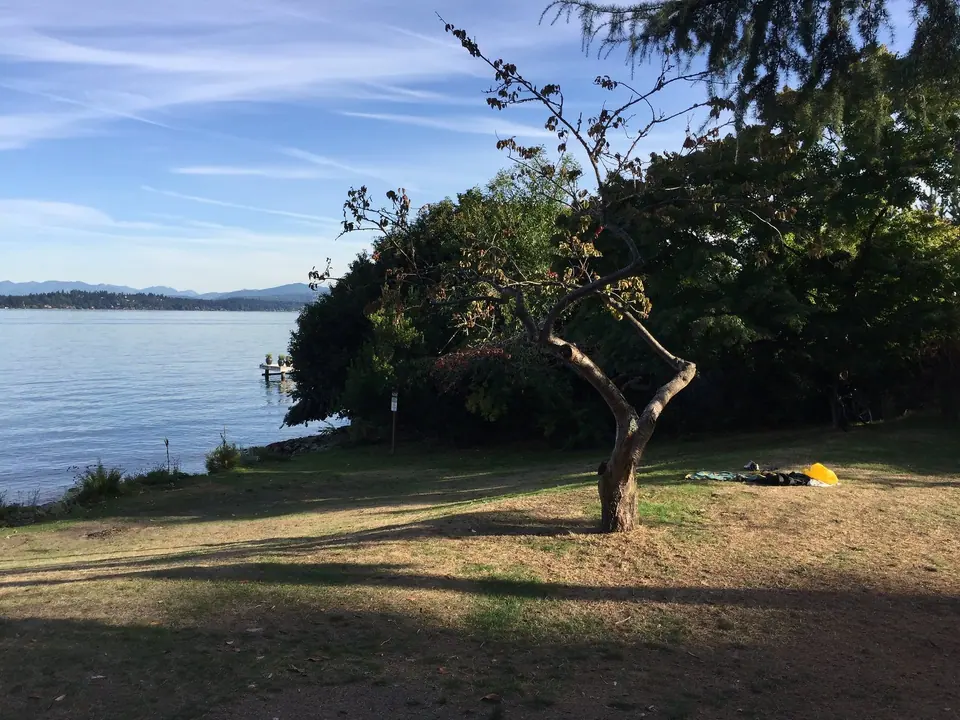
- Middle tier: another sweep of grass running from the lake side of the seawall down to the beach.
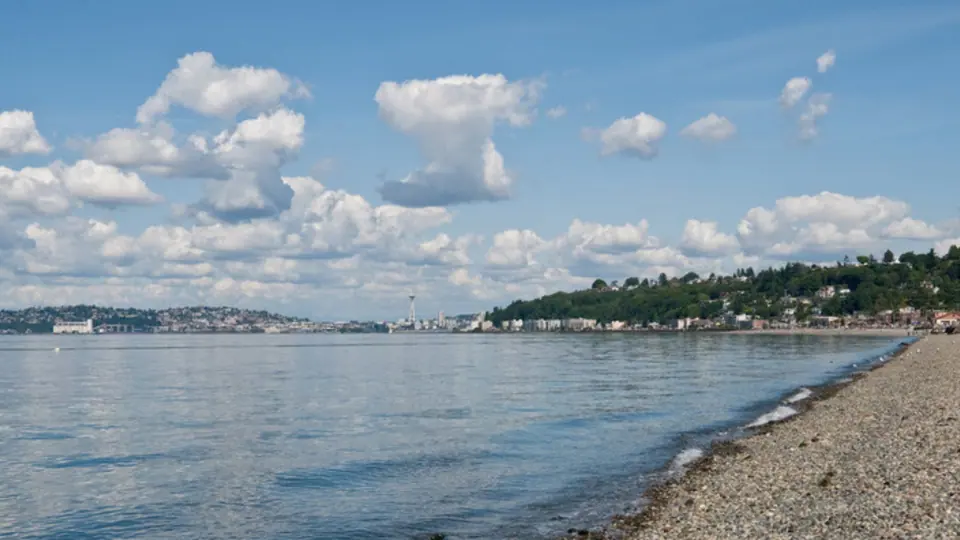
- Lower tier: a sandy beach with a rocky shoreline, where small, smooth river pebbles carry on a few feet into the water.
Take one of the two sets of stairs built into the seawall to reach the beach. On warm summer days, expect all three tiers to fill up.
The Seawall That Lost Its Lake
As you cross between the upper and middle tiers, notice the seawall: it marks where the lake once reached. Builders were already working on it by 1900, a year before the land was formally platted, and a wharf soon followed. Early features also included a boat facility, an oval lagoon linked to the lake by a narrow channel, a small rustic shelter, paths and lawns.
Everything shifted in 1917, when the Montlake Cut connected Lake Washington to South Lake Union and the lake dropped about 9 feet. Suddenly the seawall stood well above the water, with a gently sloping beach revealed below. Once the debris was cleared and the ground smoothed, that new beach became the swimming spot you can enjoy today.
Look inside the oval loop and imagine the fountain that the original plat drawing showed there, though it was never built. A renovation completed in 2004 focused largely on the big planting bed just above the shoreline.
A Gift to the Public in 1901
The park's story begins on April 15, 1901, when the plat for the Denny-Blaine-Lake Park Addition was filed with the city. Landowners Charles L. Denny and his wife, Viretta Denny, dedicated the addition's streets, parks and other open spaces for public use forever, and the same filing created four other parks.
Denny and his partner, E. F. Blaine, meant these spaces for all of Seattle, not just subdivision residents, and they did not want them turned into amusement grounds. Blaine went on to serve on the Park Commission from 1902 to 1908 and was later honored as the father of the Seattle park system. Generosity ran in the Denny family, too: Charles's uncle, David Denny, donated the land for Seattle's first public park in 1883.
From Whitman Place to Denny Blaine
The plat never gave the park a name. Because it sat at the end of a loop called Whitman Place, many people called it Whitman Park, though that name was never official. In 1918 the City Council renamed the loop Denny Blaine Place to avoid confusion with another Whitman street, and the park gradually took on the Denny-Blaine name, which Seattle Parks and Recreation now writes without the hyphen.
While it still owned the land, the Denny Blaine Land Company handled the early construction and landscaping, with the parks department taking on maintenance. The park was transferred to the city in 1932.
A Stop on the Olmsted Plan
John Charles Olmsted's 1903 report for Seattle described this spot as a water terrace, the place where a scenic drive running north along the lake from Seward Park would turn inland toward Washington Park. You will find the park on the Olmsted system maps of 1903, 1908 and 1928, and a 1909 Park Board report listed it among Seattle's fully improved parks. In 2016 it joined the National Register of Historic Places as part of Seattle's Olmsted Parks and Boulevards.
Clothing Optional Culture
Seattle Parks and Recreation does not designate Denny Blaine Park as clothing optional, but the city recognizes that it has been used that way for more than 50 years, especially by the queer community. Public nudity is not illegal in Seattle, so the practice is neither officially approved nor prohibited, and regular nudists help look after the beach.
This tradition reaches far back. Ellsworth Storey, the noted architect who lived nearby, was once arrested here for skinny dipping. In the 1970s, women who mostly identified as lesbian began going topless at the beach and nicknamed it Dykekiki Beach, blending a reclaimed slur with Waikiki. Police periodically cited sunbathers under a lewd conduct ordinance, including 16 women in a 1988 crackdown, until the city dropped that ordinance in 1990 after losing the case Seattle v. Johnson.
Since the mid-2010s, the crowd has grown more mixed across gender and sexual orientation, with a notable rise in visitors from Seattle's transgender community after the COVID lockdown. That role became very public in 2023, after a neighbor offered to fund a toddler play area on the upper tier. At the community meeting Seattle Parks and Recreation held on December 6, 2023, around 400 people packed the room to oppose the plan and share what the park means to them.
Planning Your Swim
Come expecting a casual, natural beach. If you want lifeguards and full accessibility, head to one of two public beaches close by:
- Madrona Park: about 0.8 miles south.
- Madison Park: about 1.3 miles north.
Expect the clothing optional atmosphere described above, particularly on sunny afternoons. Before you go, check with Seattle Parks and Recreation for current hours, rules and any updates.
Small Parks and Storey Houses Nearby
Stroll the surrounding streets to discover a cluster of small green spaces and historic homes, all within about a third of a mile.
- Viretta Park (0.1 mi), named for Viretta Denny.
- Stevens Triangle (0.1 mi).
- Howell Park (0.2 mi), another lakeside parcel Olmsted wanted the city to acquire.
- Ellsworth Storey House (0.2 mi), a landmark linked to the architect from the skinny dipping story.
- Denny Blaine Lake Park (0.2 mi).
- Lakeview Park (0.2 mi).
- Rohrer House (0.3 mi), a city landmark.
- Brehm Brothers House #1 (0.3 mi), also a landmark.
Ready for more green space? Browse our guide to all parks in Seattle.