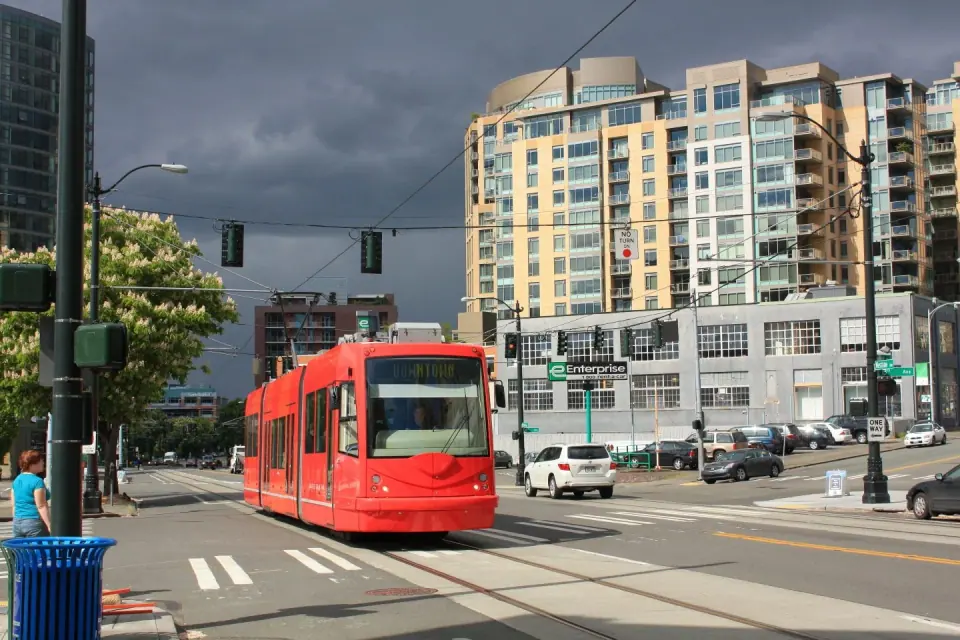
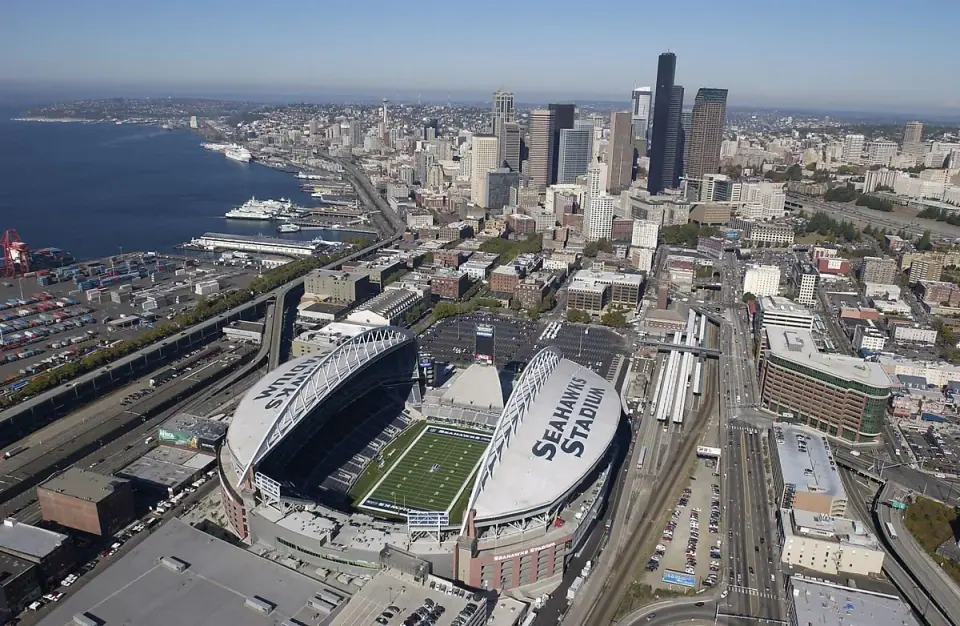
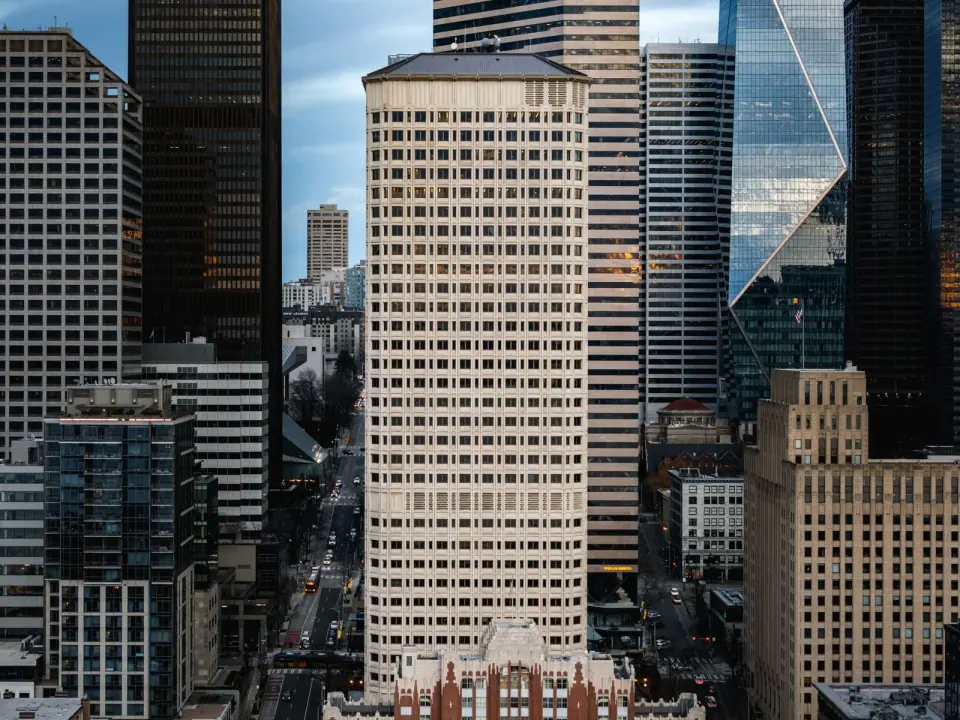
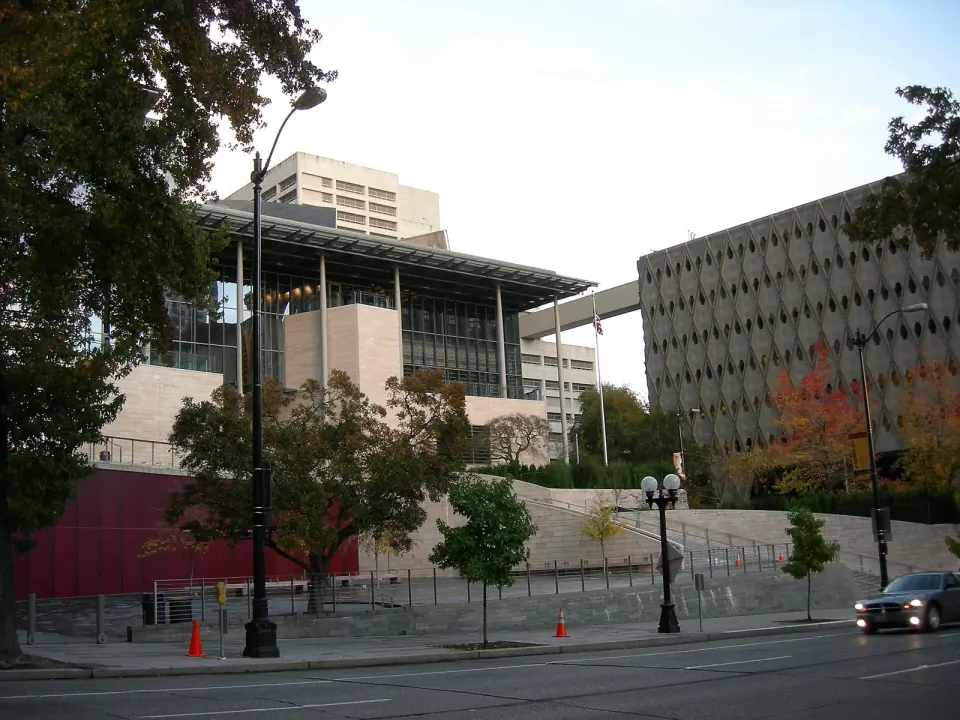
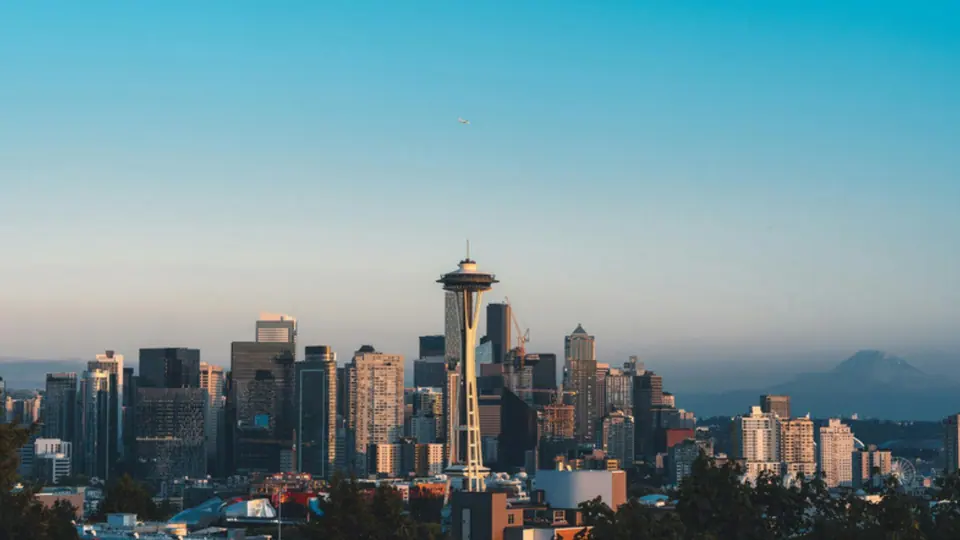
With just seven stops, the whole trip goes by quickly. Use it to hop between downtown shopping and the offices, parks and older industrial buildings of South Lake Union, skipping a long walk uphill or across busy streets.
Transfers at Westlake and beyond
Westlake is where this line really proves its worth. Step down into Westlake Station in the Downtown Seattle Transit Tunnel to catch Link light rail, or head to the third floor of Westlake Center, where the Seattle Center Monorail departs, and pair a streetcar ride with a Monorail trip on the same outing.
The RapidRide C Line bus also meets the streetcar at several stops. Once you reach South Lake Union, that gives you one more easy way to keep going.
Schedules and fares
On both lines, you can usually expect a streetcar every 10 to 15 minutes for most of the day. Service thins out late at night, so plan ahead if you are riding home after dinner. Fares and exact operating hours can change, so check the official Seattle Streetcar website or King County Metro before you set out.
Explore the First Hill Line
For a longer ride over more varied ground, head to the second line. It runs 2.5 miles with 10 stops between Pioneer Square and Capitol Hill, rolling through Chinatown, Little Saigon, Yesler Terrace and First Hill along the way, so a single trip gives you a cross section of several distinct neighborhoods.
The line opened to the public in January 2016, later than first planned because its new cars were delivered behind schedule.
Catch a train from First Hill
This line ties neatly into regional travel. Hop off at King Street Station for Amtrak and Sounder commuter trains, or connect to Link light rail at either the International District/Chinatown station or the Capitol Hill station, which makes the streetcar a practical last leg for many trips.
Meet the Cars
Every streetcar in the system was built by Inekon Trams in the Czech Republic. The original South Lake Union fleet is three double-ended, low-floor cars about 66 feet long, numbered 301 through 303 and delivered in 2007.
About a decade later, seven newer cars numbered 401 through 407 joined them. Six went to the First Hill line and one added service in South Lake Union; three were assembled in the Czech Republic, while Pacifica Marine put the other four together in Seattle under contract.
The newer cars carry electric batteries that power them along part of the First Hill route without overhead wires. Because the three original cars cannot run off the wires, they stay on the South Lake Union line.
Hop Off in South Lake Union
Look past the glassy new buildings and you will find a neighborhood with more history than first meets the eye. Several parks and City of Seattle landmarks give you good reasons to step off the streetcar.
Parks and green space
Stroll through Denny Park, Seattle's oldest park, which fills a full city block at 100 Dexter Ave N. Donated as a cemetery in 1861 and turned into a park in 1883, it holds more than 150 years of city history, and Seattle Parks and Recreation also lists it as a dog park.
Over in the Cascade district, Cascade Playground sits at 333 Pontius Ave N, ringed by a community garden, historic laundry buildings and two notable churches. That garden is the Cascade P-Patch, a 57-plot garden at 310 Minor Ave N that has been part of the city's P-Patch program since 1996.
Landmarks along Eastlake Avenue
Head up Eastlake to see the Lake Union Steam Plant at 1179 Eastlake Ave E, an official city landmark since 1994. Farther south, the Jensen Block at 601-611 Eastlake Ave E earned landmark status in 1996 and stands among several other protected sites.
The area's landmark list also takes in old laundry buildings such as the Troy Laundry Building, the former Ford Assembly Plant, and historic vessels like the excursion boat Virginia V and the tugboat Arthur Foss. Together they offer a glimpse of the working waterfront and industrial past of the lake shore.
Expansion Plans on Hold
For years the city has hoped to join its two lines, but so far those plans remain unbuilt.
The Culture Connector
Once known as the Center City Connector, this project would lay new track along 1st Avenue and Stewart Street to link Westlake with the First Hill line. It was designed to serve Pike Place Market, the Seattle Art Museum, Colman Dock and Pioneer Square, with the two lines overlapping downtown in a dedicated transit lane to raise frequency.
Planners expected daily ridership to climb to 20,000 to 24,000, up from roughly 5,000 at the time. Construction was set to wrap up in 2020, and the city accepted a $50 million federal grant in 2017.
Rising costs changed the picture. In March 2018, Mayor Jenny Durkan halted construction for a review after a projected $23 million shortfall on a $200 million budget, and in January 2019 she said the project could be revived if the full $286 million cost were funded, with opening pushed to 2026 at the earliest. As of 2023 it remained on hold and unfunded.
The pause also ended a 2017 contract with the Spanish builder CAF for 10 battery-equipped cars. SDOT canceled that order in 2019, so the original South Lake Union cars were never replaced.
The Broadway extension and bigger ideas
A half-mile extension of the First Hill line up Broadway on Capitol Hill would have added two stops near Harrison Street and Roy Street for $28 million. It was shelved indefinitely in December 2016, with design 90 percent complete, after businesses objected to the plan, especially the lack of truck loading zones, and to a financing approach that taxed nearby properties.
Earlier still, in December 2008, the city approved studying a citywide network costing up to $600 million, with ideas including lines to the University District, Fremont and Ballard, and along Rainier Avenue.