Getting to Know the Street Grid
Follow the long avenues and you are tracing the shoreline. Alaskan Way, Elliott, Western and First through Fourth Avenues all carry steady through traffic, while Broad, Wall and Battery Streets handle most of the movement toward the bay, so expect busier corners along those routes.
Beneath your feet, the State Route 99 tunnel passes under several blocks, linking the waterfront highway to Aurora Avenue North, and the Seattle Monorail glides through toward Seattle Center. When you want a calmer stroll, head to Bell Street Park, where a stretch of Bell Street becomes a curbless shared space of about 1.33 acres and people on foot and in cars use one surface.
How Belltown's Past Shapes Its Apartments Today
The neighborhood takes its name from William Nathaniel Bell, whose land claim became Belltown. Notice how flat the streets feel compared with nearby Queen Anne: the ground itself is not original, because Seattle's regrading work leveled the hills here to make building and travel easier.
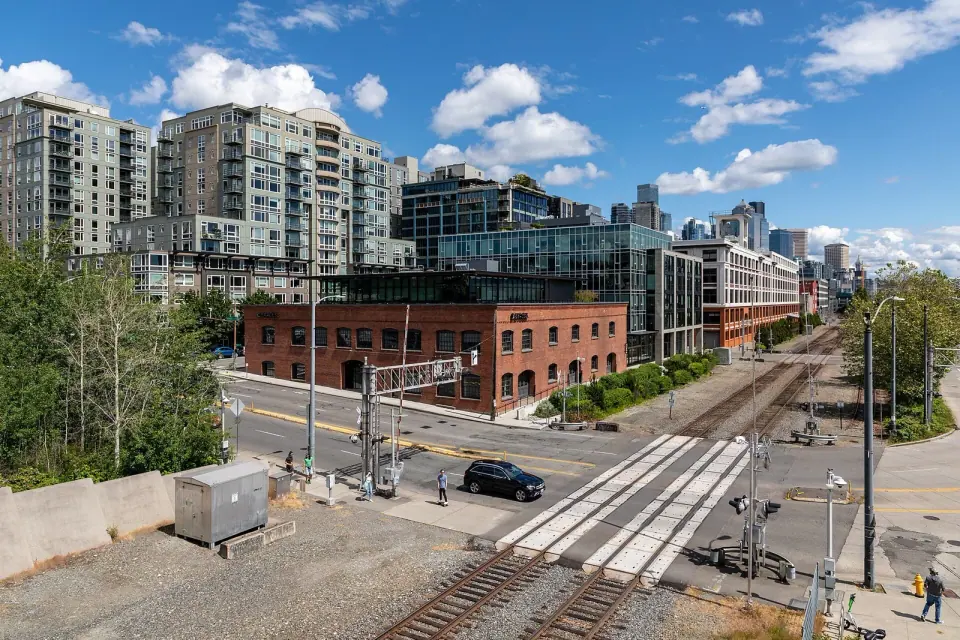
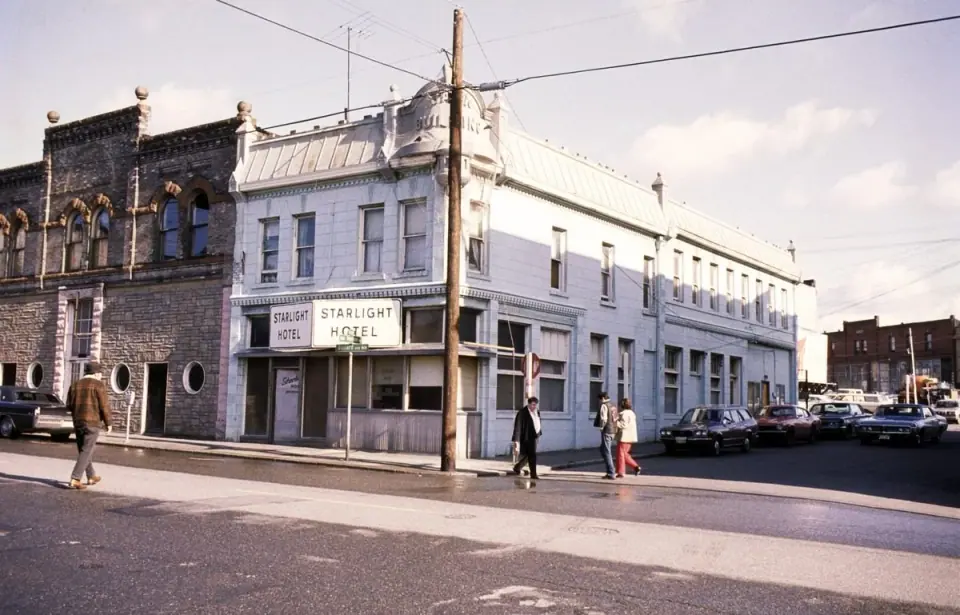
For much of the twentieth century, cheap rents drew artists and light industry, and Alaska Airlines even kept its headquarters here at one point. Over recent decades, high-rise apartments, dining and nightlife moved in, yet warehouses and galleries still hold their ground between the towers.
Living Among City Landmarks
Look up as you walk and you will spot an unusual concentration of buildings protected by the City of Seattle, several of them historic apartment buildings. The Securities Building on Third Avenue, designated in 2010, sits in a tight cluster of other protected structures, so a stroll of a few blocks often takes you past two or three designated buildings.
At Western Avenue and Vine Street, a group of modest wood houses built in 1916 looks almost out of place among the towers. They are the last of eleven cottages that once filled the quarter block, the only wood-framed homes left in downtown Seattle, and they also mark where the shoreline ran in the 1850s.
Old Film Row
Belltown was once the center of the region's movie business. Nitrate film burned so easily that zoning pushed film exchanges into this one district, and during the silent era distributors here supplied roughly 470 theaters across Washington, Oregon, Idaho and Montana. Head to Second Avenue just south of Battery Street to find the former MGM Building, now home to a bar and restaurant, and catch the Rendezvous, which keeps the Jewel Box theater, the last screening room left in the neighborhood.
Outdoor Space When You Don't Have a Yard
You won't find sprawling lawns in Belltown, but each of its small parks offers something different. For apartment dwellers, these spots work as shared backyards.
- Olympic Sculpture Park: Spend an afternoon at this free 9-acre waterfront site, run by the Seattle Art Museum on former industrial land beside Myrtle Edwards Park. Large contemporary sculptures stand among native plantings, a restored beach and a rebuilt seawall, with no walls or gates to slow you down.
- Tilikum Place: This small triangular plaza near the Space Needle end of the neighborhood is built around James Wehn's life-size statue of Chief Seattle. Meet friends here on your way to Seattle Center.
- Belltown P-Patch: This community garden at Elliott Avenue and Vine Street has 35 plots and has been part of the City of Seattle P-Patch program since 1995. Renters can grow their own food here, and visitors should respect it as a working garden.
Seattle Rental Rules Every Belltown Tenant Should Know
Across the state, the Washington Residential Landlord-Tenant Act governs rentals, and Seattle layers its own stricter rules on top for every Belltown lease. Because regulations change, check current details on the City of Seattle's Renting in Seattle site before you sign.
The Renter's Handbook
When you sign an initial rental agreement, your landlord must hand you a printed copy of the city's Renter's Handbook. A digital version is allowed for renewals, for month-to-month tenants each year, and whenever the city updates it. The handbook walks you through each stage of renting and comes in many languages, including Spanish, Chinese, Korean, Russian, Somali and Vietnamese.
No Algorithmic Rent Setting
Since July 31, 2025, Seattle landlords cannot use software that generates rent recommendations from data on unaffiliated rental properties. The city adopted the ban out of concern that third-party pricing tools push rents up artificially, and it applies whether the underlying data is public or private.
New Limits on Rental Fees
On August 11, 2026, the City Council passed new rules on rental fees covering agreements entered into or renewed after July 1, 2027. Listings, ads and applications will need to show you monthly rent, required and optional fees, utilities, discounts, and an estimated average total monthly cost.
Any fee not explicitly permitted will be banned. Allowed charges include:
- A security deposit plus move-in fees totaling no more than one month's rent
- Move-in fees capped at 10 percent of one month's rent
- A pet damage deposit capped at 25 percent of one month's rent
- Late fees of no more than $10 per month
- Utilities, parking, air conditioning units and documented tenant-caused damage
- Lockout fees of up to $50 on weekdays and $150 outside business hours
- Replacement keys at actual cost or $50, whichever is less
Optional services such as landlord-offered renters' insurance will require your written opt-in, and you must be able to cancel without penalty. Bundled services like cable and internet must also be sold separately.
Before You Sign a Belltown Lease
A little preparation makes the process smoother in a neighborhood this busy.
- Walk the blocks at different times of day, since nightlife and through traffic vary by street.
- Ask for the printed Renter's Handbook when you sign your first agreement.
- Compare the total monthly cost, not just base rent, and check that each fee is one the city allows.
- Keep copies of your listing, application, lease and receipts.
- Look up any questions on the city's rental site, which also covers evictions and common problems.
Curious how Belltown compares with other parts of the city? Browse our guide to Seattle neighborhoods.