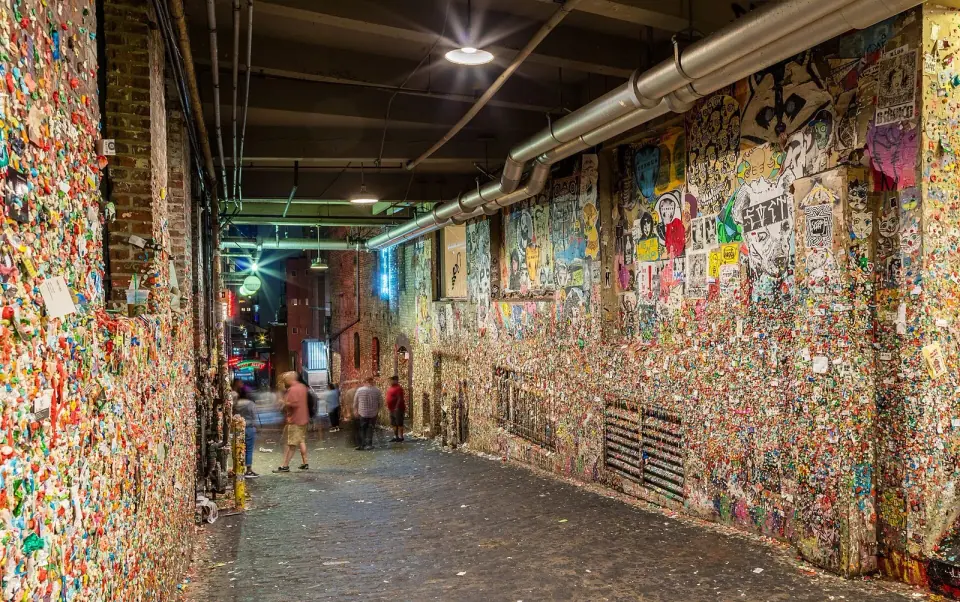
You will know when you arrive. The alley walls turn into a dense, multicolored mosaic that stands out even on a crowded afternoon. Before you set out, check the official Pike Place Market website for current directions, parking and market access.
What the wall looks like today
Measurements taken in 2024 put the gum at roughly 54 feet long and 8 feet high, which works out to an estimated 180 pieces on every single brick. In places the layer builds up several inches thick, giving the wall real depth and texture when you step in close.
Take a slower look and you will spot more than random blobs. People shape gum into hearts, initials and little designs, and artists tack up prints of their work between the colorful clusters.
How a theater line became a landmark
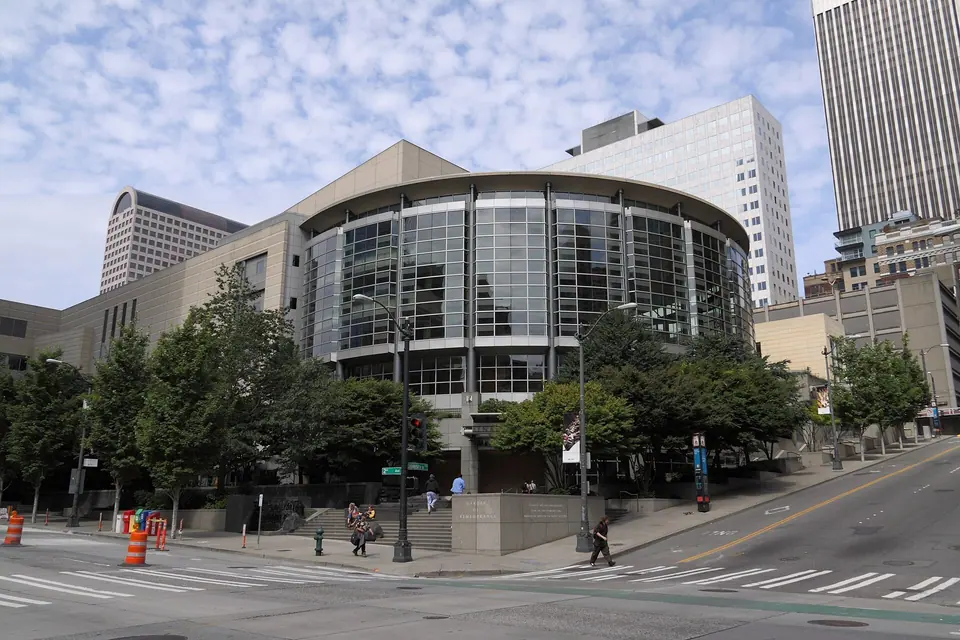
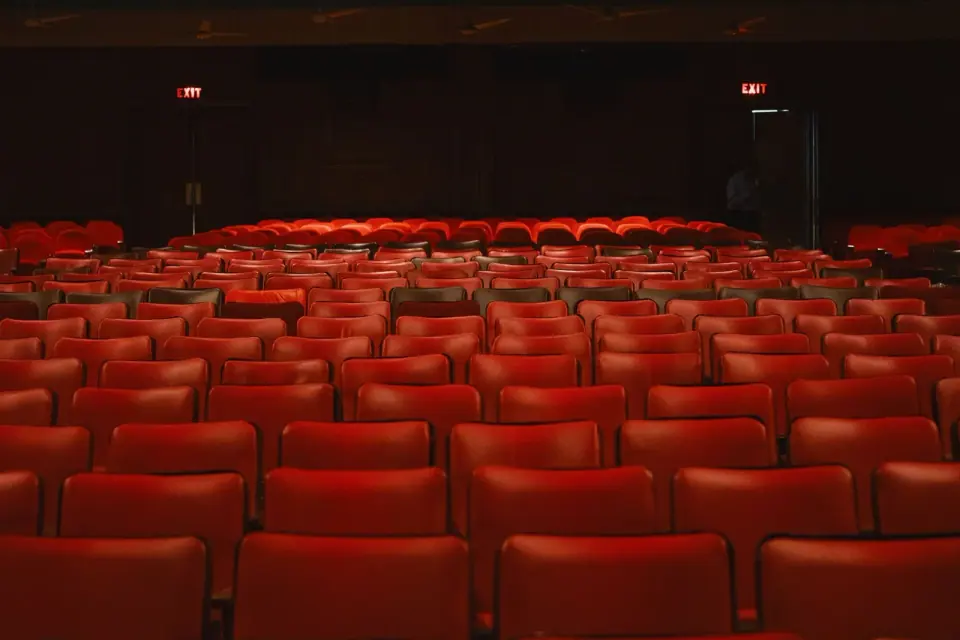
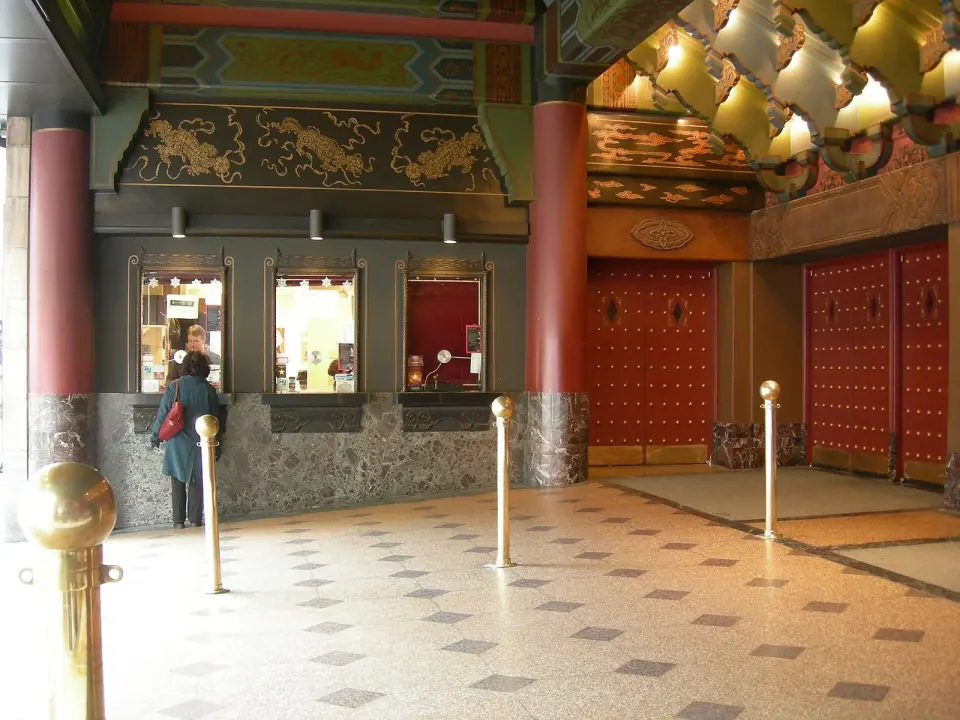
The story begins in 1991, when Unexpected Productions brought its Theatresports improv shows to the Market Theater. Patrons waiting to get in started sticking their chewed gum on the theater walls, and many pressed a penny into each piece. The coins were later removed, but the gum stuck around.
From nuisance to attraction
At first, the Pike Place Market Preservation and Development Authority, the public body that runs the market, saw nothing but a mess. It ordered several cleanings over the years, and each time the gum came right back.
Around 1999, market officials had a change of heart, deciding the wall had become a tourist attraction in its own right and letting it remain. By the late 2000s it stretched about 50 feet, with some pieces climbing as high as 20 feet up the bricks.
The big steam cleanings
Sugar in chewing gum slowly eats away at brick, and eventually that forced a reckoning. In November 2015, the market's development authority announced the first full cleaning in about two decades. Until then, crews had only spot-cleaned gum stuck in places where it was not allowed.
Work began on November 10, 2015, and took 130 hours. A local contractor used steam machines heated up to 280 degrees Fahrenheit, loosening the gum without the high pressure that could damage the bricks. The job cost about $4,000 and hauled away more than 2,350 pounds of gum, all of it bound for an ordinary landfill.
Fans were sorry to see it go, so market officials invited people to share their photos and memories of the wall online. The mourning did not last long. With nothing stopping anyone, fresh gum appeared almost as soon as the steam crews left, including tributes to victims of the Paris attacks that same month.
Cleanings since then
Crews cleaned the wall again in September 2018 and in November 2024, and since 2015 cleaning has become a regular part of caring for the alley. Arrive soon after one and you will find a thinner, fresher layer that fills back in quickly.
Art, romance and a famous gum portrait
Some people see the Gum Wall as one giant piece of collective art, where thousands of strangers have turned something most of us find gross into a shared, constantly changing artwork. Where the gum runs thinner and more visible, graffiti artists leave their marks too.
The best-known example arrived in January 2024, shortly after Pete Carroll left his job as head coach of the Seattle Seahawks. Local artist Rudy Willingham chewed 200 pieces of gum to build a 2-foot mural of Carroll wearing a headset, a fitting tribute to a coach known to chew up to 130 pieces on game days.
A backdrop for love and photos
Couples often spell out declarations of love in gum, earning the wall comparisons to Paris's Pont des Arts, and wedding photographers like it for the same reason. The alley is also where the market's Ghost Tour begins.
The wall has high-profile admirers as well. Former Washington governor Jay Inslee has called it his favorite thing about Seattle that you cannot find anywhere else.
The less charming side of the alley
Not everyone is a fan. In 2009, the Gum Wall ranked among the five germiest tourist attractions, second only to the Blarney Stone, so keep that in mind before you lean in for a close-up.
Neighbors have their own complaints. Visitors sometimes stick cigarette butts and wrappers to the wall, gum gets tracked into nearby businesses, and some say it draws rats into the alley. Bars and restaurants across the way have posted signs asking people not to stick gum on their property, with little success.
There is an environmental angle, too. Modern gum is made from synthetic polymers, so discarded pieces add to plastic pollution and microplastics.
Making the most of your visit
Adding your own piece is part of the tradition, so go ahead, but be considerate about it. Stick your gum on the wall itself rather than on doors or neighboring storefronts, and carry any wrappers away with you. Bring hand sanitizer, and keep curious kids from touching too much.
Pair it with the rest of the market
The Gum Wall makes a quick stop, so plan to spend time exploring the market around it. Pike Place Market opened on August 17, 1907, ranks among the older continuously operating public farmers markets in the country, and now welcomes more than 20 million visitors a year as Seattle's most popular tourist destination.
Wander up from the alley into the covered arcades, where fishmongers, produce stands and craft tables fill spaces that farmers and makers rent by the day. Browse the lower levels for antique dealers, comic and collectible shops and small family restaurants, then catch the flying fish at Pike Place Fish Market, a classic crowd-pleaser near the main entrance.
Seasonal events fill the market throughout the year, so check the Pike Place Market calendar for what is coming up, since schedules and hours can change. For more ideas nearby, browse our guides to Seattle landmarks, things to do in Seattle and Seattle neighborhoods worth exploring.