Watch a boat pass through
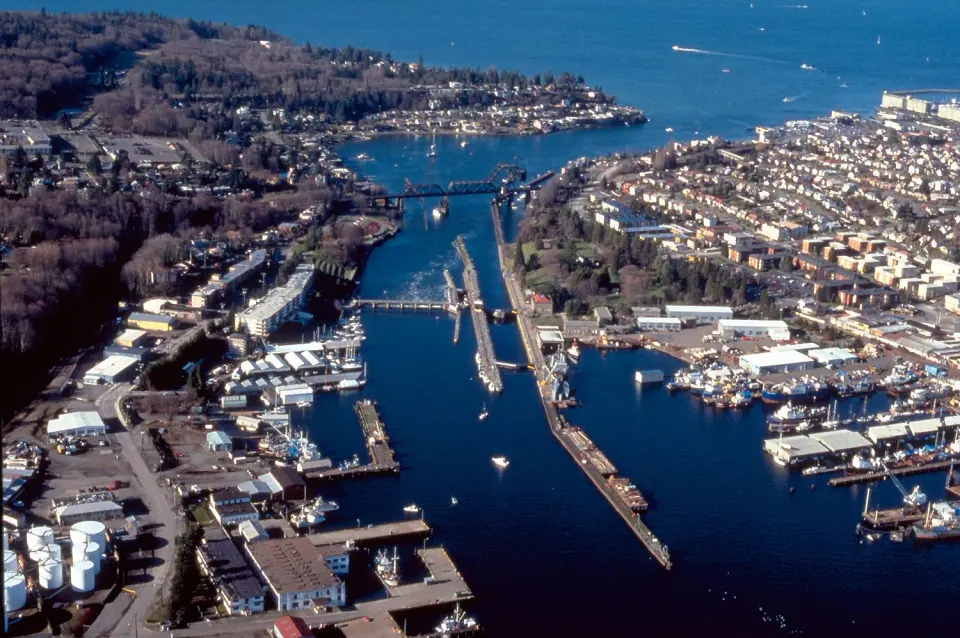
Picture each lock as a water elevator. A boat heading out to the Sound glides into the chamber through open upper gates, and attendants on the lock wall make sure it is tied off. Then the upper gates close, a valve opens, and gravity drains the water toward the Sound.
When the water on both sides of the lower gates is even, those gates swing open and the boat motors away. Boats arriving from the Sound go through the same steps in reverse. Stand at the wall and you can watch a full lift or drop in about 10 to 15 minutes.
Two locks and every kind of boat
Look for two chambers side by side: a small lock measuring 30 by 150 feet and a large lock measuring 80 by 825 feet. The small one handles light traffic and saves fresh water in summer, when the lakes get less inflow, while the large one can lift a vessel 760 feet long by 80 feet wide.
The parade ranges from kayaks and pleasure boats to fishing boats back from the Bering Sea and cargo ships, carrying more than a million tons of cargo, fuel, building materials and seafood each year. Each lock is drained for roughly two weeks of maintenance, the large one usually in November and the small one usually in March.
Meet the Salmon at the Fish Ladder
Built into the locks on the south side of the canal, the fish ladder lets salmon and steelhead trout climb from salt water into fresh water on their way to spawn. Head down to the underground viewing room, where large windows look straight into the current and the fish swimming through it.
These fish once reached Lake Washington and the Cedar River by way of the Duwamish River, until building the canal cut off that route. Today the ladder gives returning salmon an essential path home. Small chutes in the spillway, called smolt flumes, help young salmon pass safely downstream on their way out.
When to go for fish
- Sockeye salmon: July
- King (Chinook) salmon: late July through August, when the biggest fish come through
- Coho (silver) salmon: September through October
- Steelhead trout: late February through March
Runs vary from year to year, so a sighting is never guaranteed. For the best odds of a busy ladder, aim for late summer, the most reliable window.
Stroll the Carl S. English Jr. Botanical Garden
On the north side of the locks, a garden laid out in English estate style invites you to slow down. Botanist Carl S. English Jr. tended it for decades, and today it holds more than 500 species of trees plus thousands of flowers from around the world.
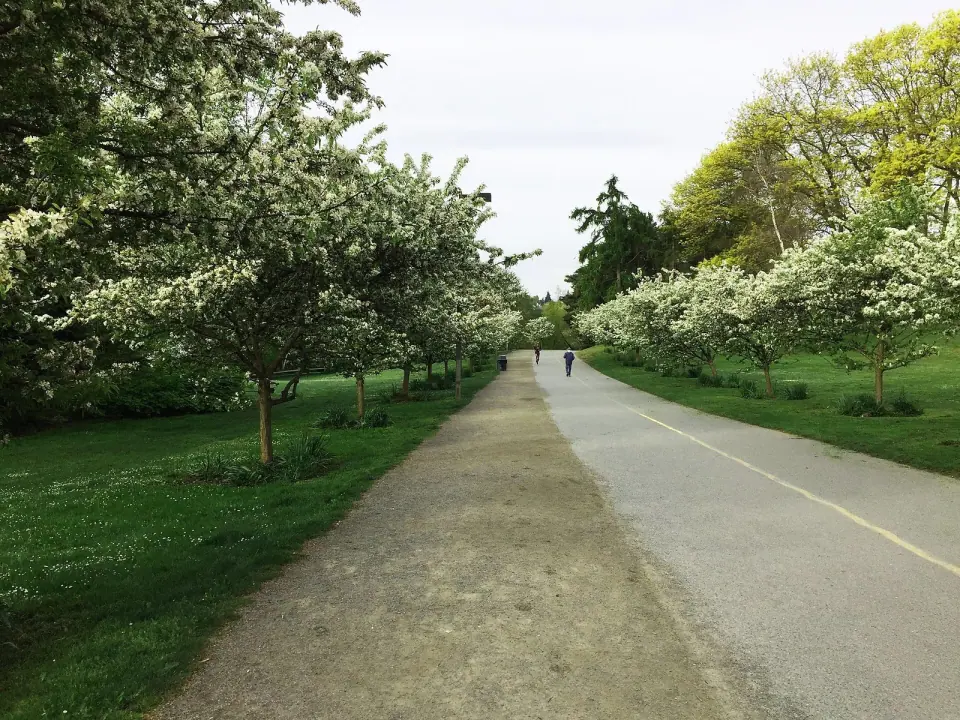
Spread a blanket on the broad lawns, a favorite neighborhood spot for an afternoon with a book, and watch boat masts slide past below. Bring a picnic or grab takeout in Ballard, since the small concession stand runs only during peak summer months.
Catch a summer concert on the lawn
Sunny summer weekends often bring free live music to the lawn, from local marching bands to jazz groups and community orchestras. Check the official site for the current schedule before you go.
The Lock That Reshaped Seattle
Talk of linking Lake Washington to Puget Sound started as early as 1854, mainly to move logs, lumber and fishing boats. The Corps began planning in 1891, and serious work got underway in 1911 after legal fights with Ballard mill owners and lakeside property owners.
When the gates first closed in July 1912, Salmon Bay turned from salt water to fresh. The first ship passed through on August 3, 1916, and the locks formally opened on July 4, 1917. After a temporary dam at Montlake was breached, Lake Washington dropped 8.8 feet over three months.
That drop dried more than 1,000 acres of wetlands, stranded old piers and added miles of new shoreline, while the Black River dried up and the Cedar River was rerouted into Lake Washington. The locks joined the National Register of Historic Places in 1978 and are a National Historic Civil Engineering Landmark. Step into the visitor center to explore the story through interactive exhibits on building the canal.
Plan Your Visit
Admission is free, and donations to the nonprofit visitor center are welcome. The grounds and fish ladder open early and stay open into the evening year round, while the visitor center keeps shorter hours that change by season, with fewer open days from October through April.
Hours can change, so check the U.S. Army Corps of Engineers site for current times, tours and maintenance closures. You will find the locks at 3015 NW 54th St in Ballard.
Getting there and getting around
- Parking: a paid lot sits just outside the main gates on NW 54th St, with paid and free street parking nearby.
- Transit: hop on King County Metro routes 17, 40 or 44, which serve the area.
- Walking across: pedestrian walkways cross the lock gates, giving you a handy walking and cycling link between Ballard and Magnolia.
Good to know
- Leashed dogs are welcome on the grounds but not in the visitor center or the fish ladder viewing room.
- Sunny summer weekends get crowded, so come early in the morning or on a weekday afternoon for a quieter visit.
For deeper background, the Mountains to Sound Greenway Trust page on the Chittenden Locks explains the site's role in the regional watershed. Round out your day with more Seattle landmarks, head out to other Seattle parks and green spaces, or wander the rest of the Ballard neighborhood and beyond. Our guide to things to do in Seattle has plenty more ideas.