The name also tips its hat to SoHo in New York City, where artists in the 1970s moved into cheap factory spaces and turned them into lofts and studios. SODO has followed a similar path, though it has kept a far grittier, less polished edge than its namesake.
Where SODO Begins and Ends
SODO is part of Seattle's larger Industrial District. Start at South King Street, its northern edge, with Pioneer Square just across the way, and follow the neighborhood south to South Spokane Street, where more industrial land carries on.
The Duwamish River forms the western boundary, with West Seattle across the water. On the east, the line traces the Downtown Seattle Transit Tunnel and the SODO Busway, and beyond them lie the International District and more of the Industrial District.
The Stadium District
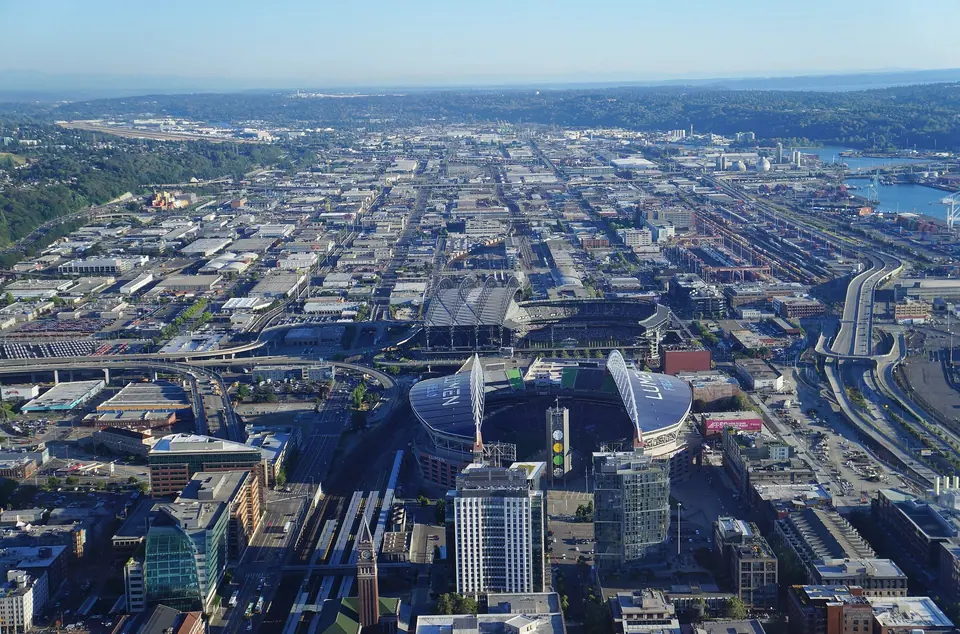
For most visitors, a trip to SODO means sports. Head to the north end of the neighborhood to find Seattle's downtown stadium district, where two major venues sit close together.
T-Mobile Park
Catch the Seattle Mariners at this baseball stadium, the team's home field. Fans of a certain age still remember the club's early 2000s marketing push around the catchphrase "SoDo Mojo," which helped carry the neighborhood name across the city.
Lumen Field
Lumen Field stands on the former Kingdome site and hosts the Seattle Seahawks of the NFL, Seattle Sounders FC of Major League Soccer and Seattle Reign FC of the National Women's Soccer League. With so many teams sharing the area, the clubs follow a scheduling agreement, and the Mariners get priority on start times.
Before you go, check each team's official site for game schedules, tickets and event details, since dates and times change from season to season.
Warehouses, Lofts and Art Spaces
Step away from the stadiums and you will find a district that is still very much at work. Some warehouse buildings are used just as they always have been, while others have been divided into artist lofts, art galleries and a mix of smaller businesses.
Stroll south along First Avenue S. and watch the character change. The creative conversions thin out, and light manufacturing, warehouses and warehouse-style retail take over. This is not a polished shopping district, and that is a big part of the appeal if you like seeing a city at work.
Historic Buildings
Seek out two notable older buildings the City of Seattle lists in the area: the U.S. Immigrant Station and Assay Office, and Fire Station #14. Both are reminders that SODO has a civic history alongside its industrial one. For more of the city's historic sites, browse our guide to Seattle landmarks.
Who Lives in SODO
SODO is mostly industrial, but people do call it home. The 2000 census counted about 2,600 residents with a median age of 41.2, and rentals slightly outnumbered owner-occupied homes. Those figures are now dated, so read them as a snapshot of an earlier SODO rather than a current portrait.
Getting Around SODO
Light Rail and Buses
Ride transit for the easiest way in, especially on game days. Sound Transit's 1 Line runs through the neighborhood with two stops: SODO station at Lander Street, and Stadium station at Royal Brougham Way, right beside the venues.
The SODO Busway runs along 5th Avenue South, carrying King County Metro and Sound Transit Express routes that link the area with downtown and beyond.
Main Streets
For north and south travel, use First Avenue S., Fourth Avenue S. and Alaskan Way S. To cross east and west, turn onto S. Lander Street, S. Holgate Street, Edgar Martínez Drive S. or S. Royal Brougham Way.
Here is a fun fact for road trippers: Interstate 90 begins in SODO and stretches 3,020 miles east to Boston, Massachusetts.
Planning Your Visit
Pair a game with a walk through Pioneer Square or the International District, both right on SODO's edges. Our guide to Seattle neighborhoods shows you what is next door, and our roundup of things to do in Seattle can help you fill the rest of your day.