Finding the Edges
Four busy roads frame Cascade today. Fairview Avenue North marks the west side, with the rest of South Lake Union beyond it, while Interstate 5 forms the east edge, the Mercer Street interchange closes off the north and Denny Way runs along the south.
The neighborhood once spread much wider, west to Terry Avenue and east to Melrose Avenue, across land the freeway later erased. Locals still debate whether the narrow strip along the east shore of Lake Union belongs to Cascade at all.
Why Capitol Hill feels so far away
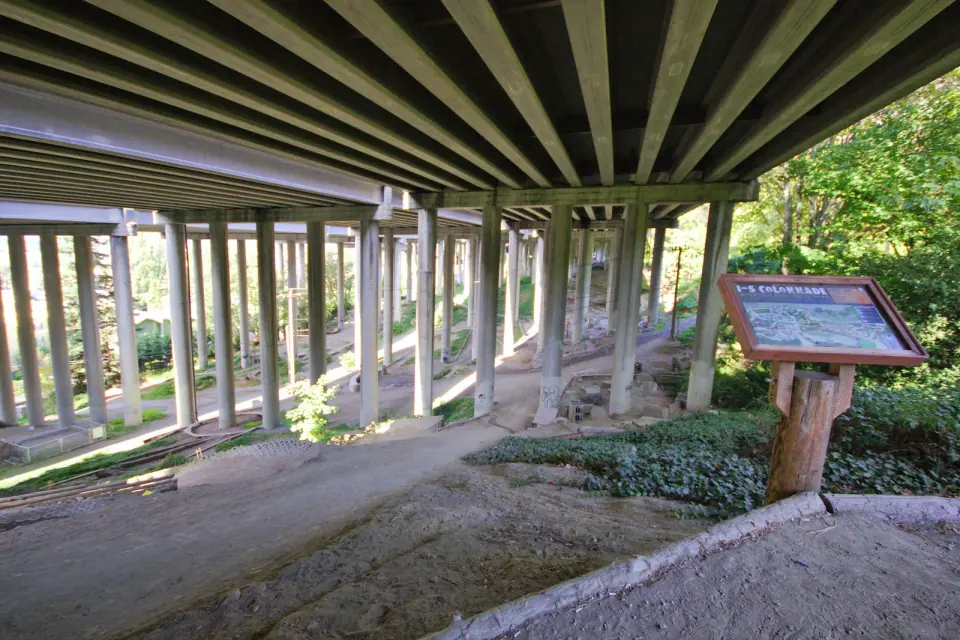
Streets and stairways once tied Cascade directly to Capitol Hill, until 1962. Building Interstate 5 cleared more than seven blocks of homes and shops on the east side of Eastlake Avenue, and now Denny Way is the only direct link between the two neighborhoods.
Look for one fragment that survives: the upper half block of the Republican Street stairway, east of Melrose, is a city landmark. It once continued two more blocks down to Eastlake Avenue.
Mills, Laundries and Working History
Picture the late 1800s, when Cascade grew into a blue-collar mix of housing and early industry. Sawmills, shingle mills and boat yards lined the lake, and cabinet shops, groceries, laundries and boarding houses filled the streets, home to many Russian, Swedish, Norwegian and Greek settlers.
The name arrived with the Cascade School, which opened in 1894. Pioneer Margaret Pontius, remembered for caring for children in what is now called foster care, lived nearby by 1885, and you will still walk along Pontius Avenue North, which carries the family name.
The laundry district and the eight-hour day
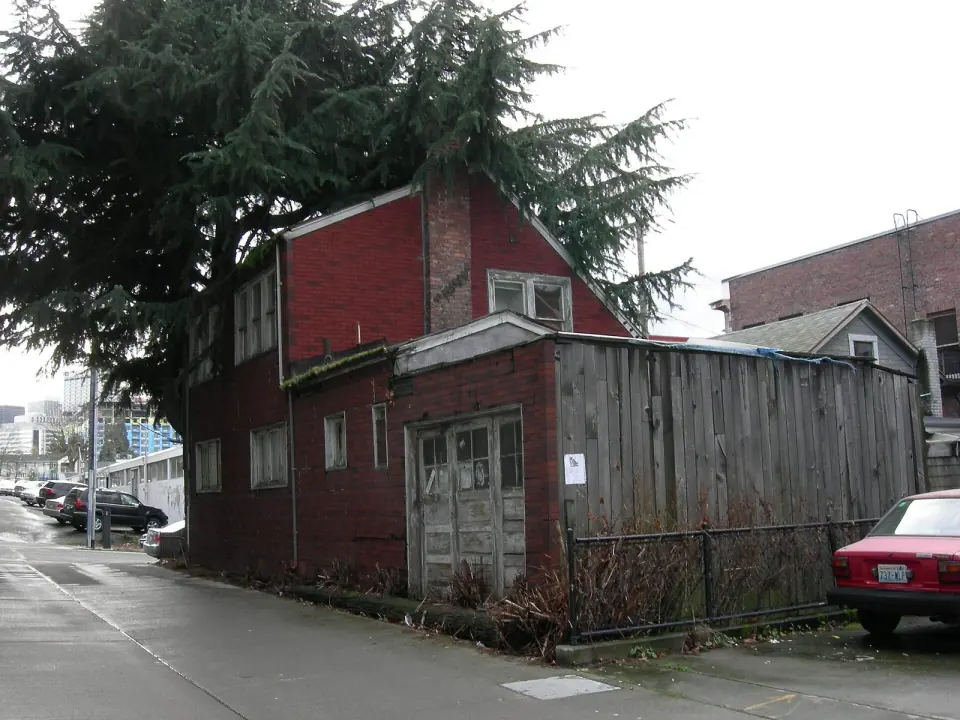
Industry grew after the Lake Washington Ship Canal opened in 1917, and Cascade became the center of the city's large laundries. Workers here won a fight for the eight-hour day in 1917 and 1918, an important chapter in Seattle labor history. Keep an eye out for the Troy, Supply and New Richmond laundries, all among the city's protected sites.
Stop at the New Richmond Laundry Building to see old and new side by side. The Alley24 development rose around it in 2007, keeping the historic facade, and the architecture firm NBBJ moved its headquarters inside.
Ford's first western factory
Designed by John Graham Sr. and built in 1914, the Ford Assembly Plant was the company's first factory west of the Mississippi River. It joins the Seattle Times buildings and several old substations on the long list of protected buildings in and around Cascade.
Historic Churches
Two congregations give Cascade much of its character. Pause at St. Spiridon Russian Orthodox Cathedral, founded in 1895 with its current church finished in 1938, and at Immanuel Lutheran Church, which dates to 1890 and completed its present building in 1912.
Both reflect the immigrant families who made their homes here. A Greek Orthodox church also began in Cascade, though that congregation moved in 1963 and the building is gone.
Parks and Gardens to Linger In
Cascade Playground and the P-Patch
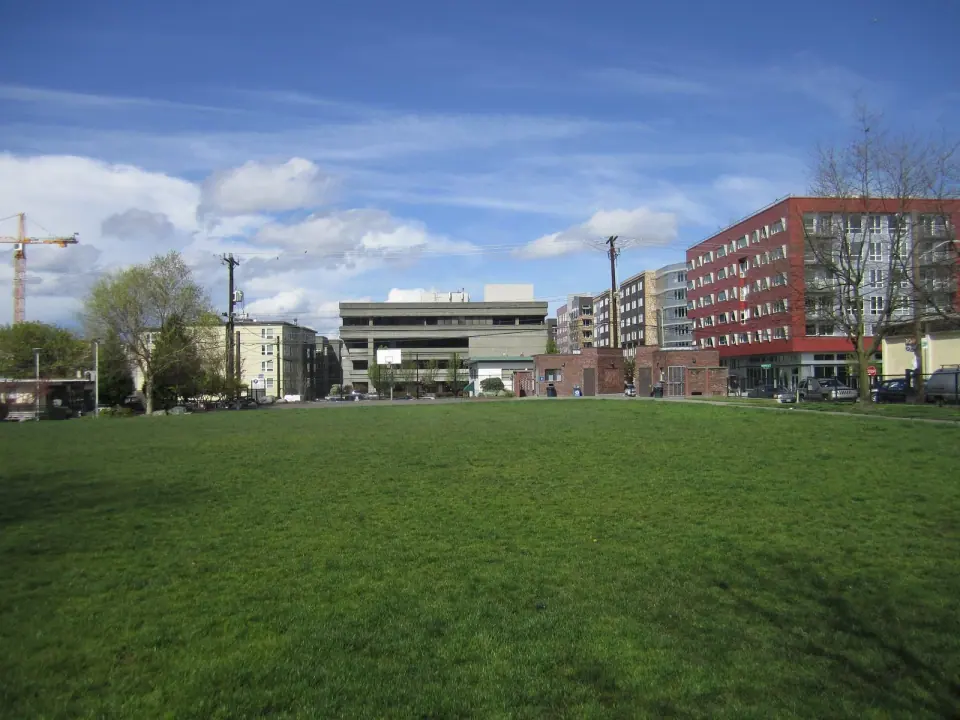
The 1949 earthquake damaged the Cascade School, and the building came down, but its playground stayed public. Today Cascade Playground on Pontius Avenue North is that survivor, ringed by the old laundry buildings and both historic churches.
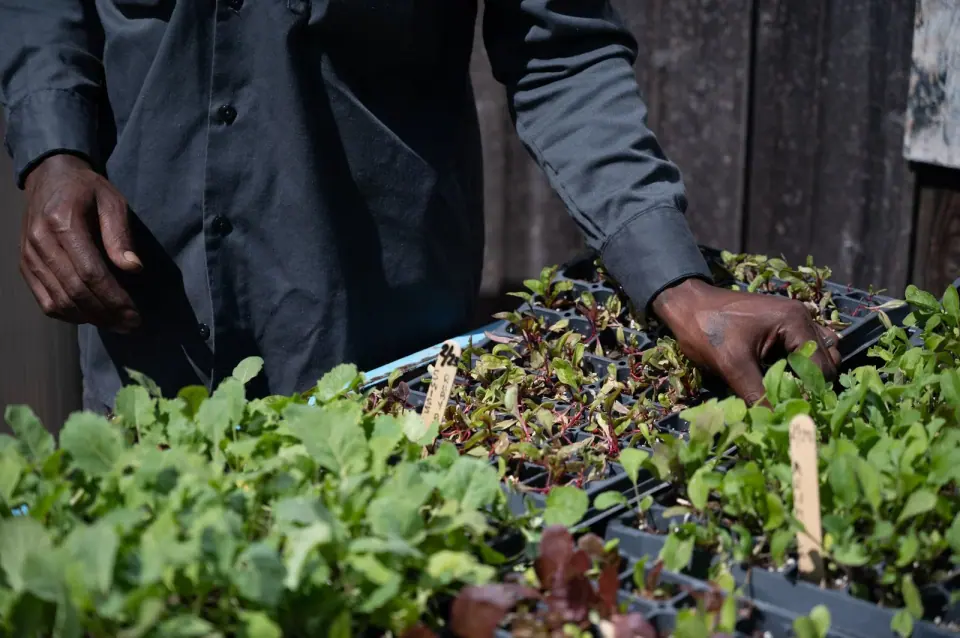
Wander next door to the Cascade P-Patch community garden, where 57 plots have been part of the City of Seattle P-Patch program since 1996.
Denny Park, just to the west
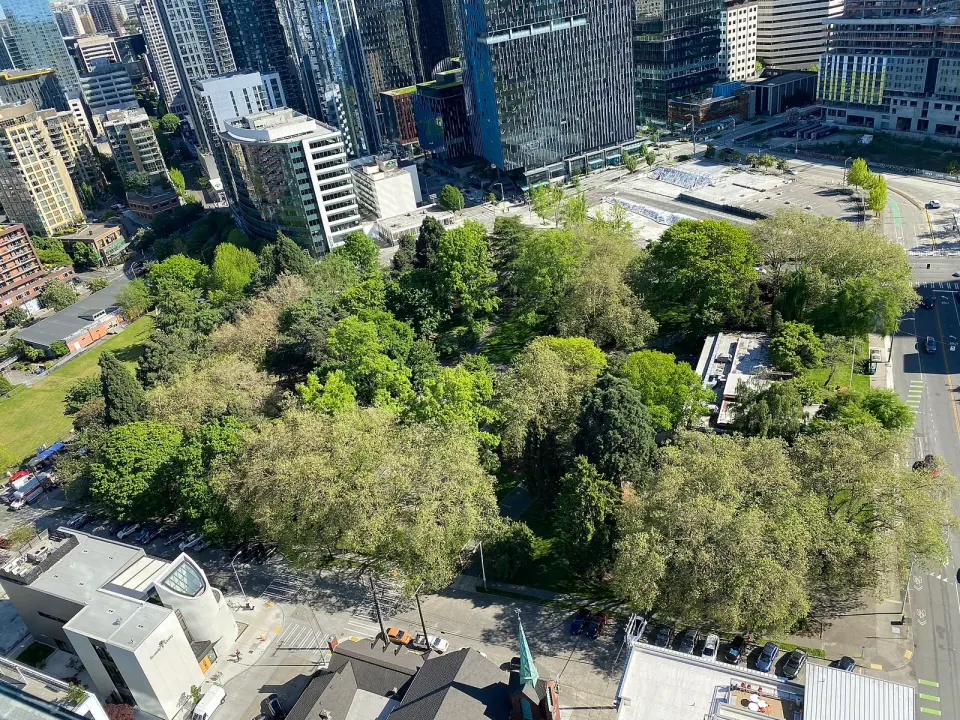
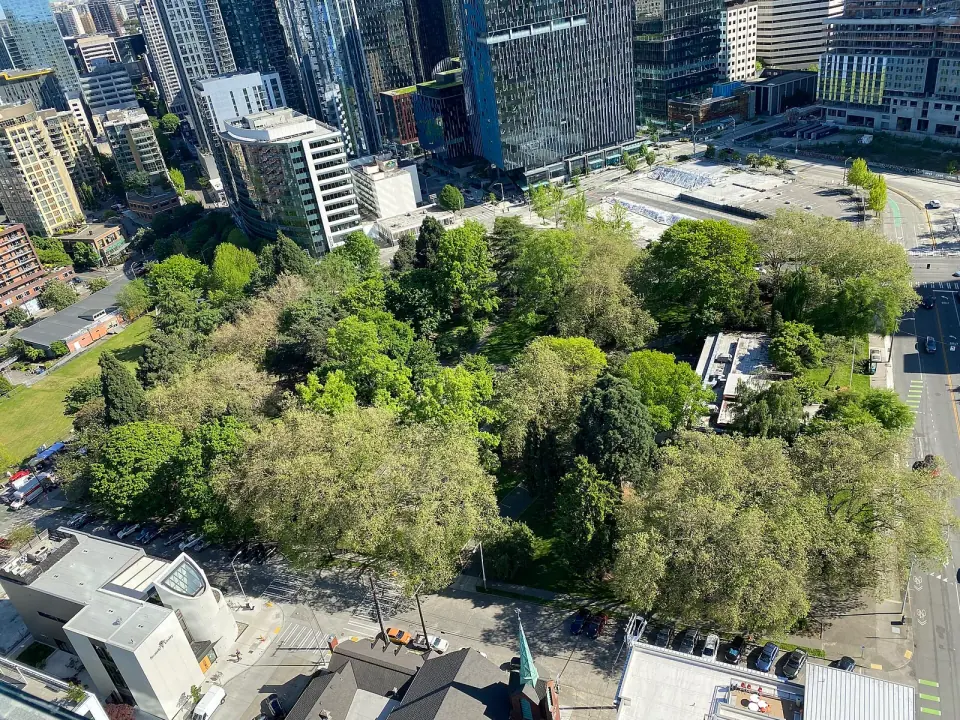
Walk a short way west to reach Denny Park, Seattle's oldest park. Donated as a cemetery in 1861 and turned into a park in 1883, it fills a full city block, and Seattle Parks and Recreation also lists it as a dog park.
Along the Lake Union shore
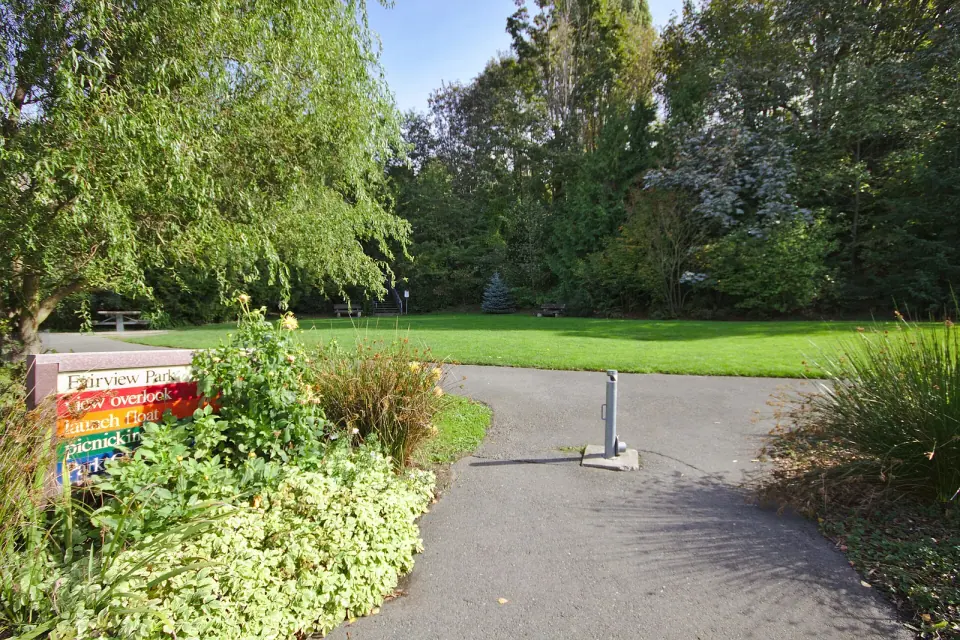
Head north along Eastlake Avenue to Fairview Park, a small patch of shoreline with a boat launch and a P-Patch. Neighbors have tended the nearby Eastlake P-Patch since 1981.
Eastlake Avenue Landmarks
Eastlake Avenue once bustled as a business strip with groceries, a pharmacy, barbers and taverns. The freeway left it much quieter, yet many buildings on its west side survive, and the Jensen Block, a city landmark since 1996, is one of the standouts.
Keep going north to the Lake Union Steam Plant, an official landmark since 1994 and a good turnaround point on a lakeside walk.
How Cascade Endured
The Depression hit Cascade hard, and after World War II the city zoned the area for industry only, banning new homes. Planners also proposed an elevated Bay Freeway that would have cut the neighborhood off from the lake, until voters rejected it in 1972.
In the early 1970s, activists including a young Frank Chopp set up geodesic domes on vacant lots as part of the Cascade Shelter Project. Studies later that decade named Cascade a historic residential area worth protecting, which helps explain why so many older buildings still line your route.